There are moments in astronomy when the sky stirs public imagination not through beauty alone, but through a quiet question: What if something were coming our way? In those moments, telescopes become both watchers and storytellers, tracing faint objects drifting through the dark between worlds.
For a brief time, one such object drew attention across the scientific community — a small asteroid quietly traveling through the inner solar system. Its path, when first calculated, carried a whisper of uncertainty. Not toward Earth, as some early headlines feared, but toward our nearest companion in space: the Moon.
Now, after months of careful observation, astronomers have offered a calm conclusion. The Moon, they say, is safe.
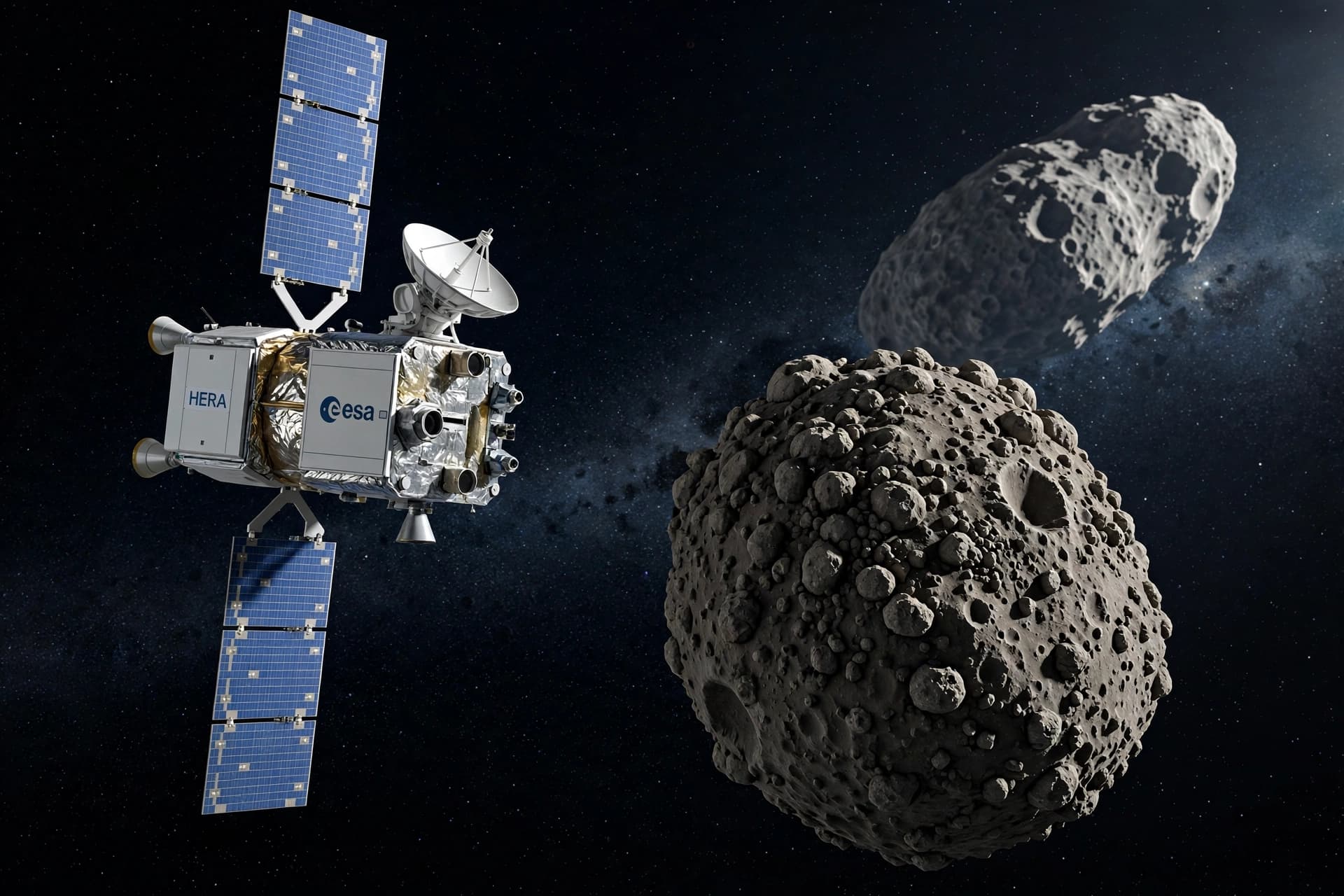
The object at the center of the story is asteroid 2024 YR4, a near-Earth asteroid discovered in late 2024. Measuring roughly 60 meters (about 200 feet) across, the rocky body is modest by cosmic standards, yet large enough to draw attention from planetary defense teams who monitor objects that cross near Earth’s orbit.
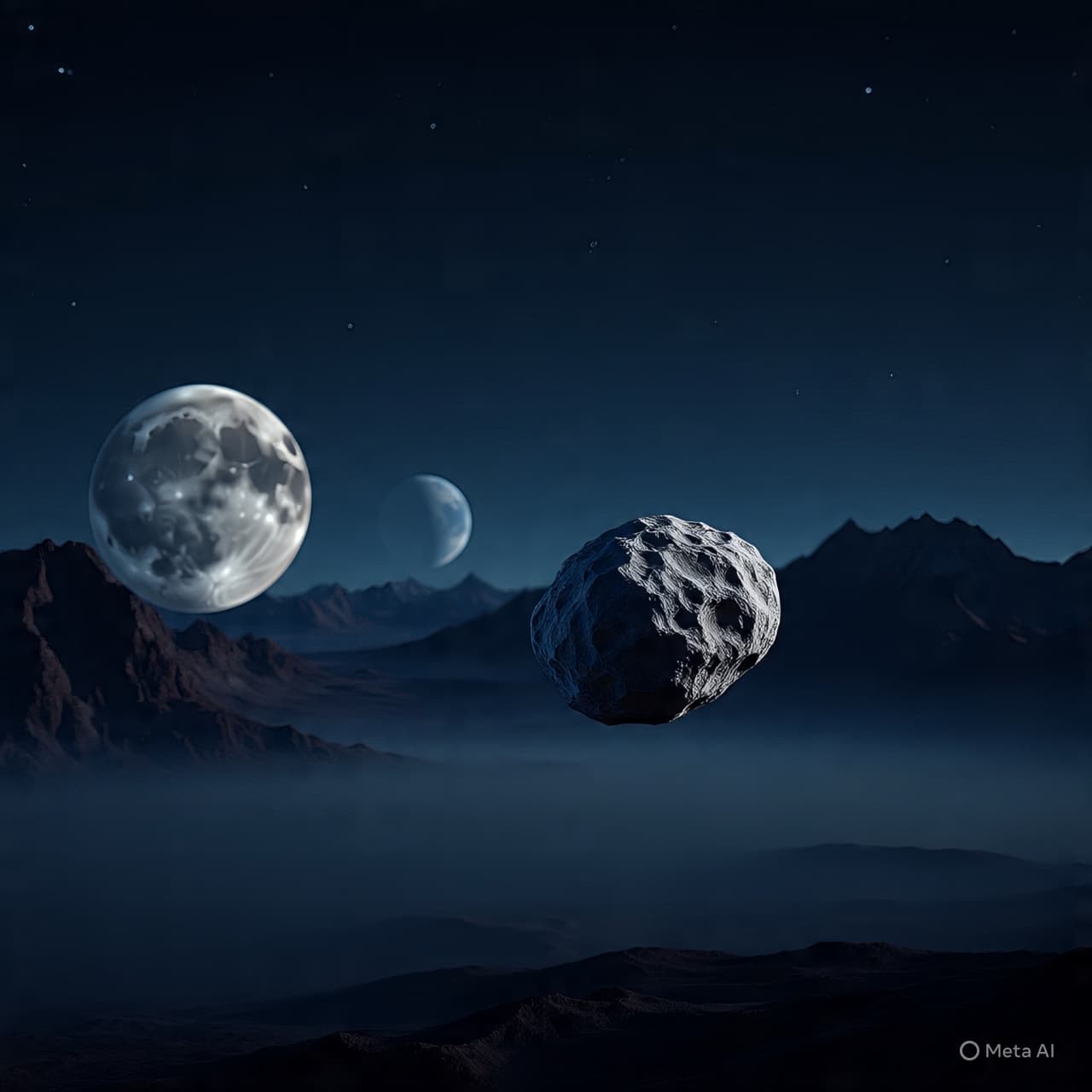
Initial calculations suggested the asteroid might pass very close to the Moon in December 2032. At one stage, scientists estimated a small — though noteworthy — chance, around 4.3 percent, that the asteroid could collide with the lunar surface.
Even at that level, the probability remained low. Still, astronomers treat such possibilities carefully, not with alarm but with patience. Orbital paths of newly discovered asteroids often begin as rough sketches. Over time, additional observations sharpen those lines, turning uncertainty into clarity.
That clarity arrived with the help of one of the most powerful eyes ever placed in space: the James Webb Space Telescope.
In February 2026, astronomers used the telescope’s sensitive instruments to track the faint asteroid again. Because objects like 2024 YR4 can be difficult to observe once they move farther from Earth, each opportunity to measure their position becomes valuable. Webb’s infrared vision allowed researchers to capture precise data about the asteroid’s location and movement.
With those measurements, scientists recalculated the object’s orbit.
The updated trajectory revealed reassuring news. Asteroid 2024 YR4 will miss the Moon entirely when it passes by on December 22, 2032, traveling roughly 13,200 miles (21,200 kilometers) from the lunar surface.
In astronomical terms, that distance is close enough to be noteworthy but comfortably far from a collision.
Equally important, the asteroid poses no threat to Earth. Earlier concerns about a potential Earth impact had already been ruled out by scientists studying its orbit.
Had the asteroid struck the Moon, the event would likely have created a dramatic new crater and sent a plume of lunar debris into space. While such an impact would not endanger Earth directly, some scientists had speculated that fragments could briefly affect satellites orbiting our planet.
But the scenario will remain purely theoretical.
Instead, the asteroid will continue along its path through the solar system, another wandering fragment among countless others. Astronomers expect to observe it again during a future approach in 2028, when it will come close enough for further study.
Moments like this offer a quiet reminder of how planetary defense works in practice. The process rarely involves urgent action or sudden alarms. More often, it unfolds slowly — a matter of patient observation, improved calculations, and the steady refinement of knowledge.
In this case, what began as a small possibility has resolved into reassurance.
The Moon will continue its familiar orbit around Earth, untouched by the passing traveler, while astronomers keep watching the skies for the next faint object that drifts into view.
AI Image Disclaimer Images in this article are AI-generated illustrations, meant for concept only.
Sources The Guardian Associated Press Live Science The Washington Post India Today Science
Published by Banx Network. This article is part of the Banx decentralized media programme, powered by the BXE token on the XRP Ledger.