

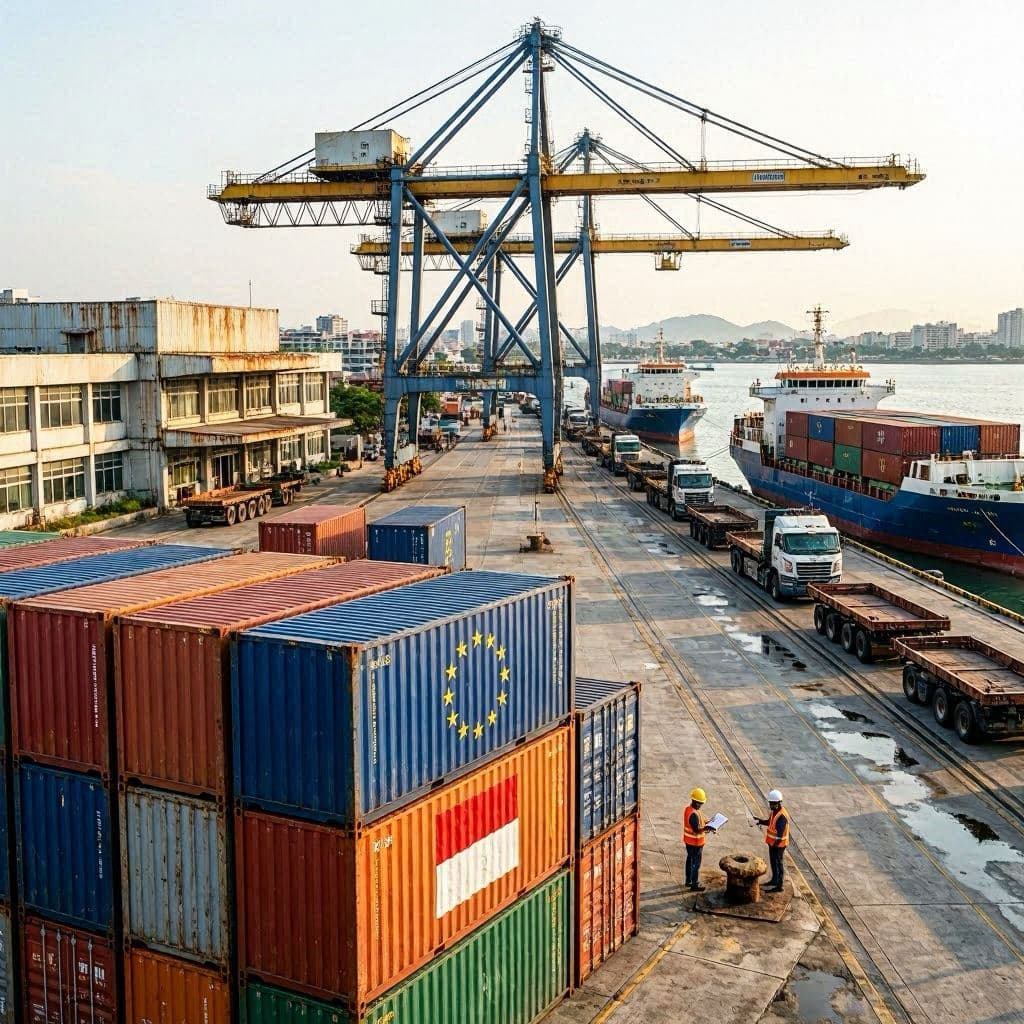
Key Highlights
- Trade Agreement:Indonesia and the EU are negotiating the IEU-CEPA.
- Timeline:Finalization of the agreement is targeted for 2026.
- Economic Impact:The agreement aims to enhance trade relations and market access.
Indonesia and the European Union are making significant strides in their negotiations for the Indonesia-European Union Comprehensive Economic Partnership Agreement (IEU-CEPA). After nearly a decade of discussions, both parties are optimistic about finalizing the agreement by 2026. This development is seen as a crucial step in strengthening economic ties between Indonesia and Europe, two regions with substantial trade potential.
The IEU-CEPA aims to reduce trade barriers, improve market access, and encourage investment flows between Indonesia and European countries. For Indonesia, the European market is vital, particularly for its agricultural products, manufactured goods, and industrial commodities. Enhanced access to this market could open new avenues for Indonesian businesses, fostering growth and innovation in various sectors.
European negotiators recognize Indonesia's strategic importance in Southeast Asia, given its large population and burgeoning consumer market. As global interest in Indonesia continues to rise, the IEU-CEPA is expected to attract more international businesses looking to tap into this dynamic economy. The agreement is anticipated to provide a framework that not only benefits trade but also enhances bilateral relations.
However, the path to finalizing the IEU-CEPA has not been without challenges. Over the years, negotiations have faced hurdles related to sustainability standards, market access provisions, and regulatory frameworks. Both sides have engaged in diplomatic discussions to navigate these complex issues, seeking compromises that would satisfy the interests of both parties.
Economic analysts suggest that a successful IEU-CEPA could significantly bolster Indonesia's position within global supply chains. By diversifying its export destinations, Indonesia can enhance its economic resilience and reduce dependency on any single market. This diversification is particularly crucial in the current geopolitical climate, where countries are increasingly looking to strengthen trade partnerships and build economic resilience through diversified networks.
Both Indonesia and the European Union have reiterated their commitment to ongoing dialogue and cooperation. If the IEU-CEPA is successfully finalized, it could represent one of Indonesia's most significant trade achievements in recent years, paving the way for a more integrated and prosperous economic future.
Published by Banx Network. This article is part of the Banx decentralized media programme, powered by the BXE token on the XRP Ledger.




