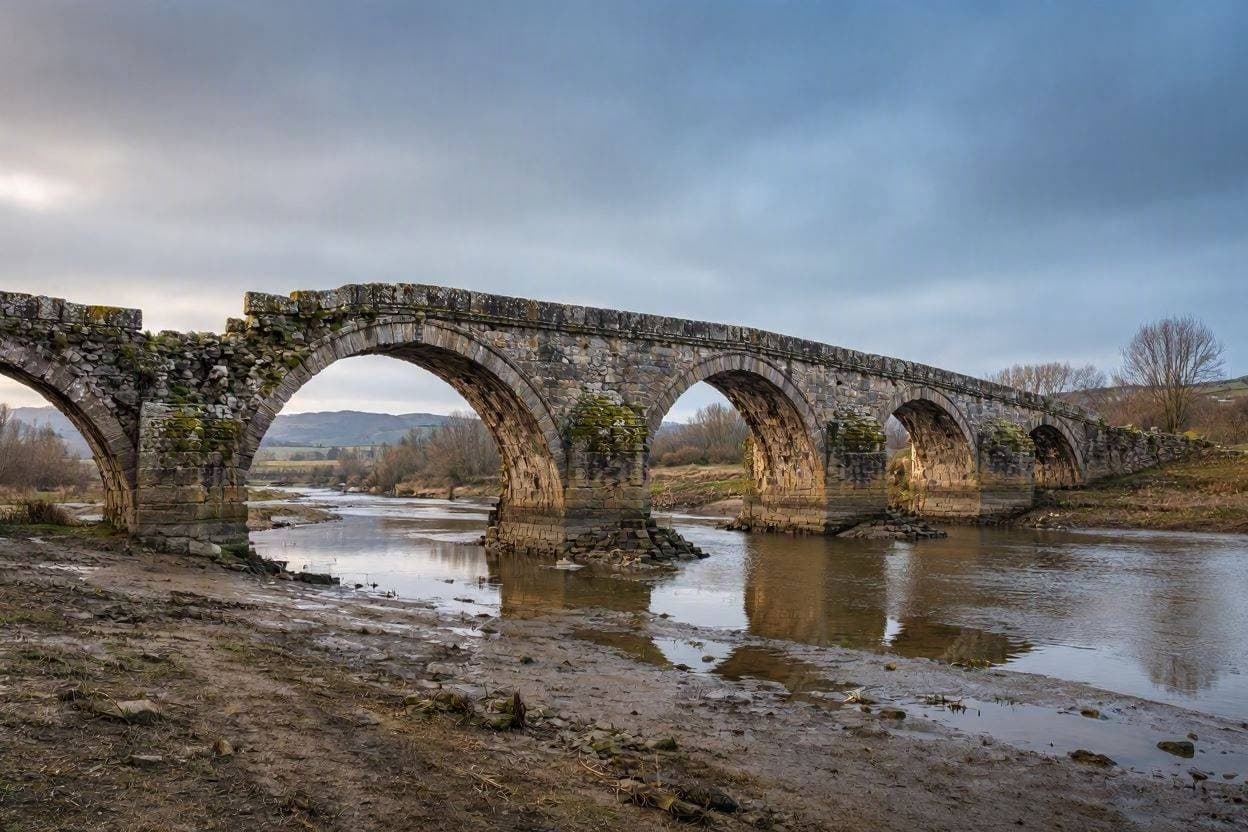
Rivers are the arteries of history, carrying not just water but the memories of civilizations past. In Bulgaria, the Danube has receded significantly due to prolonged drought and low rainfall, revealing secrets long hidden beneath its surface. Among these discoveries is a well-preserved Roman-era bridge, emerging from the mud like a ghost from antiquity. This archaeological find offers a tangible link to the empire that once dominated the region, reminding us that climate changes can uncover as much as they destroy. It is a moment of historical revelation born from environmental stress.
The bridge, located near the city of Vidin, dates back to the 1st or 2nd century AD. Constructed with sturdy stone pillars and wooden beams, it was part of a vital trade and military route connecting the Roman provinces. For centuries, it lay submerged, protected by the river’s flow. Now, with water levels at record lows, the structure is visible, allowing archaeologists to study its construction and condition in unprecedented detail.
Experts from the National Institute of Archaeology have rushed to document the site before the waters rise again. They note that the preservation is remarkable, with many original stones and structural elements intact. The discovery provides insights into Roman engineering techniques and the logistical capabilities of the empire in this frontier region. It also highlights the strategic importance of the Danube as a border and a conduit for commerce.
The low water levels are attributed to a combination of factors, including reduced snowmelt from the Alps and increased evaporation due to higher temperatures. Climate change is exacerbating these trends, leading to more frequent and severe droughts in Europe. While the exposure of the bridge is a boon for historians, it serves as a warning about the broader ecological impacts of a warming planet.
Local residents have gathered to view the ancient structure, expressing pride in their heritage. The sight of the Roman ruins has sparked interest in regional history and tourism. Authorities are considering measures to protect the site while it is exposed, ensuring that it is not damaged by erosion or unauthorized access. It is a delicate balance between preservation and public engagement.
This discovery is not isolated; other archaeological sites along the Danube have also been revealed by low waters. Each find adds a piece to the puzzle of Europe’s past, enriching our understanding of human history. However, the reliance on drought for such revelations underscores the urgency of addressing climate change. We must learn to protect our heritage without relying on environmental distress to reveal it.
The emergence of the Roman bridge in Bulgaria is a fascinating intersection of history and environment. It offers a rare glimpse into the past while highlighting the present reality of climate change. As the Danube continues to fluctuate, the hope is that these historical treasures are preserved and studied, adding depth to our collective memory.
AI Image Disclaimer: Visuals associated with this article are AI-generated to illustrate the themes of archaeology and environmental change.
Sources: The Guardian AP News Bulgarian National Radio
Published by Banx Network. This article is part of the Banx decentralized media programme, powered by the BXE token on the XRP Ledger.