

Key Highlights
- Appointment:Lieutenant General Kyrylo Budanov becomes chief of staff for President Zelenskyy.
- Background:Budanov previously led Ukraine's intelligence agency, overseeing key operations against Russian forces.
- Challenges:Ongoing territorial disputes complicate peace negotiations between Ukraine and Russia.
In the long winter of a conflict that has stretched into years, the terrain of diplomacy often feels as foreign as the battlefields once felt to young volunteers in 2022. Across forests frozen with frost and streets scarred by artillery, the hopes of peace take shape like early morning mist—quiet, elusive, and seeming to shift without warning. Into this space steps a figure whose life has been woven through the hidden paths of war itself: a spymaster whose reputation was forged in the crucible of conflict and whose new task is to speak with those he once regarded as the adversary.
Ukraine’s choice to elevate Lieutenant General Kyrylo Budanov to President Volodymyr Zelenskyy’s chief of staff reflects a strategic and symbolic shift. For years, Budanov led the Main Directorate of Intelligence (HUR), overseeing bold covert operations that struck at logistics, command centers, and the infrastructure of an invading force. His agency’s contributions to Ukraine’s resistance—whether through daring raids or the delicate choreography of prisoner exchanges—etched his name into both the nation’s defense strategy and its collective imagination as a guardian of sovereignty.
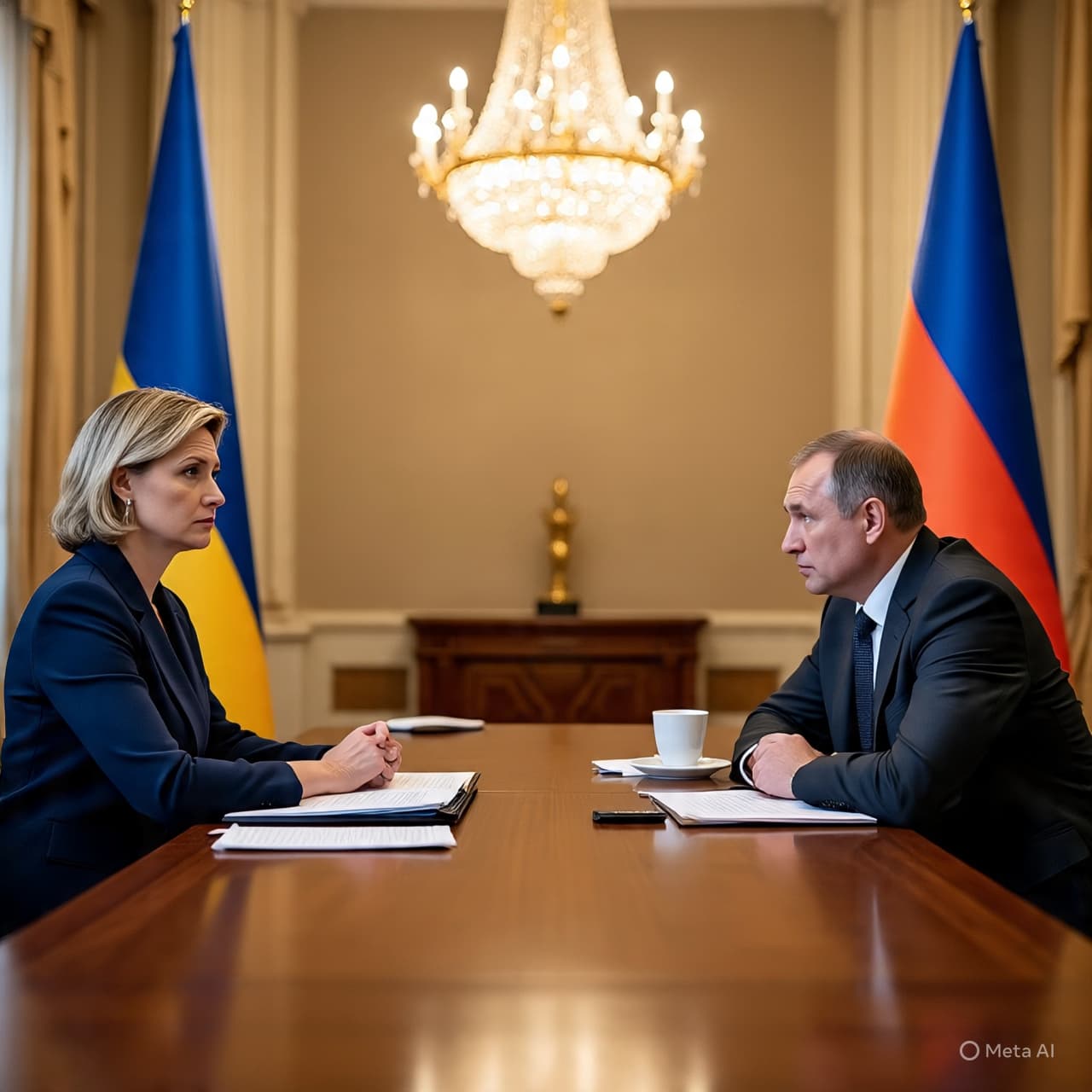
Yet war has its paradoxes. The same mind that calculates unseen moves on the chessboard of espionage now sits at a table that must balance the irrevocable losses of combat with the fragile promise of negotiation. This transition is not merely tactical; it is human. In corridors once reserved for cloak-and-dagger work, Budanov now navigates the subtle language of compromise—a language that often demands patience and an openness to outcomes that fall short of total victory.
In practical terms, Ukraine’s diplomatic landscape sits at a crossroads. Behind the scenes, multinational efforts seek to shape a peace framework, including proposals with complex security guarantees and economic recovery plans. Yet the gravest point of contention—territorial status, especially in regions like Donetsk and Zaporizhzhia—remains unresolved, and Moscow’s demands and Kyiv’s red lines create a terrain as treacherous as any battlefield.
The appointment of an intelligence chief to a senior diplomatic role may, to some observers, seem counterintuitive. Intelligence work and negotiation often occupy different worlds: one thrives in ambiguity, the other in consensus. But perhaps in the prolonged winter of war, where every side has endured losses and recalibrated expectations, the crossing of these worlds is not only logical—it may be indispensable. A negotiator must understand the calculus of resilience, the subtleties of threat, and the art of reading intentions where they are spoken softly or not at all.
Still, the path ahead carries questions as vast as the fields that now lie silent in northeast Ukraine. Can one whose history is anchored to resistance truly bridge to reconciliation? Will experience in conflict sharpen insight or harden resolve against compromise? These inquiries belong not only to Kyiv’s leadership but to the millions who yearn for the day when children can play in quiet streets and families rebuild what was lost.
And so, with winter thawing into uncertain spring, Ukraine steps into another chapter of its long ordeal, guided by a leader forged in the shadows now seeking light. The negotiation table may yet prove its own kind of frontier, where the grit of past battles meets the hope for future peace.
In the coming months, the world will watch not only the outcomes of talks but the transformation of roles once defined by war into ones shaped by the aspiration for peace.
Published by Banx Network. This article is part of the Banx decentralized media programme, powered by the BXE token on the XRP Ledger.




