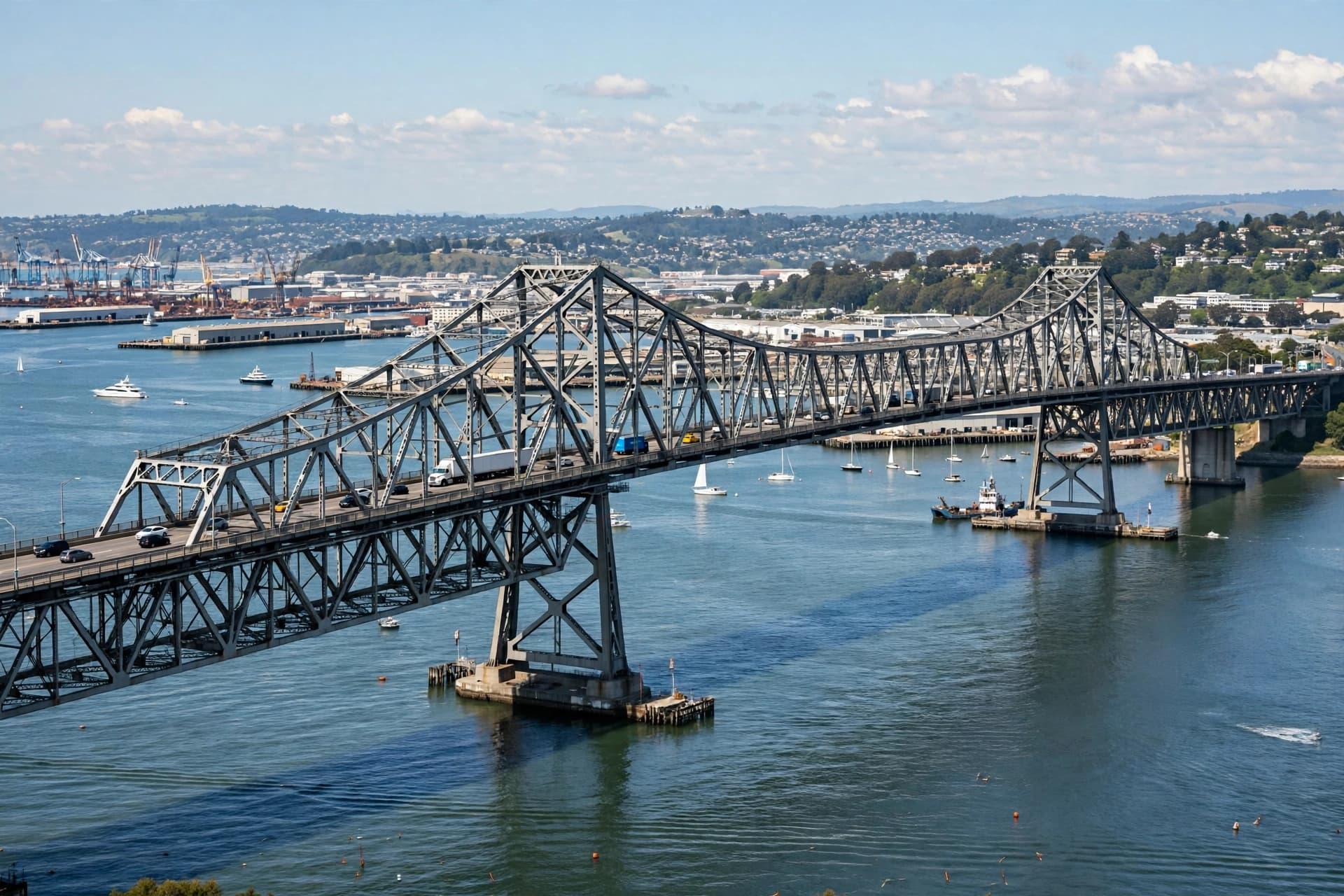
Every city has its lifelines—the arteries through which its daily life flows, often so familiar that they become nearly invisible. In Halifax, the A. Murray MacKay Bridge has served as one such artery since 1970, carrying more than 65,000 vehicles each day between Halifax and Dartmouth. But even the sturdiest spans feel the weight of decades, and the "new bridge," as locals still call it, is approaching the end of its useful life. The question now is not whether something must be done, but what—and who will pay for it.
The numbers are sobering. Tony Wright, CEO of Halifax Harbour Bridges, has placed the cost of repairing or replacing the MacKay at up to $3 billion—a ballpark figure based on recent bridge projects elsewhere in Canada. That estimate encompasses not only the structure itself but the years of planning, design, and construction that any major infrastructure undertaking demands. The bridge must be addressed by 2040, leaving little room for indefinite delay.
Several paths forward have been discussed. One option involves refurbishing the existing bridge, extending its life for decades to come. Another calls for a full replacement, either with a new bridge or a tunnel connecting the Windsor Street exchange to Burnside. Each carries its own engineering challenges and financial implications. What they share is a scale of investment that no single source may comfortably bear.
Historically, Halifax's bridge projects have been publicly funded, with tolls covering much of the cost. The "Big Lift" project on the Macdonald Bridge between 2015 and 2017, which cost approximately $150 million, was financed this way. But tolls were removed last year, eliminating a revenue stream that once supported maintenance and replacement. That decision has left a gap that must now be filled through other means—whether public funds, private investment, or some combination of both.
The province's decision to include the MacKay project in its portfolio at the Canada Investment Summit earlier this month signaled openness to private-sector involvement. Public-private partnerships, in which government retains ownership but private capital covers upfront costs, are common for projects of this magnitude. Full privatization—selling the bridge outright—has also been raised as a possibility, though it carries its own complexities. Critics note that private investors expect returns, and those returns must come from somewhere, whether tolls, tax revenue, or other arrangements.
For now, the province has taken a measured approach. Public Works Minister Fred Tilley announced in July that his department would spend two more years studying the options, with a report due by May 2028. That timeline reflects the gravity of the decision: a bridge that will serve millions for generations cannot be chosen hastily. Wright has suggested that a final decision on the project's future could take another eighteen months beyond that, placing any construction start well into the next decade.
The MacKay Bridge is more than concrete and steel. It is the road taken to work, the route to a child's soccer game, the connection between two halves of a community. The question of how to sustain it—and who will bear the cost—is ultimately a question about what a city owes to its own future, and how it chooses to share that burden.
Image disclaimer: The images in this article are AI-generated and intended for illustrative purposes only.
---
Sources: CBC News, Radio-Canada, The Canadian Press, Pique Newsmagazine
Published by Banx Network. This article is part of the Banx decentralized media programme, powered by the BXE token on the XRP Ledger.