In the vast expanse of the galaxy, there are worlds that mirror our own in size and structure, yet remain shrouded in mystery. One such world, a "super-Earth" located in the habitable zone of its star, has recently shown tantalizing signs of possessing an atmosphere. This discovery marks a significant milestone in the search for extraterrestrial life, as an atmosphere is a key ingredient for sustaining liquid water and potentially, life as we know it. It is a whisper from the cosmos, hinting that we may not be alone in the universe.
The planet, identified through advanced spectroscopic analysis, is larger than Earth but smaller than Neptune, placing it in the super-Earth category. Recent observations using powerful telescopes have detected signatures of gases in its upper layers, suggesting the presence of a substantial atmosphere. While the exact composition is still under investigation, the mere existence of this gaseous envelope is a promising indicator of the planet’s potential habitability.
Scientists are particularly interested in whether the atmosphere contains water vapor, methane, or other biosignatures. These molecules can provide clues about the planet’s climate, geology, and possibly, biological activity. The detection process involves analyzing the light from the host star as it passes through the planet’s atmosphere during transit. Tiny changes in the spectrum reveal the chemical fingerprints of the gases present.
This super-Earth orbits a red dwarf star, which is cooler and smaller than our sun. Such stars are common in the galaxy, making their planets prime targets for study. However, red dwarfs can be volatile, emitting flares that might strip away atmospheres over time. The fact that this planet has retained its atmosphere suggests it may have protective mechanisms, such as a strong magnetic field, that shield it from stellar radiation.
The discovery has sparked excitement in the astronomical community. It validates the methods used to detect exoplanet atmospheres and encourages further investment in next-generation telescopes. Missions like the James Webb Space Telescope are already contributing to this field, and future observatories will build on these findings to explore more distant worlds.
For the public, the news offers a sense of wonder and possibility. The idea that another world might have skies, clouds, and weather is captivating. It fuels the imagination and inspires a deeper interest in science and exploration. Stories of super-Earths bridge the gap between abstract data and human curiosity, making the universe feel more accessible.
Researchers caution that much work remains before we can confirm the nature of the atmosphere or the presence of life. False positives are possible, and alternative explanations must be ruled out. However, the initial signs are strong enough to warrant continued attention and study. Each new data point brings us closer to answering one of humanity’s oldest questions.
The super-Earth’s atmospheric signs are a beacon of hope in the search for life beyond Earth. As we continue to peer into the depths of space, each discovery brings us closer to understanding our place in the cosmos and the potential for companionship among the stars.
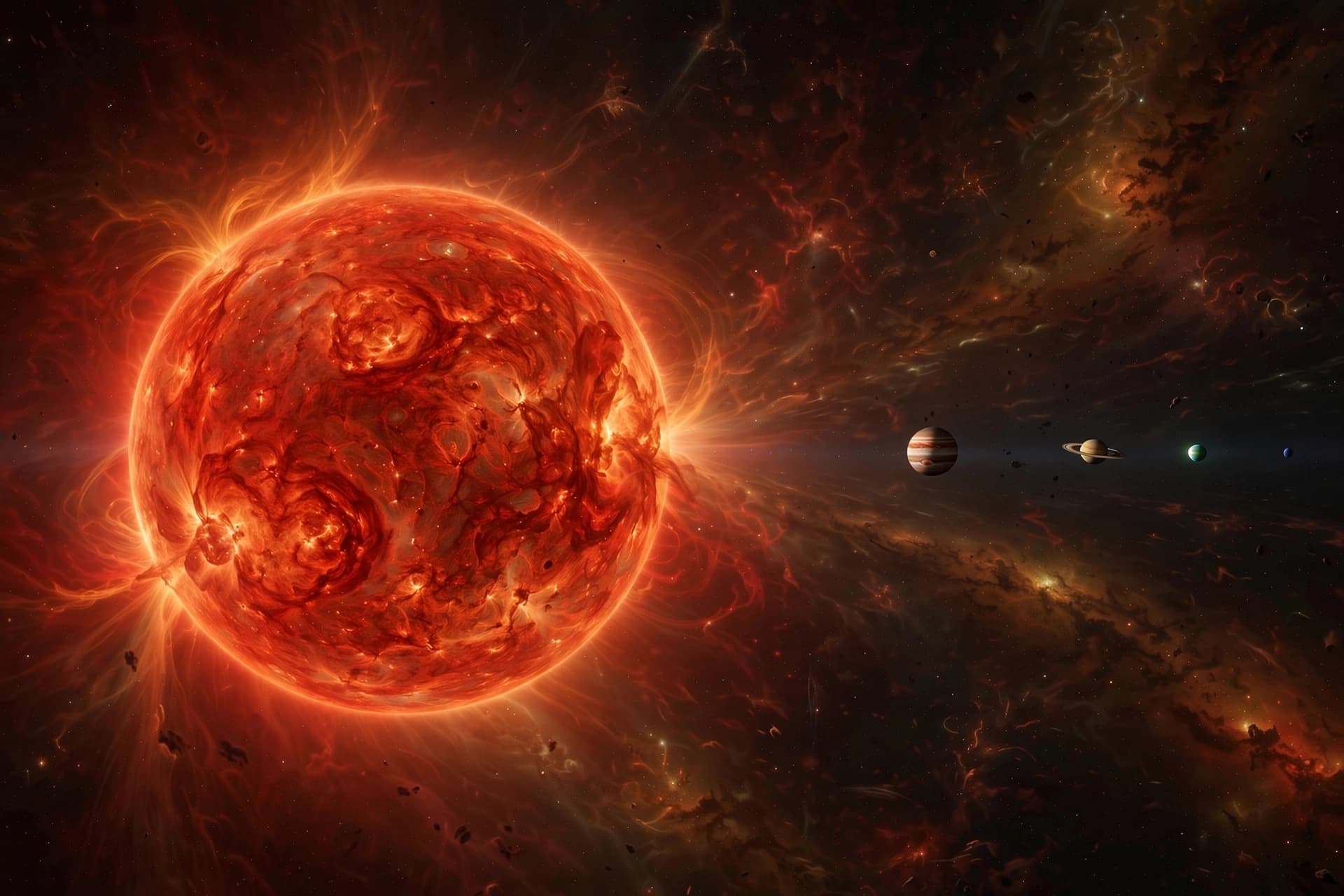
AI Image Disclaimer: The images associated with this article are AI-generated illustrations designed to represent the themes of exoplanet discovery and atmospheric science.
Sources: Smithsonian Magazine, Phys.org, NASA, ScienceDaily
Published by Banx Network. This article is part of the Banx decentralized media programme, powered by the BXE token on the XRP Ledger.