Sometimes the universe offers its discoveries quietly, hidden inside faint signals that travel across unimaginable distances. A distant comet drifts through the dark between stars, carrying with it a frozen memory of another planetary system. When its light finally reaches our instruments, what we see is not only a visitor but also a messenger — a small archive of chemistry written long before our own Sun was born.
Such a messenger has recently drawn the attention of astronomers around the world. The interstellar comet known as 3I/ATLAS, only the third confirmed visitor of its kind detected passing through our solar system, has revealed something unexpectedly rich within its icy makeup. Observations made using the Atacama Large Millimeter/submillimeter Array, or ALMA, suggest that the comet contains an unusually large amount of alcohol molecules drifting from its surface.
The discovery might sound almost playful at first glance, yet its meaning reaches much deeper into cosmic chemistry.
In astronomical terms, the alcohol detected is methanol, a simple organic molecule made of carbon, hydrogen, and oxygen. Methanol is common in space and often forms on the surfaces of icy dust grains within cold molecular clouds. When comets form, they gather these molecules, preserving them inside frozen layers that can remain unchanged for billions of years.
As comet 3I/ATLAS traveled closer to the Sun, gentle warming caused its icy surface to release gas into space, forming a glowing cloud known as a coma. Within that expanding halo, ALMA’s sensitive radio antennas were able to detect the spectral fingerprints of methanol molecules with remarkable clarity. What surprised researchers was not merely the presence of the molecule, but the sheer abundance measured in the comet’s emissions.
Compared with typical comets originating within our own solar system, 3I/ATLAS appears to release methanol at significantly higher levels. That contrast hints that the comet may have formed in a region of its home star system where chemical conditions favored the production or preservation of this compound.
In a sense, the comet behaves like a bottle carrying a sample from another cosmic ocean.
Interstellar visitors such as 3I/ATLAS are extraordinarily valuable to scientists because they formed around distant stars, under environments we cannot directly observe. When one briefly passes through our solar system, astronomers gain a fleeting opportunity to study material created in a completely different planetary nursery.
The first known interstellar object, detected in 2017, was the mysterious ʻOumuamua, whose elongated shape puzzled researchers. Two years later, the comet 2I/Borisov provided the first clear look at an interstellar comet releasing gas and dust. Now, with 3I/ATLAS, astronomers are beginning to examine the chemical complexity of such travelers in even greater detail.
The presence of abundant methanol also touches on a broader question that fascinates astrochemists: how organic molecules spread throughout the galaxy. Methanol itself is not life, of course, but it is part of the family of carbon-bearing molecules that can participate in more complex chemical reactions. Comets carrying such materials may help distribute organic ingredients across young planetary systems.
By observing the gases released by 3I/ATLAS, scientists are effectively sampling the chemistry of another stellar neighborhood. Each molecule detected — whether water, carbon monoxide, or methanol — becomes a clue about the physical conditions that existed where the comet first formed.
Even so, the moment of study is brief. Interstellar objects pass through the solar system only once, and their trajectories carry them quickly back into the depths of space. Astronomers must gather as much information as possible while the visitor remains visible to telescopes.
For now, the ALMA observations provide one of the clearest chemical portraits yet of an interstellar comet. The unusually strong methanol signature suggests that the building blocks of organic chemistry may be widespread across planetary systems, not unique to our own cosmic neighborhood.
As more powerful observatories come online in the coming years, scientists hope to detect additional interstellar travelers and compare their chemical compositions. Each new visitor could add another page to a growing story about how molecules — and perhaps the ingredients of life — circulate through the Milky Way.
In the meantime, comet 3I/ATLAS continues its quiet journey through our skies, carrying the frozen memory of a distant star system before eventually disappearing again into interstellar darkness.
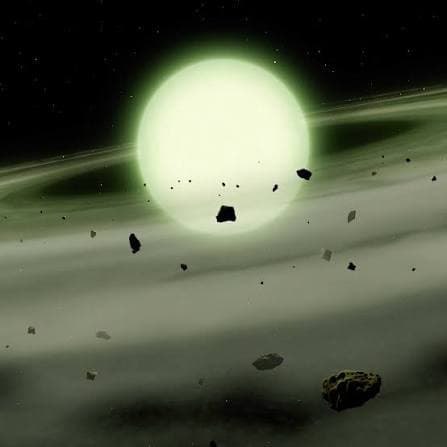
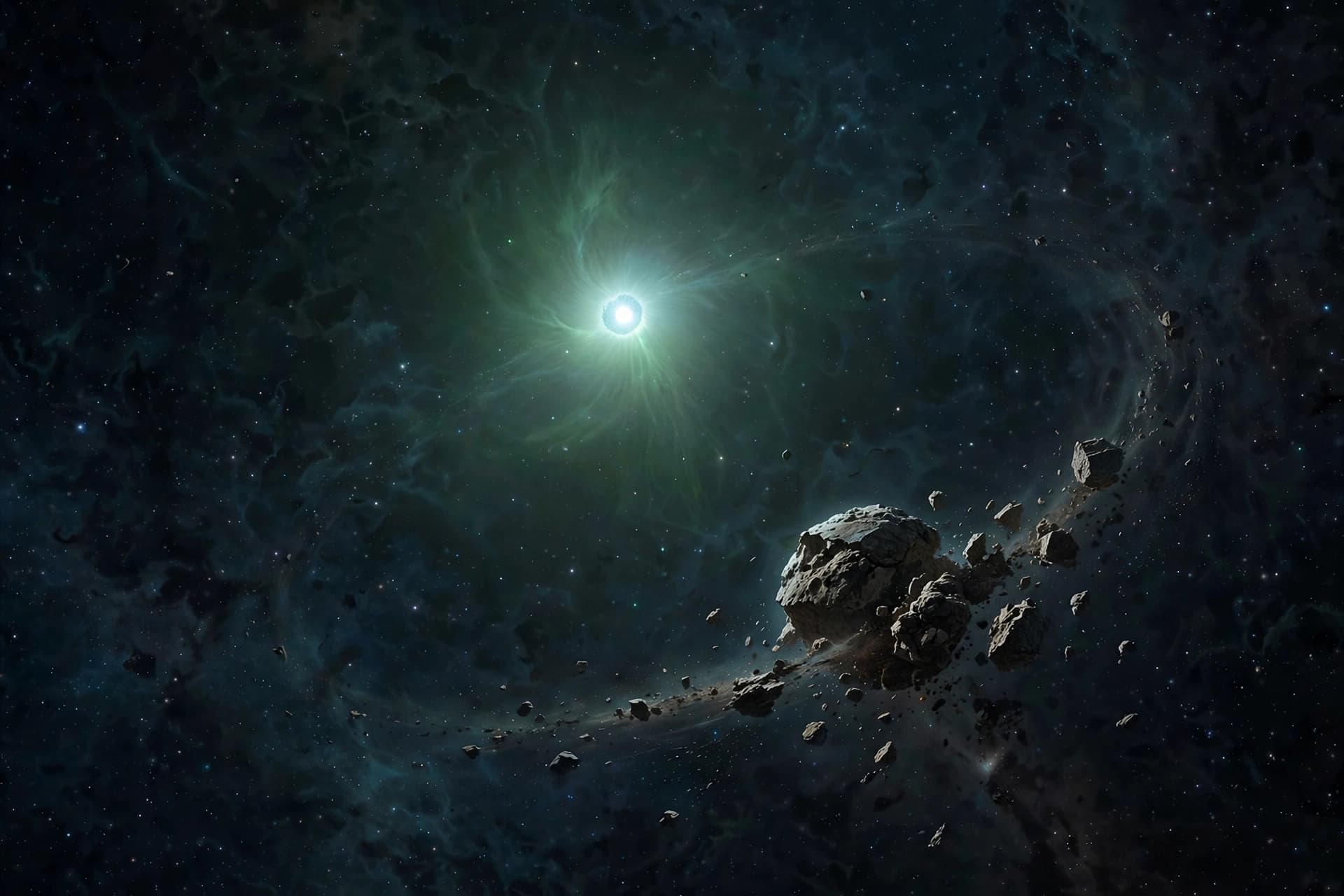
AI Image Disclaimer Images in this article are AI-generated illustrations, meant for concept only.
Source Check Credible sources covering this development exist.
European Southern Observatory (ESO) Space.com Phys.org Universe Today ScienceDaily
Published by Banx Network. This article is part of the Banx decentralized media programme, powered by the BXE token on the XRP Ledger.