There is a particular freedom that an electric scooter promises—the wind in your face, the city moving past at a speed that feels like flight, the sense that you are gliding through spaces that were never meant for you. For adults, that freedom is a choice. For children, it is often something else: a toy, a thrill, and increasingly, a source of injuries that doctors describe with a urgency that policy has been slow to match.
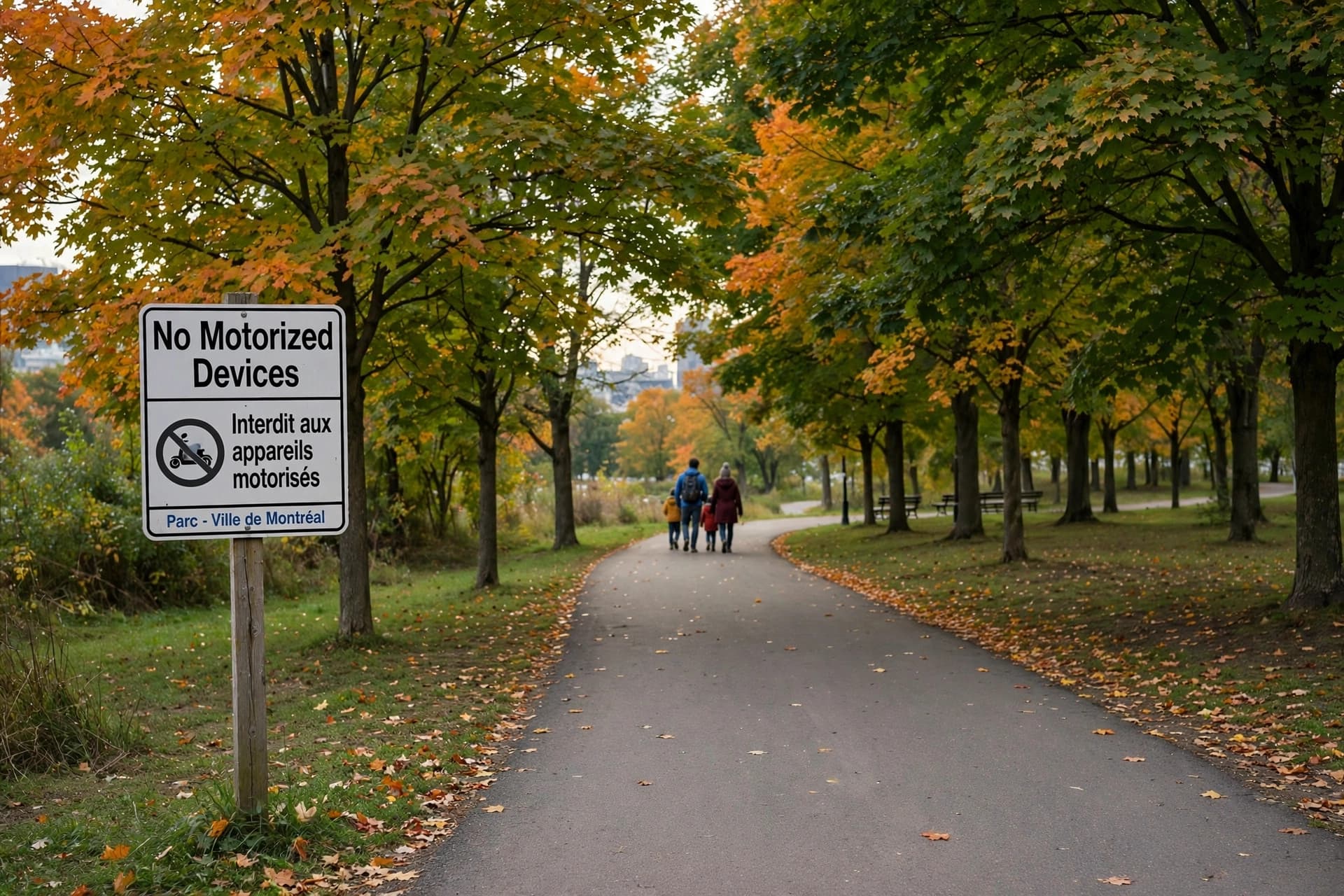
The Montreal borough of Saint-Laurent has adopted a new bylaw banning electric scooters and other motorized personal mobility devices in public areas under its jurisdiction, including city parks, trails, and sidewalks . The devices remain permitted on bike paths and on streets where the maximum speed limit is under 50 km/h . The bylaw was adopted after a series of incidents and near misses over the summer, as the popularity of the devices continues to grow.
Councillor Vana Nazarian framed the measure as a matter of protecting the vulnerable. "We're not banning them, but we want to make sure that with the speeds that these scooters have, they stay more on places where vulnerable populations won't be at risk," she told CBC . She noted that the borough is home to many young families and seniors who should be able to use parks and trails without fear of collision.
The data behind the decision is stark. Deborah Friedman, trauma director at the Montreal Children's Hospital, said the number of traumatic injuries related to e-scooters has increased 14-fold since the provincial pilot project began in 2023 . In 2025, there were about 80 cases for the entire year. So far this year, that number is already 112 . Close to 20 percent of cases require hospitalization, and the injuries include traumatic brain injuries, multiple facial fractures, dental trauma, complicated limb fractures, and abdominal trauma .
What concerns Friedman most is the age of the victims. Nearly 60 percent of the children presenting at the trauma center are under 14 years old . "That's a problem," she said . The provincial pilot allows anyone 14 and older to use the devices, but Friedman argues that younger children lack the judgment, skill, height, and control to navigate e-scooters safely. She is calling for the minimum age to be raised to 16 and for a Class 6D license—the same required for a moped—to be mandatory .
The borough's bylaw is a local response to a provincial framework that doctors say is insufficient. Quebec extended its e-scooter pilot project in July, even as physicians warned that the rules leave children at risk . A 25 km/h speed limit is in effect, with fines of $200 for exceeding it, but enforcement remains a challenge. Friedman commended Saint-Laurent for acting and encouraged other municipalities to follow suit, while emphasizing that provincial and federal action is still needed.
For the families of the children who have been injured, the policy debate is personal. "Each number that I mentioned is attached to a child, which is attached to a family, which is attached to a community," Friedman said . The bylaw in Saint-Laurent will not undo those injuries, but it may prevent the next ones. And in a season when e-scooters will be given as gifts, the question of who is allowed to ride them, and where, has never been more urgent.
AI Image Disclaimer: This article includes AI-generated imagery created for illustrative purposes only.
Sources: CBC News
Published by Banx Network. This article is part of the Banx decentralized media programme, powered by the BXE token on the XRP Ledger.