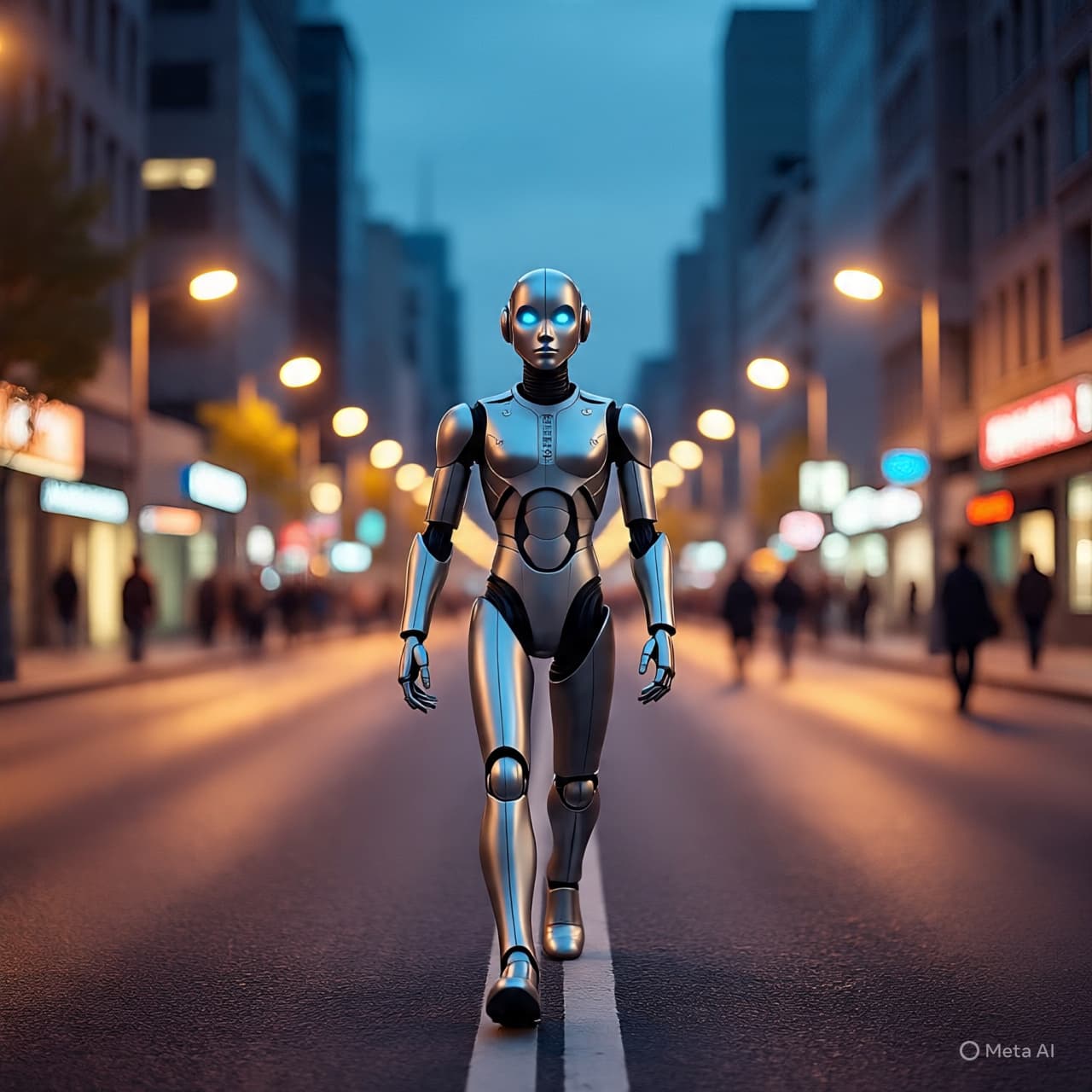
Under the glow of streetlights and the hum of night traffic, a robot took steps not just through concrete, but through history. Its footsteps marked a remarkable journey — from Suzhou to Shanghai — turning a technological milestone into a quietly poetic testament to human ambition, persistence, and the ever‑shrinking divide between man and machine.
A Chinese-made humanoid robot, the AgiBot A2, has officially claimed a new Guinness World Record after walking about 106.3 km (66 miles) non-stop over three days. The feat was certified by Guinness as the longest journey walked by a humanoid robot.
The journey began on the night of November 10 in Suzhou, a city of winding canals and historic gardens. The A2, about 169 cm tall, proceeded along highways, city streets, tiled pathways, bridges, and ramps, finally arriving at the Bund in Shanghai in the early hours of November 13. What makes this achievement even more striking is its endurance — the robot remained active the entire time, powered by a rapid hot-swap battery system that let it continue walking without long shutdowns.
Technically, it wasn’t just about walking: the A2 was navigating real-world urban scenarios. It used dual GPS modules, LiDAR, and infrared depth sensors to perceive its surroundings, obeying traffic signals, negotiating narrow sidewalks, and maintaining stability across varied terrain. According to Agibot, this isn't just a stunt — it's a demonstration of the maturity of their hardware and balance algorithms, as well as robotic endurance.
Guinness World Records now lists this as the record for “longest journey walked by a humanoid robot.” For Agibot, the A2’s walk could be more than a record — it may pave the way for “large-scale commercial deployment” of humanoid robots, particularly in roles that require reliability and autonomy on foot.
This is not just a robotics headline — it’s a signal. As A2 trudged mile after mile, it carried with it the hopes of a growing robotics industry: that humanoid machines can not only walk but persevere, learn, and operate in a human environment. The 66‑mile journey is more than a record; it's a step toward a future where robots don’t just exist in labs — they move among us.
AI Image Disclaimer: “Images are AI-generated illustrations meant for conceptual representation, not real photographs.”
Sources: Guinness World Records AFP / Geo.tv China.org.cn / Xinhua via China Daily
Published by Banx Network. This article is part of the Banx decentralized media programme, powered by the BXE token on the XRP Ledger.