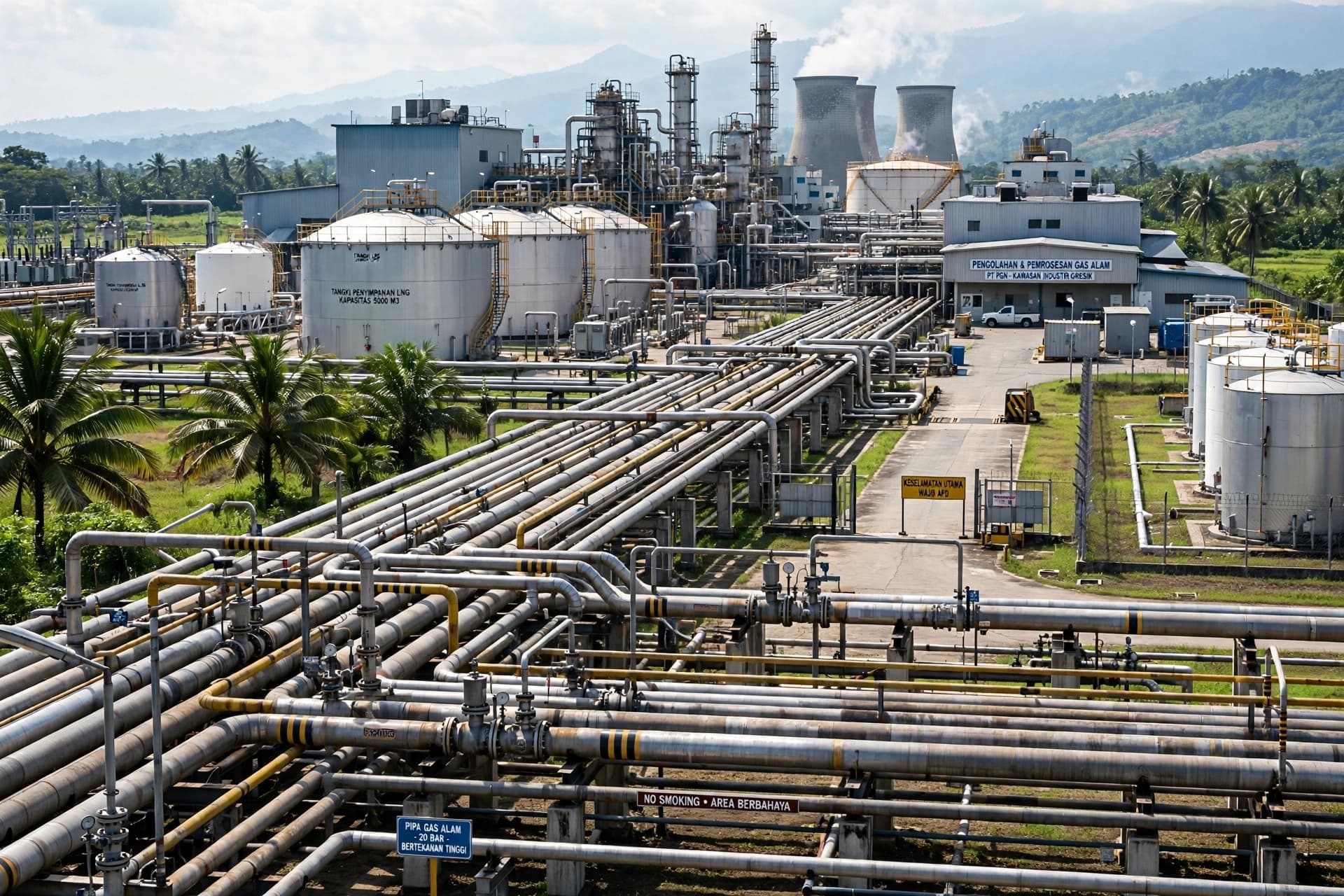
Inside a factory, energy is rarely seen as something separate from production. It moves through pipes, powers furnaces and keeps machines operating continuously. For industries that depend on natural gas, a disruption in that flow can quickly become a disruption in the production process itself.
That situation emerged in Indonesia during September, when industrial gas users reported reductions in supply from state gas utility PT Perusahaan Gas Negara. According to the Forum Industri Pengguna Gas Bumi, or FIPGB, deliveries were reduced to about 78% of the minimum contractual volume beginning September 14. (mediaindonesia.com)
The issue is particularly significant for industries such as ceramics, glass and silicates, where production processes can depend on furnaces operating continuously. Abruptly stopping such equipment can create operational problems and potentially damage expensive industrial assets.
Business groups said some manufacturers had already reduced production lines as a result of the constrained supply. The effects can extend beyond daily output because factories also need to manage delivery schedules, customer contracts and production planning. (kontan.co.id)
The situation also illustrates the importance of natural gas within Indonesia’s manufacturing system. Although the country is developing alternative energy sources, gas remains an important industrial fuel for processes that require continuous and controllable heat.
PGN has explained that the availability of gas from sources allocated for certain industrial customers can fluctuate because of natural declines in field production, maintenance activities and operational conditions. The company said it was coordinating with the Ministry of Energy and Mineral Resources, SKK Migas and suppliers to optimize available supply. (bisnis.com)
The situation also touches on the implementation of Indonesia’s Certain Natural Gas Price policy, known as HGBT. Industrial users have raised concerns that actual deliveries in some areas have fallen below allocated volumes.
For manufacturers, the issue is therefore not simply about price. The physical availability of gas is equally important. A factory can have a contract and production capacity, but continuous manufacturing still depends on whether the energy required to operate the machinery can arrive when it is needed.
Ceramic producers have been among the industries raising concerns. Bisnis.com reported that some ceramic factories had experienced production-capacity reductions of between 40% and 50% amid constrained gas supply. The industry also faces higher gas costs in some circumstances, adding another layer to the pressure on production economics. (bisnis.com)
The impact can travel through the industrial chain. Lower factory utilization means fewer products are available for downstream businesses, while companies may need to adjust production schedules or reconsider expansion plans.
For an industrial economy, reliable energy is part of the foundation beneath investment. Companies planning new factories or larger production capacity need confidence that electricity, gas, transportation and other essential inputs will remain available.
Indonesia’s September gas situation therefore offers a glimpse into the less visible side of manufacturing. Behind every finished tile, sheet of glass or industrial product is a continuous flow of energy that allows machines to keep working. When that flow becomes uncertain, the consequences can be felt long before they appear in the finished product.
IMAGE DISCLAIMER
These visuals are AI-generated conceptual illustrations and are not photographs of the actual gas-supply conditions or industrial facilities described.
SOURCES
Bisnis.com Media Indonesia Kontan PT Perusahaan Gas Negara
Published by Banx Network. This article is part of the Banx decentralized media programme, powered by the BXE token on the XRP Ledger.


.jpg&w=3840&q=75 "ASML Says It Sold Nothing in Europe in 2026, Calls on EU to Create Demand")