Medical knowledge can be separated from the doctors who need it by more than distance. Journal subscriptions, specialist availability, continuing education and reliable internet access can all influence how quickly clinicians find information. A new partnership between Anthropic and OpenEvidence is attempting to narrow some of those gaps through artificial intelligence.
The companies announced on September 22, 2026, that they were collaborating to provide AI-powered clinical decision support to physicians in low- and middle-income countries. The specialized version of OpenEvidence is being made available free to healthcare providers in about 100 countries.
OpenEvidence is designed to answer medical questions using peer-reviewed research and treatment guidelines. It is already available free to clinicians in the United States and Canada, while the new initiative focuses on regions where access to medical literature and specialist expertise can be more limited.
The initial country list includes Uganda, Angola, Sudan, Haiti and Mongolia, among others. The companies said the system will be adapted to different healthcare environments rather than simply deploying an identical version everywhere.
That regional adaptation is important because medical practice does not take place under identical conditions around the world. Disease patterns, diagnostic equipment, available treatments, healthcare infrastructure and clinical guidelines can differ substantially between countries.
Anthropic’s technology will provide the underlying AI support, while OpenEvidence will tailor the platform to local settings. Earlier in 2026, OpenEvidence had worked with healthcare organizations in Rwanda and Botswana on adapting its tools for local conditions.
The potential value of such a system lies partly in speed. A doctor with a smartphone may be able to search large amounts of medical information without having direct access to the libraries, databases or specialist networks available at major medical institutions.
OpenEvidence reported that U.S. clinicians consulted its platform 42 million times during August alone. The figure illustrates the scale at which AI-assisted medical information is already being incorporated into clinical workflows in some healthcare systems.
At the same time, access to an AI tool does not automatically establish that every recommendation will be appropriate for every patient or healthcare environment. Clinical decisions still depend on patient-specific information, local practice standards and professional judgment. The companies’ announcement describes the expansion of access, rather than establishing clinical effectiveness across every country where the service will be introduced.
The broader development reflects a growing question for healthcare systems: how can advanced AI tools be made useful in places where specialist knowledge and medical resources are limited, while still respecting differences in clinical practice and infrastructure?
For a physician working in a facility without extensive institutional subscriptions, the ability to reach evidence-based medical information through a smartphone could change how information is gathered. But the technology will ultimately need to operate alongside local healthcare systems, regulations and professional standards.
The Anthropic-OpenEvidence partnership therefore represents an early step in a wider experiment involving medicine and artificial intelligence. Its long-term significance will depend on how effectively the technology adapts to local realities and how clinicians incorporate it into the decisions that remain, ultimately, part of human medical practice.
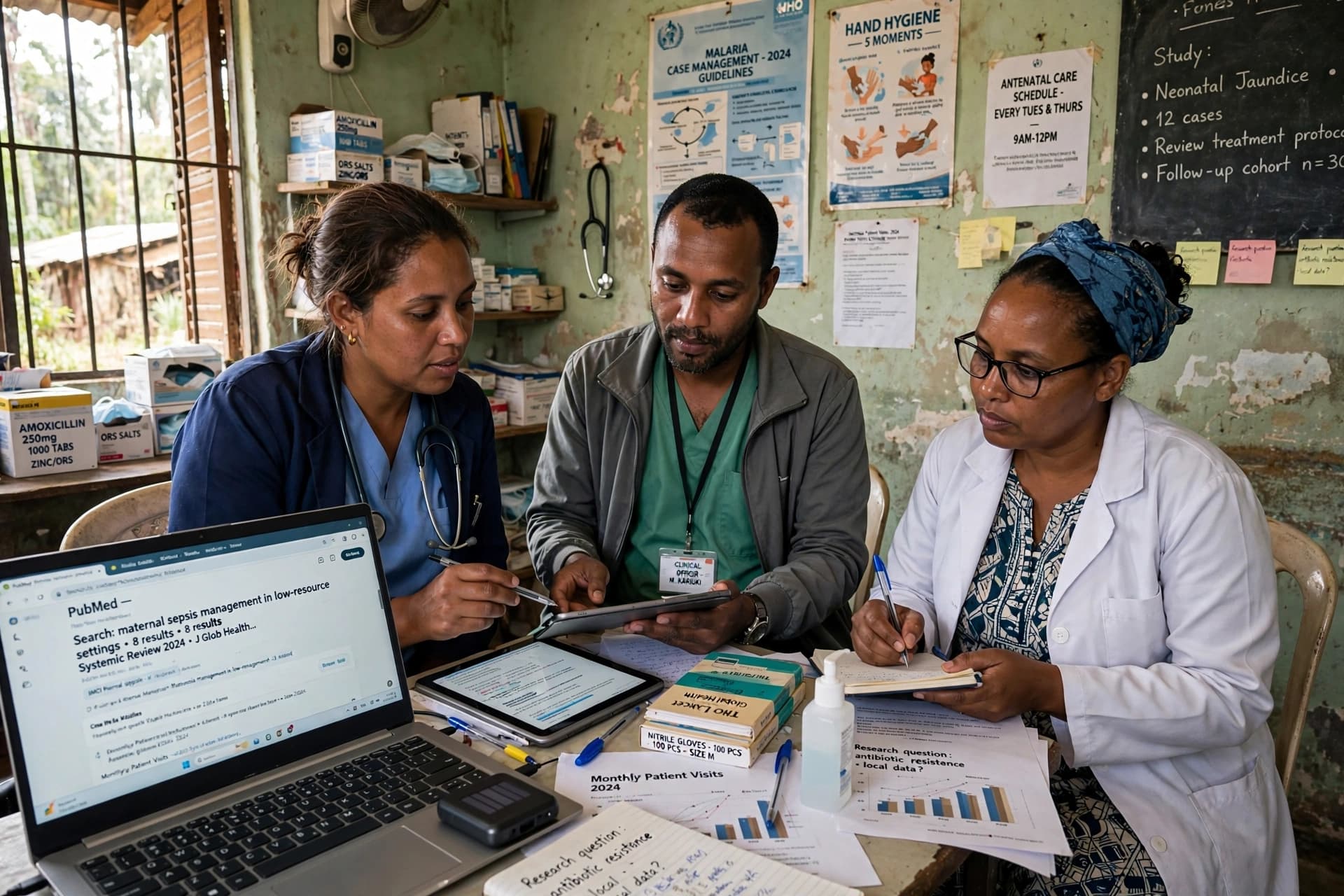
Image Disclaimer: These illustrations are conceptual visualizations created for editorial purposes and do not depict actual patients, physicians, hospitals or clinical decisions.
Sources: Reuters; CNA; OpenEvidence; Anthropic.
Published by Banx Network. This article is part of the Banx decentralized media programme, powered by the BXE token on the XRP Ledger.