Britain’s electricity network is approaching another stage of change as the country prepares to establish a new publicly owned body focused on the infrastructure that connects electricity producers and consumers.
The proposed Great British Grid is expected to operate within Great British Energy. Reuters reported that the initiative is intended to accelerate electricity-grid connections for businesses and renewable energy projects while increasing public involvement in network infrastructure.
The announcement comes as Britain attempts to expand renewable electricity generation while managing growing demand from industry and other parts of the economy. Connecting new power projects to the existing grid has become an increasingly important part of that transition.
A renewable energy project can be built only as quickly as the surrounding infrastructure allows. Wind farms, solar installations, industrial facilities and other electricity users all require connections to a network capable of moving power from where it is produced to where it is needed.
The proposed Great British Grid is intended to address some of those connection challenges. Reuters reported that the initiative would work to speed connections, improve competition and support the country’s wider reindustrialisation plans.
The government also set an objective of bringing Britain’s energy costs closer to those of other European countries over the next decade. The target connects electricity infrastructure with a broader economic question, because energy costs influence manufacturers, businesses and households.
Renewable energy adds another dimension. Britain has invested heavily in wind and other low-carbon generation, but expanding generation capacity does not automatically guarantee that electricity can be delivered efficiently. Network capacity must grow alongside generation.
The planned structure would therefore place greater attention on the grid itself. Instead of focusing only on generating more electricity, the infrastructure linking generation, storage, industry and consumers becomes part of the central challenge.
For businesses waiting for grid connections, delays can affect investment schedules. A factory or data center may have financing, land and equipment available but still be unable to operate at full capacity without sufficient electricity infrastructure.
The issue is also relevant to renewable developers. A project may have strong generation potential but face a long wait for a connection if the surrounding network is already congested. Faster and more coordinated connections could change the timeline for future projects.
The Great British Grid proposal therefore arrives at the intersection of energy policy, industrial development and infrastructure planning. Its practical impact will depend on how the new organization is structured, how responsibilities are divided and how quickly new network capacity can be delivered.
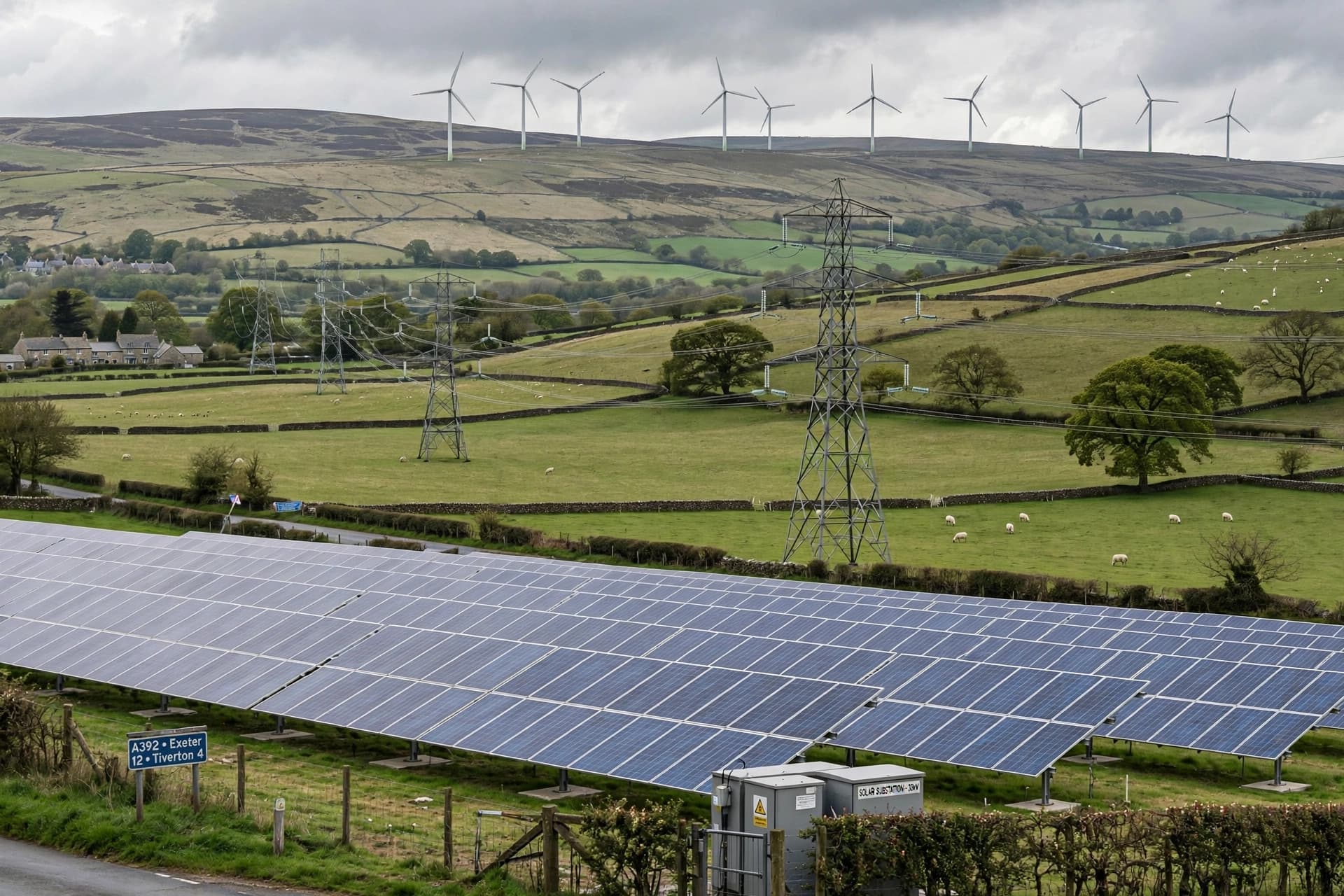
Britain’s electricity system is likely to become increasingly complex as more renewable generation, electrified transport, industry and digital infrastructure place new demands on the network. The wires and substations beneath the visible energy transition will become just as important as the turbines and solar panels that generate the electricity.
For now, the Great British Grid remains a planned institutional change rather than a completed transformation. But its purpose is clear: to make the network better suited to a country where electricity demand, renewable generation and industrial investment are all changing at the same time.
IMAGE DISCLAIMER
The illustrations are conceptual visualizations created for editorial presentation. They do not depict actual Great British Grid facilities or specific government infrastructure projects.
SOURCES
Reuters — “UK PM Burnham to launch state-owned GB Grid to cut energy costs, speed connections,” September 28, 2026.
Reuters — UK energy infrastructure coverage, September 2026.
Published by Banx Network. This article is part of the Banx decentralized media programme, powered by the BXE token on the XRP Ledger.