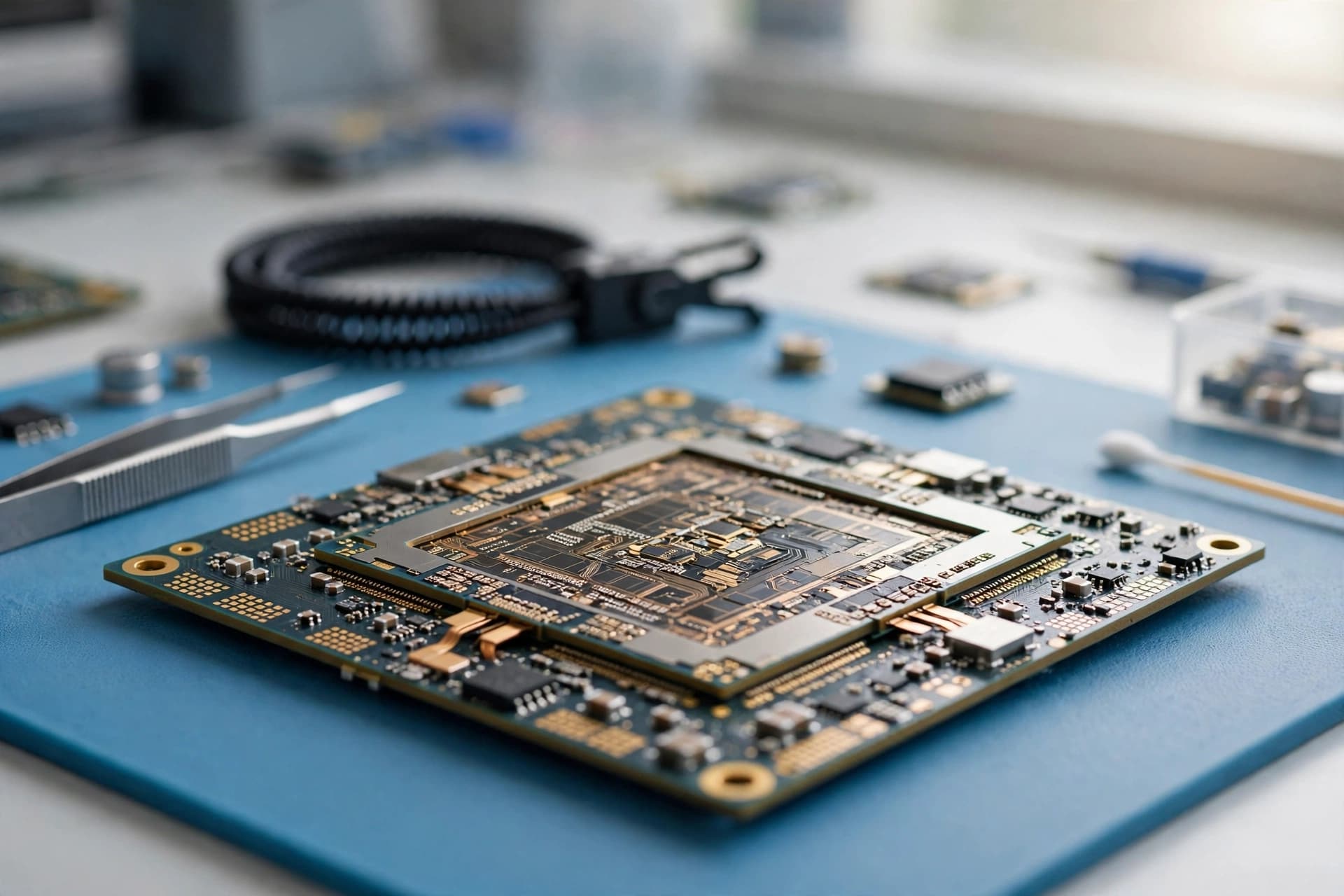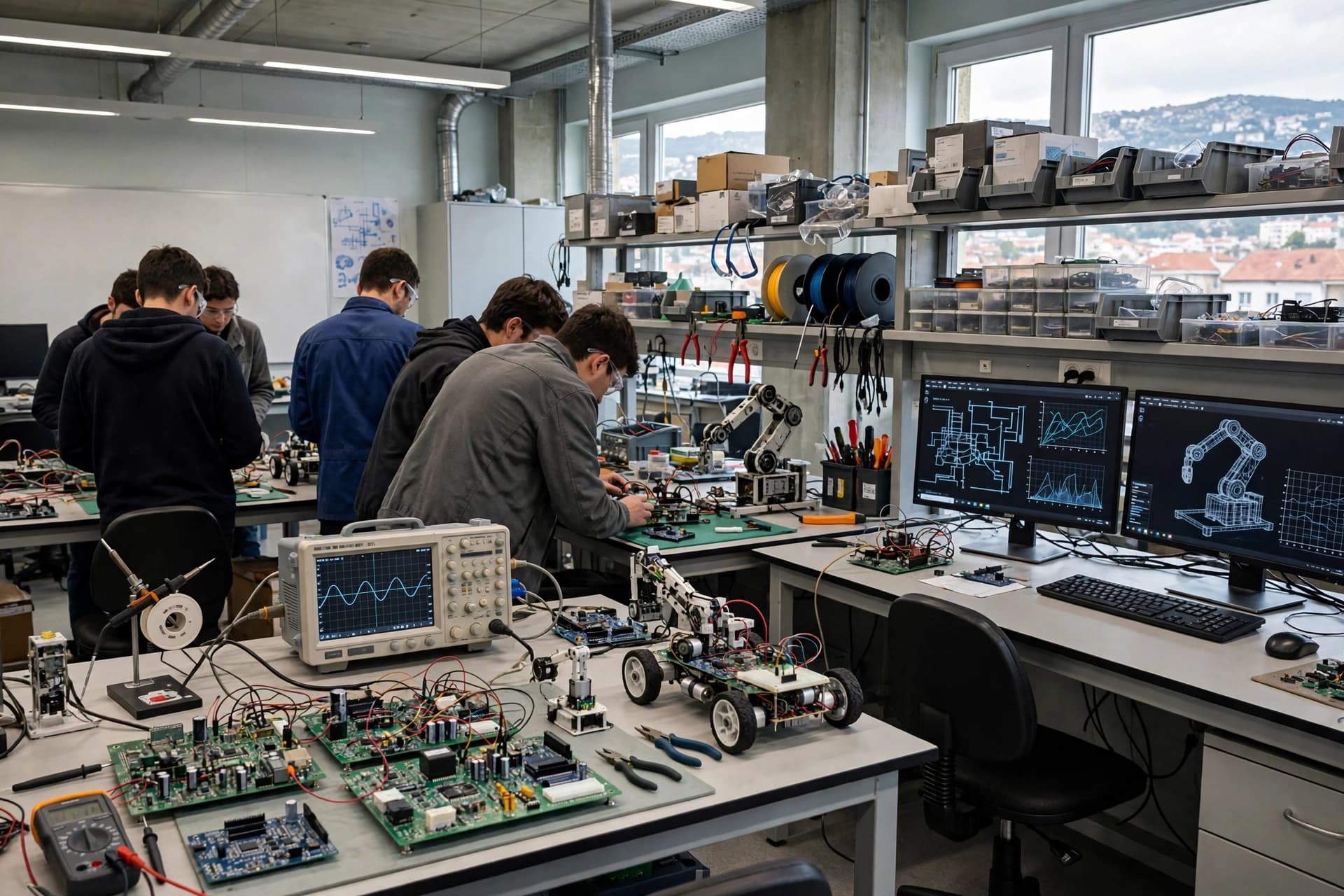
Innovation rarely begins with a ranking. It begins with a question asked in a university laboratory, an idea tested in a small workshop, or a business trying to solve a problem that has resisted familiar methods. Only later do these efforts become statistics, national comparisons, and measures of economic competitiveness. By then, the numbers offer a useful view of progress, but they cannot fully capture the people and experiments behind them.
Croatia ranked 46th among 139 economies in the 2026 Global Innovation Index published by the World Intellectual Property Organization, or WIPO. The country had ranked 40th in the 2025 edition, marking a decline of six places in the latest comparison. The index evaluates innovation through a broad collection of indicators covering the conditions that support innovation and the results those systems produce.
The ranking does not measure a country's scientific output alone. It considers a range of factors, including institutions, human capital, research, infrastructure, market conditions, business sophistication, and knowledge and technology outputs. The approach reflects the idea that innovation depends on an interconnected system: researchers need resources, businesses need ways to apply new knowledge, and institutions need to support the movement of ideas into practical use.
WIPO's 2026 profile placed Croatia 40th among the 54 economies classified in its high-income group and 28th among 39 European economies. These comparisons provide additional context for the national result. A country's position can look different depending on whether it is compared with the entire world, economies at similar income levels, or regional peers.
The index also distinguishes between innovation inputs and outputs. Inputs describe the conditions that may support innovation, such as research capacity and infrastructure. Outputs reflect the results produced by those conditions, including knowledge and technological activity. In the 2026 profile, Croatia ranked 44th for innovation inputs and 47th for innovation outputs, indicating that its position on the results side was weaker than its position on the supporting conditions.
Such a gap can be important because investment and capability do not automatically translate into new products, productive businesses, or commercially successful research. Laboratories may need stronger links with industry, while startups may need financing, skilled employees, or access to international markets. Universities and companies can also face different incentives, making collaboration difficult even when both sides have valuable expertise.
Infrastructure and human capital are among the areas that help shape this environment. Researchers need modern facilities, dependable digital networks, and opportunities to develop specialized skills. Businesses need access to talent and the ability to adopt technology without carrying costs that are beyond their means. Improvements in these areas may take years to influence economic outcomes, and their effects can vary across regions and industries.
The ranking must also be interpreted carefully. WIPO notes that data availability and changes in the index can influence year-to-year comparisons. A decline in position does not necessarily mean that every aspect of a country's innovation system has deteriorated. Rankings are relative: another economy's improvement, changes in indicators, or updated data can also affect where a country appears in the table.
For Croatia, the results provide a framework for asking more specific questions. Are research institutions generating knowledge that businesses can use? Can innovative smaller companies find financing and skilled workers? Do public institutions make it practical to test and adopt new technologies? These questions are more actionable than the ranking alone because they point toward areas where policies and organizations can make measurable changes.
The country has an opportunity to use the index as a diagnostic tool rather than simply a scorecard. Sustained investment in education, research, business development, and technology transfer could help strengthen the connections between ideas and economic outcomes. Progress would need to be assessed over time, with attention to the quality of research, business productivity, and the ability of new firms to grow.
Croatia's position in the 2026 index therefore tells a mixed story. The country remains part of a broad European innovation landscape, but the comparison suggests there is room to strengthen how knowledge and resources translate into results. Behind the ranking lies the longer task of making innovation a consistent part of economic and social development.
WIPO's 2026 Global Innovation Index placed Croatia 46th among 139 economies, compared with 40th in 2025. Its profile ranked Croatia 44th in innovation inputs and 47th in outputs, highlighting the distinction between the conditions supporting innovation and the results those conditions produce.
### Image Disclaimer
These AI-generated illustrations represent general innovation and research environments in Croatia. They are not photographs of specific institutions, companies, or projects evaluated by WIPO.
### Sources
• World Intellectual Property Organization
• Croatian Radiotelevision (HRT)
• Croatian State Intellectual Property Office
• Global Innovation Index
Published by Banx Network. This article is part of the Banx decentralized media programme, powered by the BXE token on the XRP Ledger.