
Key Highlights
- Malta achieved the highest employment rate in the EU at 83.6% in 2025.
- Italy recorded the lowest employment rate at 67.6%, indicating ongoing economic challenges.
- Significant disparities in employment rates highlight the need for targeted policy interventions across the EU.
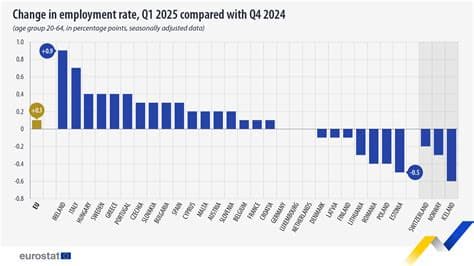
In a recent analysis of employment statistics for 2025, Malta emerged as the leader among EU countries with an impressive employment rate of 83.6%. This figure reflects the effectiveness of Malta's labor market policies and economic strategies that have fostered job creation and workforce participation. Following closely behind, the Netherlands reported an employment rate of 83.4%, while Czechia stood at 82.9%. These nations exemplify successful approaches to maintaining robust labor markets, contributing to high job availability and economic stability.
Conversely, the data reveals stark challenges faced by several EU countries, particularly in southern Europe. Italy posted the lowest employment rate at 67.6%, a figure that underscores persistent economic issues, especially in its southern regions where unemployment remains a significant concern. Romania followed with a rate of 69.0%, and Greece reported 71.0%. These lower employment rates highlight the ongoing struggles with labor market participation and economic recovery in these nations, raising questions about the effectiveness of current policies aimed at boosting employment.
The disparities in employment rates across the EU not only reflect varying economic conditions but also emphasize the need for targeted policy interventions. Countries with lower employment figures must consider strategies to improve job creation and enhance workforce participation. Policymakers are urged to analyze these statistics as benchmarks for measuring progress and identifying areas that require focused support. The European Union's commitment to reducing economic disparities among member states is crucial for fostering a more balanced and equitable labor market.
As the EU continues to navigate the complexities of its labor market, these employment statistics serve as a vital tool for understanding the current landscape and informing future policy decisions. The data from 2025 will likely influence discussions on sustainable growth and economic resilience across the region, as member states work collaboratively to address the challenges posed by unemployment and economic inequality.
Published by Banx Network. This article is part of the Banx decentralized media programme, powered by the BXE token on the XRP Ledger.



