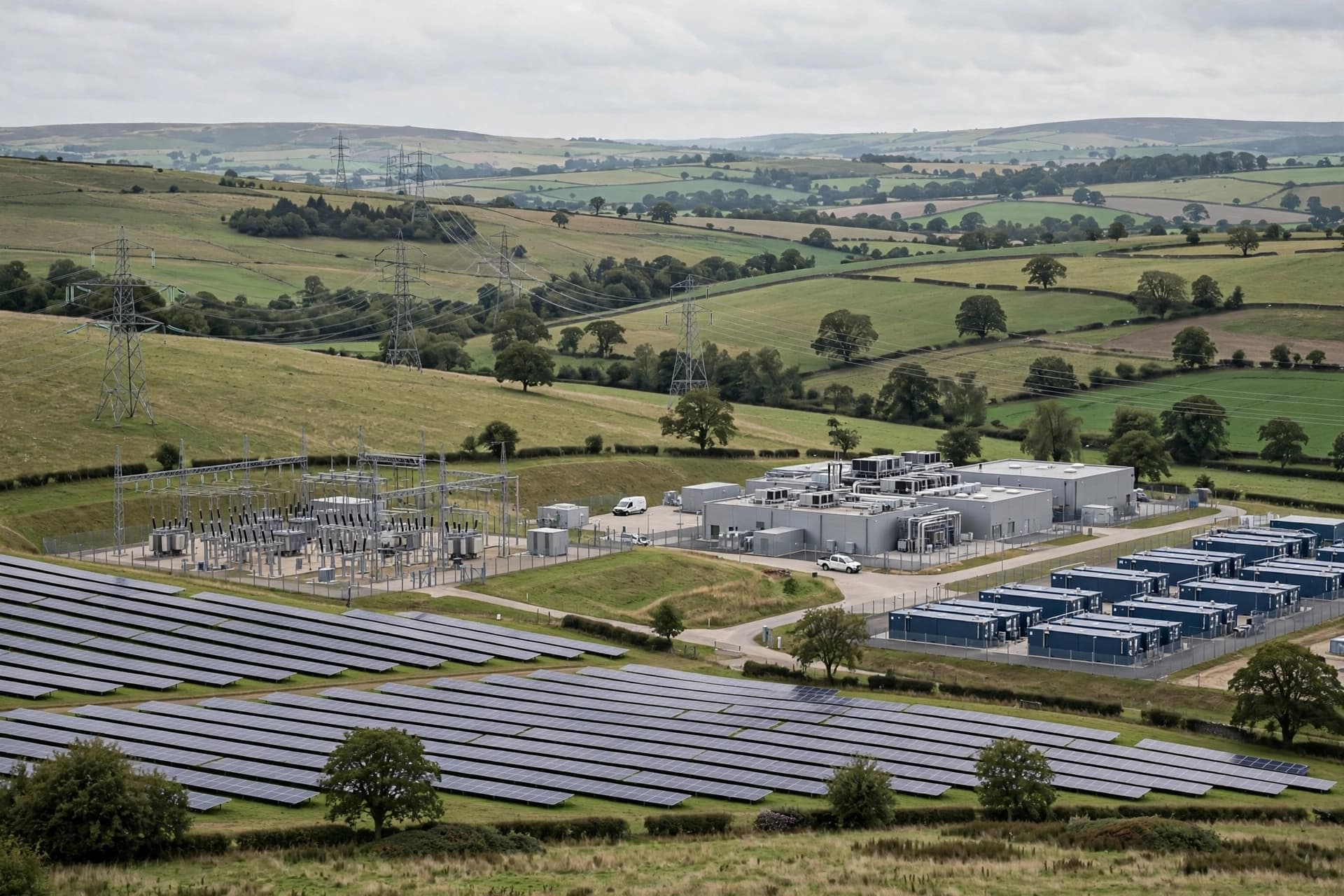
From a distance, the countryside can appear untouched by the enormous machinery of the digital world. Fields follow the contours of the land, roads connect small communities, and the horizon changes slowly with the seasons. Yet the systems that power artificial intelligence are increasingly reaching beyond established technology centers, bringing new investment proposals to places whose futures have traditionally been shaped by agriculture, industry, and local development.
In Croatia, the town of Topusko has become associated with an ambitious proposal to establish a large artificial intelligence data center. A report published by bne IntelliNews on October 8, 2026, said Sisak-Moslavina County had begun amending its spatial plan to accommodate the proposed Pantheon project. The development has been presented as a potential investment of €50 billion, although its eventual scale and schedule remain subject to further approvals.
The proposal envisages a computing facility with a planned capacity of one gigawatt. Such a project would require substantial infrastructure, including reliable electricity connections, cooling systems, telecommunications links, and suitable land. Its scale also means that planning decisions extend beyond the data center itself, touching the systems that would support its operation.
The county's planning work includes provisions for associated energy infrastructure. According to the report, these include a substation, transmission connections, solar power installations, and battery storage with a combined capacity exceeding 20 megawatts. The proposal also involves changes to the route of part of county road Ž3228 and the allocation of land outside an existing settlement construction zone.
For a community considering a project of this size, investment figures are only one part of the story. Large developments can generate construction activity, demand for local services, and new business opportunities. Their longer-term contribution, however, depends on how much employment remains once construction ends, how local suppliers participate, and whether public infrastructure can accommodate new demands.
Data centers also raise environmental questions that require detailed examination. Electricity consumption can be substantial, while cooling systems may place pressure on local water resources depending on their design. Construction can affect land use, habitats, and nearby communities. These impacts are not identical across projects, making site-specific assessments more informative than general assumptions about the industry.
Environmental review is therefore an important stage in the Croatian proposal. The October report said a strategic environmental assessment had been initiated, including consideration of potential effects on the ecological network. That process is intended to help identify risks, examine alternatives, and determine what safeguards may be necessary before a project advances.
The proposed timetable remains another important uncertainty. Construction was reportedly planned to begin in 2027, with operations targeted for early 2029. Those dates are projections rather than guarantees, and the pace of development could change as planning, environmental assessment, and other approvals proceed. Large infrastructure projects often evolve considerably between the announcement of an investment and the start of actual operations.
The project also reflects a wider European question about the geography of artificial intelligence. Computing capacity requires land, power, and connectivity, encouraging developers to consider locations beyond crowded metropolitan areas. At the same time, regional communities must weigh potential economic benefits against demands on natural resources and public infrastructure. The balance will depend on local circumstances and the final design of any approved development.
For Topusko, the proposal remains an opportunity under consideration rather than a completed transformation. Its eventual significance will depend on whether the necessary approvals are granted, how environmental concerns are addressed, and whether the investment proceeds on the proposed scale.
As reported on October 8, 2026, Sisak-Moslavina County had begun the spatial-planning process for the proposed Pantheon AI data center. Environmental assessment and additional development procedures remained part of the process, while the reported construction and operational dates were still planned targets.
### Image Disclaimer
The illustrations are AI-generated conceptual depictions of a proposed infrastructure development and do not show an approved or completed data center in Topusko.
### Sources
• bne IntelliNews
• Total Croatia News
• Lider
• Sisak-Moslavina County
• Croatian environmental authorities
Published by Banx Network. This article is part of the Banx decentralized media programme, powered by the BXE token on the XRP Ledger.