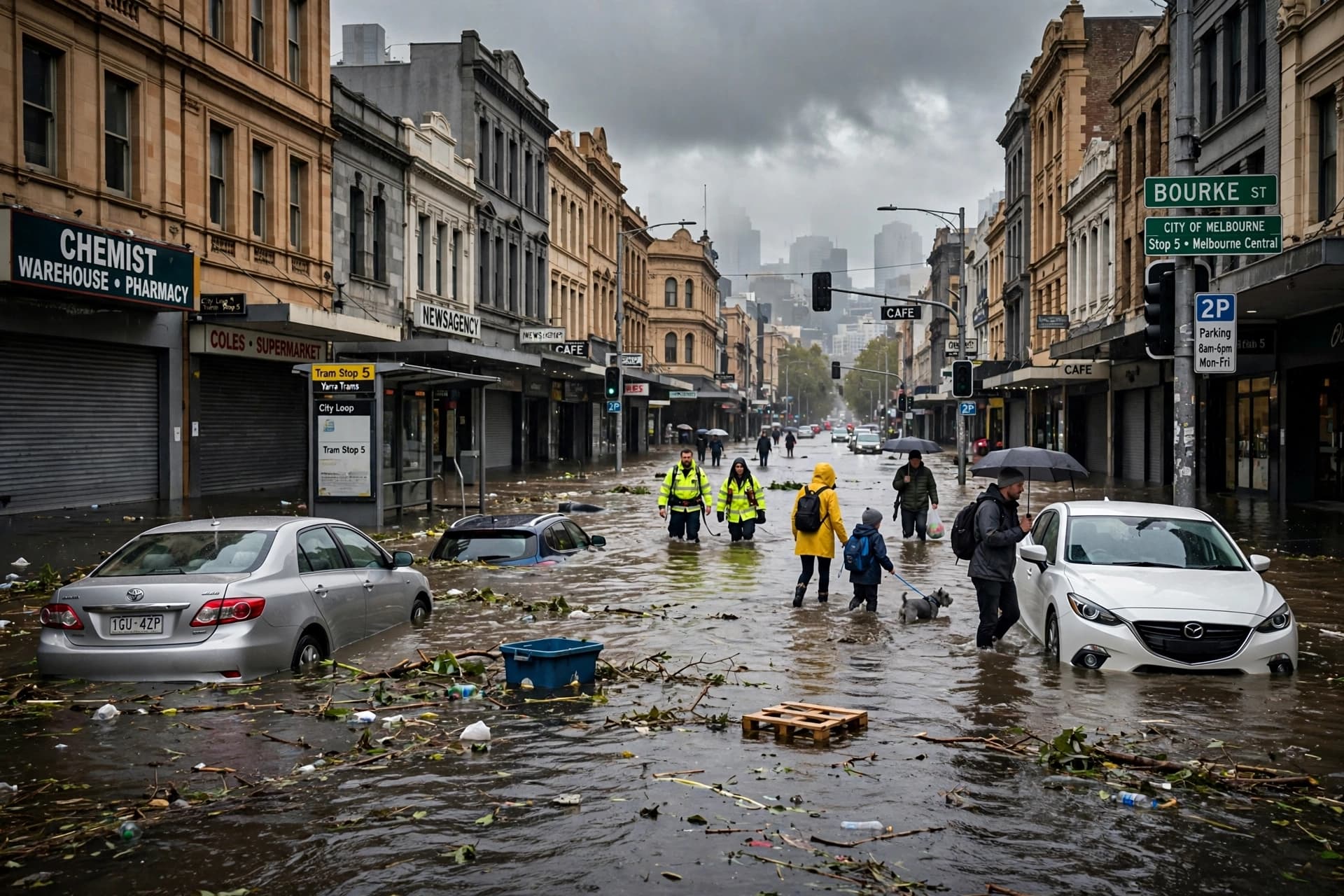
There is a particular arithmetic to a deluge—a way of measuring abundance that turns from blessing to burden, that transforms the ordinary act of rainfall into something that overwhelms drains, fills basements, and sends cars into water they cannot navigate. Across Victoria, that arithmetic has been in overdrive. Record-breaking spring rains have left the state soggy, with the wettest October start in years and more rain still to come.
The numbers tell a story of unusual intensity. Mount Cowley, a weather station about ten kilometers west of Lorne, recorded the highest rainfall total in the state: 192 millimeters in 72 hours to 9 a.m. Sunday . Melbourne recorded one of its wettest October days in several years, with up to 25 millimeters falling within a single hour on Thursday afternoon. The city's Olympic Park gauge logged 47.8 millimeters since 9 a.m. Thursday—the highest daily total since April 2024 .
The consequences were immediate and widespread. The State Emergency Service received more than 200 calls for help, including six water rescues of vehicles that had driven into floodwater. Nearly seventy calls were for building damage, fifty for flooding, and more than seventy for fallen trees. About 7,000 homes were without power overnight as overwhelmed drainage systems triggered flash flooding across metropolitan Melbourne . The worst-hit areas included Toorak, Pakenham, Reservoir, St Albans, and West Melbourne.
Bureau of Meteorology senior meteorologist David Crock described the situation with the measured language of a forecaster who has seen wet Octobers before, but not often like this. "A very wet day for the Melbourne metro area, particularly in the afternoon when that heavy rain moved through," he said. "That caused a lot of water all through the suburbs. Some flash flooding in the creeks and a lot of water under bridges" . Rainfall totals of 20 to 50 millimeters were recorded around Ballarat and Melbourne.
The rain was expected to continue through Friday and Saturday, with a flood watch current for catchments across much of central and eastern Victoria. Crock warned that "some spots in eastern Victoria could see 100 to 150mm over the next few days" . The system was expected to ease by Sunday as the low-pressure system moved offshore, with conditions improving from the west.
For a state that has experienced its share of dry seasons and water restrictions, the rain is, in one sense, a relief. Dams will fill. Soil moisture will replenish. But the abruptness of the deluge—the way it arrived in concentrated bursts, overwhelming systems designed for gentler weather—has made the start of October one of recovery and repair. The water will recede. The records will remain.
AI Image Disclaimer: The visual elements in this article were created using AI generation tools and are intended for illustrative purposes only.
Sources: Brisbane Times, The Canberra Times, Western Advocate, The Guardian
Published by Banx Network. This article is part of the Banx decentralized media programme, powered by the BXE token on the XRP Ledger.