
Key Highlights
- Twelve former FBI agents have filed a lawsuit against the Department of Justice.
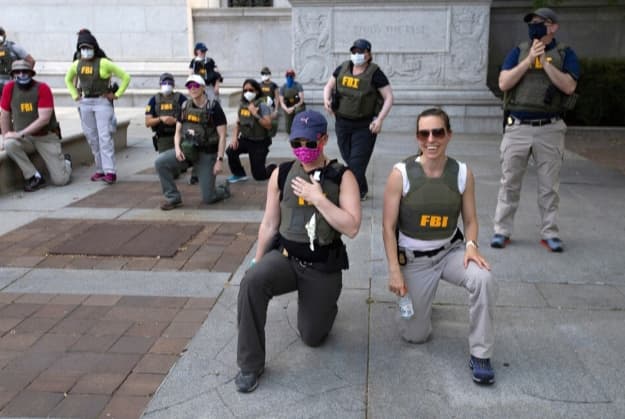
- The agents were fired for kneeling during racial justice protests.
- They claim their firings violate their First Amendment rights.
Twelve former FBI agents have initiated legal action against the Department of Justice following their controversial firings for kneeling during racial justice protests. The agents assert that their dismissals infringe upon their rights to free speech and expression, as they participated in a nationwide movement advocating for social justice and equality.
The lawsuit, filed in federal court, emphasizes the agents' intent to show solidarity with the Black Lives Matter movement. They argue that their kneeling was a peaceful protest against systemic racism and police brutality, a gesture misinterpreted as disrespectful towards law enforcement and the FBI as an institution. The agents contend that their actions were intended to promote awareness and dialogue around critical social issues.
Legal experts have noted that this case raises significant questions about the intersection of law enforcement conduct and civil rights. The agents' attorney argues that the First Amendment protects their right to engage in peaceful protests, regardless of their employment with the FBI. This legal battle could set a precedent for how government employees, particularly those in law enforcement, can express their views on political and social matters.
The FBI has defended its decision to terminate the agents, stating that their actions compromised the integrity of the bureau and could potentially erode public trust in law enforcement. The agency maintains that adherence to its policies is essential for maintaining professionalism and accountability within its ranks.
As the case progresses, it serves as a crucial test of free speech rights within government employment, particularly in the context of ongoing discussions about racial justice in America. The outcome of this lawsuit may not only affect the plaintiffs but could also influence broader policies regarding how law enforcement personnel engage in political discourse.
In addition to seeking reinstatement, the agents are pursuing compensation for lost wages and damages related to emotional distress caused by their abrupt termination. This case is drawing attention amid a larger conversation about police reforms and accountability, marking a pivotal moment in both the legal and social landscape of the United States.
Published by Banx Network. This article is part of the Banx decentralized media programme, powered by the BXE token on the XRP Ledger.



