
Key Highlights
- Argentina's solar capacity is set to exceed 800MW by 2026.
- New battery storage systems are stabilizing the national grid.
- The Puna region is becoming a key player in renewable energy.
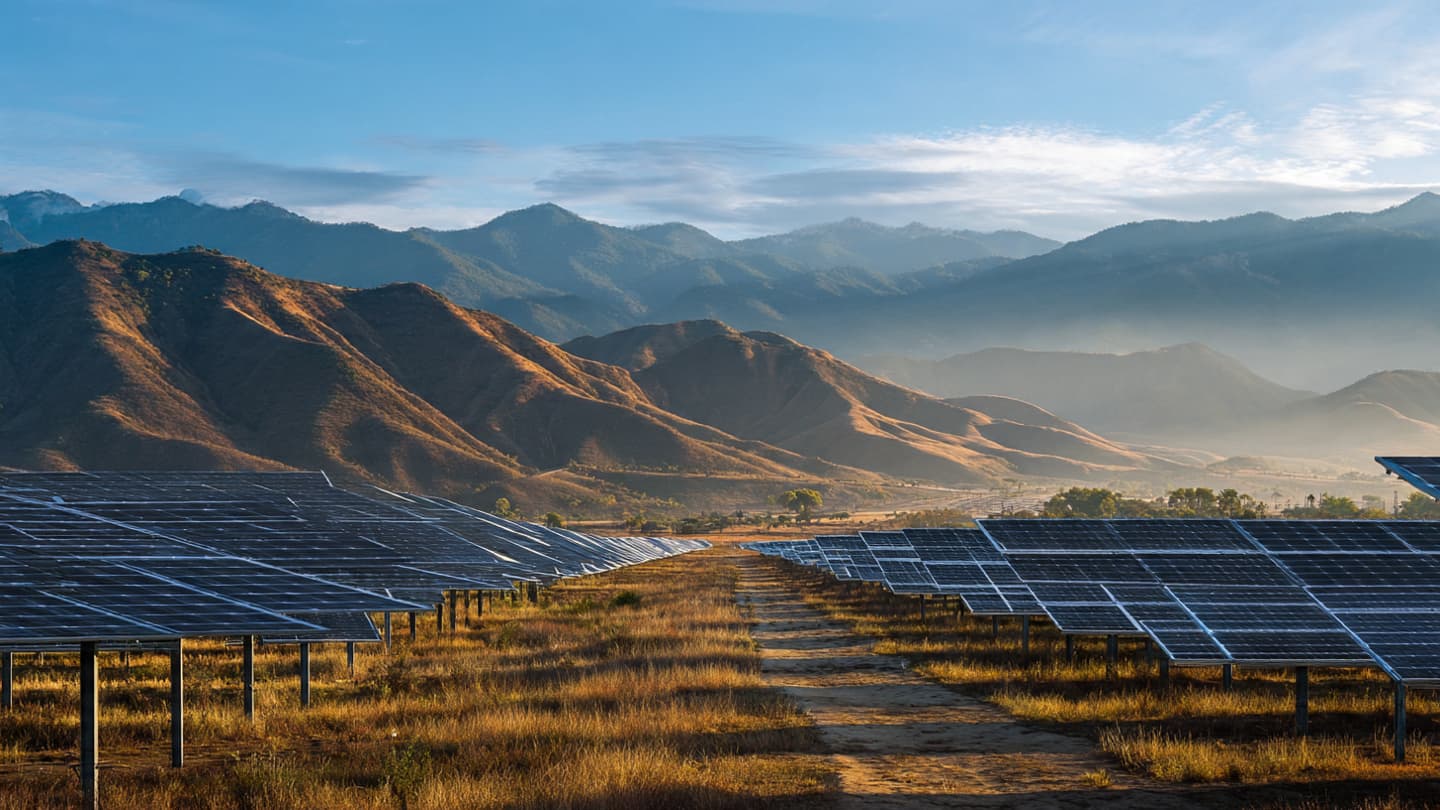
In the high, ultraviolet intensity of the Argentine Puna, where the air is so dry it crackles and the sun feels close enough to touch, a new kind of harvest is being gathered. This is the region of Jujuy and Salta, a landscape of vast, white salt flats and ancient, silent volcanoes. Here, thousands of hectares are being covered by the blue-black geometry of solar panels, forming a mirror to the sky that is transforming the most remote corner of the country into a vital powerhouse. It is a world of shimmering surfaces and silent energy, where the extreme conditions of the altitude are being converted into the steady, digital pulse of the nation.
The rapid expansion of solar infrastructure in the Argentine north is a narrative of atmospheric capture. It is an act of engineering that seeks to utilize some of the highest solar radiation levels on the planet to fuel a modern economy. The motion of the project is a massive, technological accumulation—a deployment of hundreds of thousands of photovoltaic cells and, increasingly, massive battery storage systems. It is a story of a nation realizing that its most "barren" landscapes are, in fact, its most abundant, provided it can capture the light before it hits the dust.
There is a reflective grace in the sight of the solar arrays stretching toward the horizon, their surfaces glinting like the scales of a vast, technological serpent. To the communities of the high Puna, these projects are a source of clean energy and a gateway to a new kind of industrial stability. This is a narrative of modernization—a move toward a decentralized and resilient grid. The desert is no longer just a space of passage; it is the foundation of a "solar pipeline" that stretches hundreds of miles to the industrial hubs of the center.
Factual reports from the Argentine energy market in 2026 indicate a surge in new solar and battery storage capacity, with over 800MW of projects currently in the pipeline. Companies are increasingly integrating Battery Energy Storage Systems (BESS) to stabilize the national interconnected system (SADI), ensuring that the power generated under the desert sun can be used during the peak evening hours in Buenos Aires. It is a clinical effort to reduce the country’s reliance on thermal generation and to meet the growing demand for "firm" renewable power in a volatile global energy landscape.
The atmosphere at the solar parks is one of silent, high-tech intensity. The only sound is the occasional whine of the tracking motors as the panels tilt to follow the sun’s path across the sky. It is a world of precision and light, where the human desire for sustainability is etched into the rugged geography of the Andes. The engineers move between the rows with tablets and sensors, monitoring the flow of electrons that are being harvested from the thin air, participating in a quiet revolution that is changing the color of the Argentine energy matrix.
Metaphorically, the solar grid is a mirror reflecting the nation’s desire for a more transparent and renewable future. It shows a society that is learning to value the invisible and the infinite over the finite and the extracted. The transmission lines that lead away from the Puna are silver threads that connect the silence of the mountains to the noise of the city, creating a space where the sun of the north becomes the light of the south. It is a reminder that the most powerful solutions are often the ones that have been staring at us from above.
As the sun sets over the Salinas Grandes, casting a long, golden light over the dark panels and the glowing white salt, the significance of the solar boom is clear. The Argentine north is no longer a peripheral frontier; it is the center of the energy transition. The geometry of the solar grid is a sign that the country has found a way to bridge the gap between the earth and the sky—a voice that speaks of resilience, innovation, and a deep, enduring connection to the light.
Argentina's renewable energy sector has reached a new milestone in 2026, with several large-scale solar-plus-storage projects entering operation in the northern provinces. These facilities, utilizing advanced battery technology to overcome intermittency, are now contributing a significant share of the national power supply. The expansion is supported by new regulatory frameworks designed to attract investment in long-term energy storage and grid modernization.
Published by Banx Network. This article is part of the Banx decentralized media programme, powered by the BXE token on the XRP Ledger.



