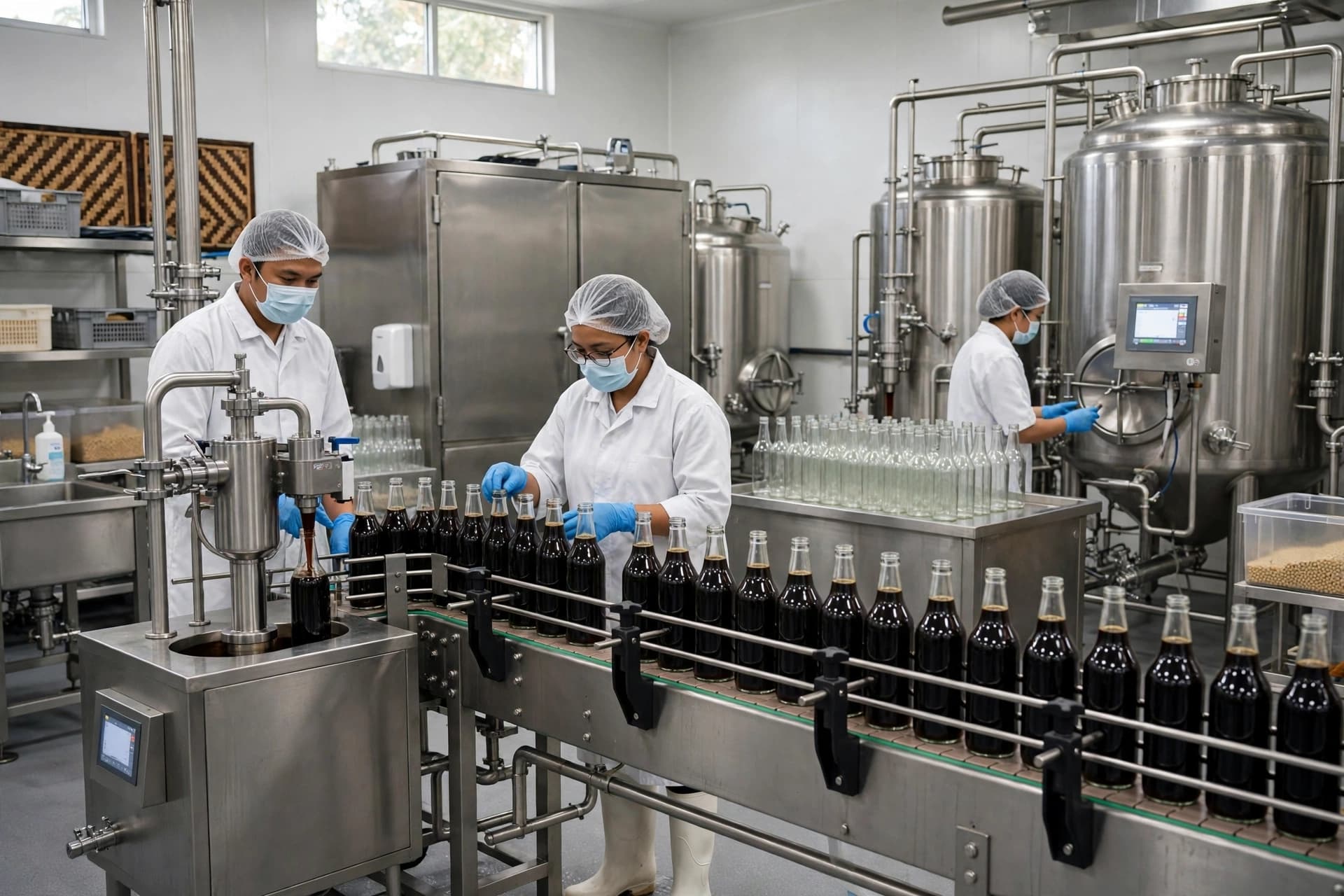
Some products travel quietly. They do not arrive with the spectacle of new machinery or the scale of major infrastructure projects. They sit on supermarket shelves, appear in restaurant kitchens, and become part of meals prepared far from the places where they were made. Soy sauce is one such product, familiar in Indonesian cooking and increasingly connected to the movement of food across international borders.
Indonesia's Ministry of Trade reported that national soy sauce exports reached US$18.81 million between January and August 2026. The figure was announced by Deden Mohammad Fajar Shiddiq, acting director for the development of service exports and creative products, during the opening of the Bango Food Festival in Jakarta on October 24. The ministry said the export value was equivalent to approximately Rp340.345 billion.
Australia was the largest destination among the markets identified in the announcement, receiving approximately US$3.77 million worth of Indonesian soy sauce. Malaysia followed with about US$3.3 million, while Saudi Arabia accounted for US$1.74 million. The United States received approximately US$1.5 million, and the Netherlands around US$1.2 million. These figures illustrate how a product closely associated with regional food traditions can find customers across several continents.
The destinations also point to different kinds of market opportunities. Nearby Southeast Asian countries have culinary traditions that already make soy-based seasonings familiar to many consumers. Other markets may offer demand through Asian grocery stores, restaurants, specialty food distributors, and households interested in ingredients from abroad. Export growth, however, depends on more than familiarity with a product; businesses must also meet local requirements for labeling, food safety, packaging, and distribution.
For producers, entering an overseas market can involve a long chain of practical decisions. Products must be consistent from one batch to another, packaging must withstand transport, and shipments need to arrive on schedule. Importers may also require documentation covering ingredients, production standards, and shelf life. These details rarely appear on a bottle's label, yet they help determine whether a product can establish a reliable presence abroad.
Soy sauce also connects commercial activity with food culture. Its role varies across households and cuisines, from marinades and dipping sauces to cooking bases and table condiments. Indonesian producers operate within a diverse domestic food landscape, where traditional flavors coexist with changing consumer habits and modern manufacturing. Exporting these products can introduce familiar tastes to new customers while creating opportunities for local businesses.
The reported export value provides a useful snapshot, but it does not by itself establish whether shipments increased compared with the same period in the previous year. Nor does the total reveal how much revenue reached individual manufacturers, farmers, or suppliers. A fuller picture would require comparisons over time and additional information about production costs, company participation, and the distribution of export earnings.
Even so, the data show that soy sauce has a measurable place in Indonesia's processed-food trade. The presence of markets in Australia, Malaysia, Saudi Arabia, the United States, and the Netherlands indicates that demand extends beyond a single region. Maintaining that reach will depend on quality, pricing, dependable supply, and the ability of exporters to respond to different consumer preferences.
For Indonesian food producers, the next stage is not simply about sending more bottles abroad. It is about building lasting commercial relationships, understanding local markets, and ensuring that products can compete consistently on quality and value. Those everyday conditions often shape export performance more than any single announcement.
Indonesia's Ministry of Trade reported soy sauce exports worth US$18.81 million for January–August 2026. Australia was the largest destination among the markets listed, followed by Malaysia, Saudi Arabia, the United States, and the Netherlands, according to the ministry's announcement on October 24.
### Image Disclaimer
These AI-generated illustrations are conceptual depictions of Indonesian soy sauce production and export activity. They are not photographs of specific factories, brands, or actual shipments.
### Sources
• ANTARA News
• Indonesian Ministry of Trade
• Bango Food Festival
### Illustration Prompts
Published by Banx Network. This article is part of the Banx decentralized media programme, powered by the BXE token on the XRP Ledger.