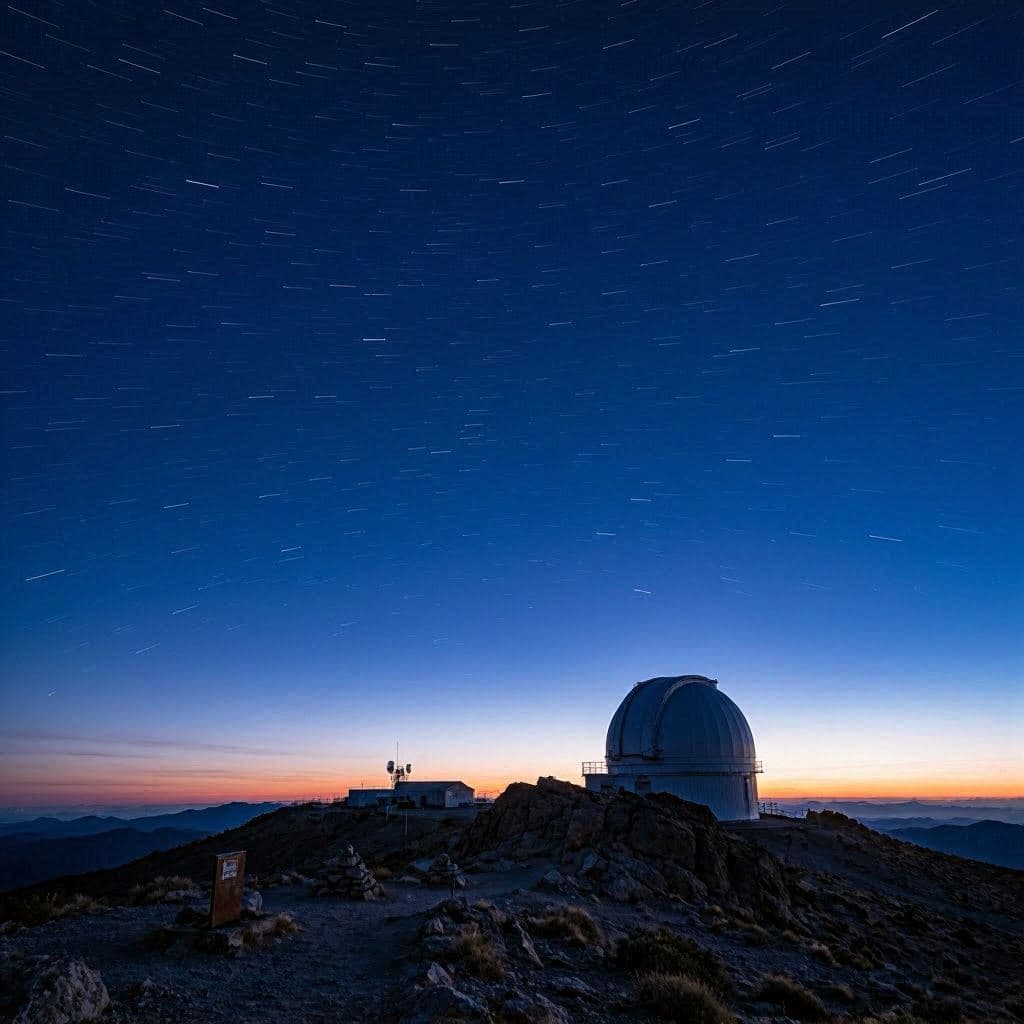
High atop Chile’s Cerro Pachón, where the sky is deep and clear as polished obsidian, a new instrument begins its patient, sweeping work—like opening a vast, unwritten diary of the cosmos. The Vera C. Rubin Observatory’s LSST Camera, recognized as the largest digital camera constructed to date, has officially started its 10‑year Legacy Survey of Space and Time . Roughly the size of a small sport‑utility vehicle and weighing nearly 3 tons, this camera holds more than 3 200 megapixels—enough resolution that one full‑frame image would require about 400 ultra‑high‑definition screens to display fully . Its three lenses include the largest astronomical camera lens ever fabricated, engineered to gather faint starlight precisely across a wide field of view. For a decade, night after night, the system will scan the entire southern sky repeatedly—imaging each region roughly 800 times—creating what amounts to a continuous, high‑definition motion picture of the universe . It pairs with an innovative 8.4‑meter telescope mirror that combines primary and tertiary surfaces into one piece, letting the instrument shift rapidly between targets in mere seconds . The scientific goals stretch across the deepest puzzles we know: mapping the distribution and behavior of dark matter and dark energy, which together govern cosmic expansion and structure; tracking millions of asteroids, comets, and variable stars; and catching fleeting events like supernovae or gravitational‑wave counterparts before they fade . Rubin alone is expected to discover millions of new asteroids within its first two years—surpassing the global total found by all other observatories combined in typical years . Built over two decades through cooperation between the U.S. Department of Energy, National Science Foundation, and international partners, the camera represents a milestone in both optical engineering and data science . Sensors are kept at roughly ‑100 °C to suppress electronic noise, and filters can be swapped automatically in under two minutes for multi‑color imaging . The volume of data will be immense—roughly 20 terabytes per night—flowing from mountain top to processing centers worldwide, where algorithms and human researchers together decode patterns hidden in the flood of light . This shared archive will remain open to the whole scientific community, encouraging discoveries beyond what planners now imagine . Named for astronomer Vera C. Rubin, whose work laid the strongest early evidence for dark matter, the observatory honors a legacy of curiosity and careful measurement . It turns the sky from a static backdrop into a dynamic, living record, accessible in unprecedented detail. Now in operation, the survey will not merely take snapshots but will build a rich, evolving portrait—one that promises to rewrite chapters of how we understand where we sit within the greater cosmos . AI Image Disclaimer: Generated visuals are artistic interpretations and not actual astronomical imagery captured by the Rubin camera. Sources: Rubin Observatory, SLAC National Accelerator Laboratory, NOIRLab, Yukawa Institute for Theoretical Physics
Published by Banx Network. This article is part of the Banx decentralized media programme, powered by the BXE token on the XRP Ledger.