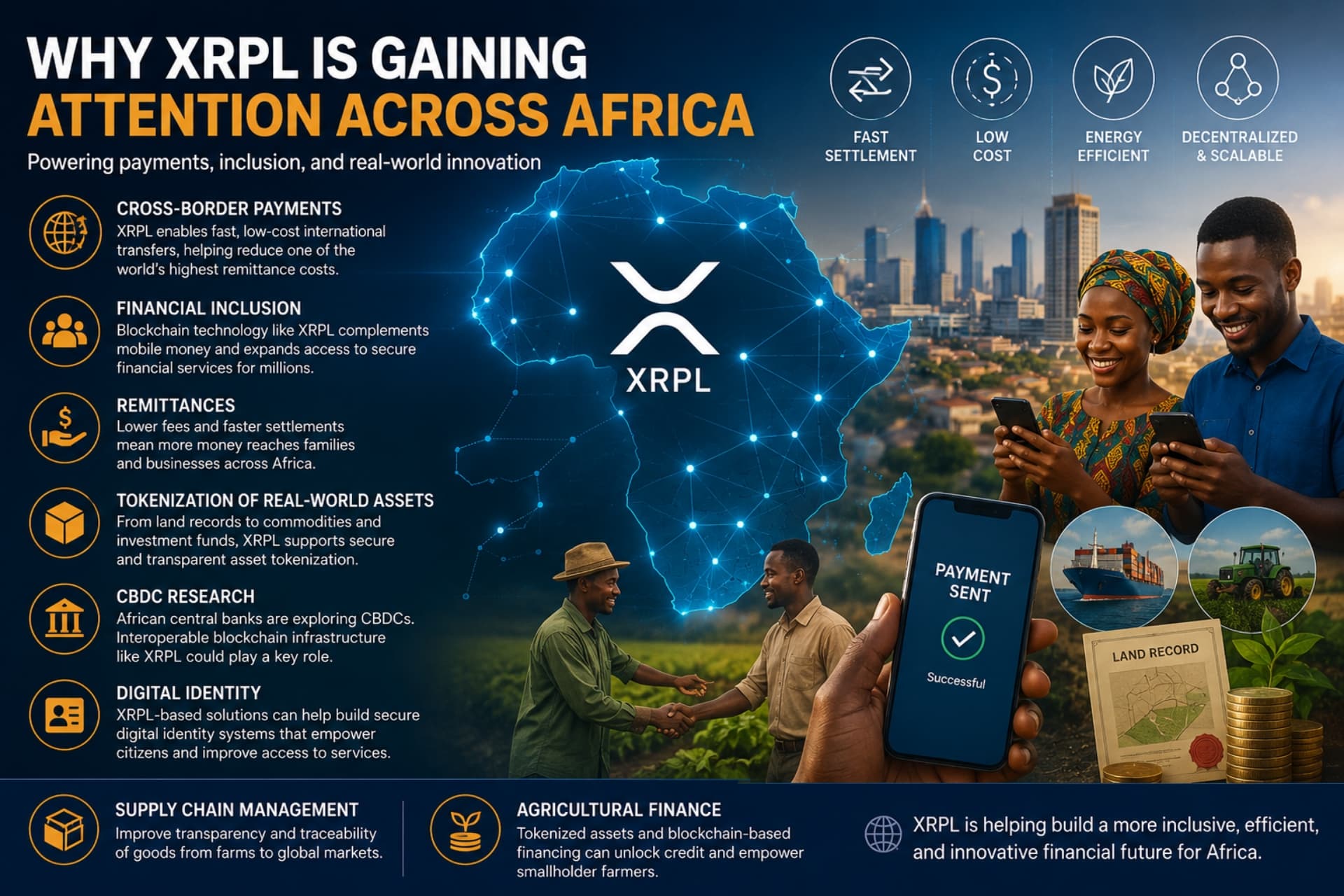
Why XRPL Is Gaining Attention Across Africa
Cross-Border Payments Africa's economies are increasingly interconnected through trade, migration, and regional integration. However, cross-border payments remain among the most expensive globally, with remittance costs often exceeding international targets established by the United Nations. XRPL's fast settlement and low transaction costs offer an alternative infrastructure capable of supporting more efficient international transfers. While widespread implementation is still developing, the technology has attracted interest from fintech companies exploring faster payment corridors. Financial Inclusion According to international financial institutions, millions of Africans remain underserved by traditional banking systems despite significant growth in mobile money. Blockchain platforms such as XRPL can complement existing digital financial services by enabling secure peer-to-peer transactions, programmable payments, and digital asset issuance without relying exclusively on traditional banking infrastructure. Remittances Africa receives tens of billions of dollars annually in remittances from citizens working abroad. Lower transaction costs could increase the amount ultimately received by families and businesses. Although regulatory frameworks differ across countries, blockchain-based settlement technologies continue to be evaluated as potential tools for improving remittance efficiency. Expanding Beyond Payments The XRP Ledger's capabilities extend well beyond transferring digital assets. Tokenization of Real-World Assets Governments, financial institutions, and private companies worldwide are increasingly exploring tokenization—the process of representing real-world assets digitally on a blockchain. Within Africa, future applications could include: Agricultural commodities. Land records. Investment funds. Carbon credits. Government bonds. Real estate assets. While many of these initiatives remain at the exploratory stage, tokenization is widely viewed as one of blockchain's most promising long-term applications. CBDC Research: Several African central banks are researching Central Bank Digital Currencies (CBDCs) as part of broader digital finance strategies. Although no African CBDC currently operates directly on XRPL as a national deployment, Ripple has developed CBDC-related technology that has attracted global interest. As African regulators continue evaluating digital currency models, interoperable blockchain infrastructure may play an increasingly important role. Digital Identity Secure digital identity remains essential for expanding financial access. Blockchain technologies can improve identity verification while giving individuals greater control over personal information. Researchers and technology communities continue to investigate how decentralized identity systems could support banking, education, healthcare, and public services. Supply Chain Management Agriculture remains a major contributor to many African economies. Blockchain-based supply chain systems built on networks such as XRPL could improve transparency by recording the movement of agricultural products from farms to export markets. This may help reduce fraud, improve traceability, and strengthen consumer confidence. Agricultural Finance: Smallholder farmers often face limited access to financing. Tokenized assets, transparent transaction histories, and blockchain-based financing platforms could eventually expand credit opportunities while reducing administrative costs for lenders.
Published by Banx Network. This article is part of the Banx decentralized media programme, powered by the BXE token on the XRP Ledger.