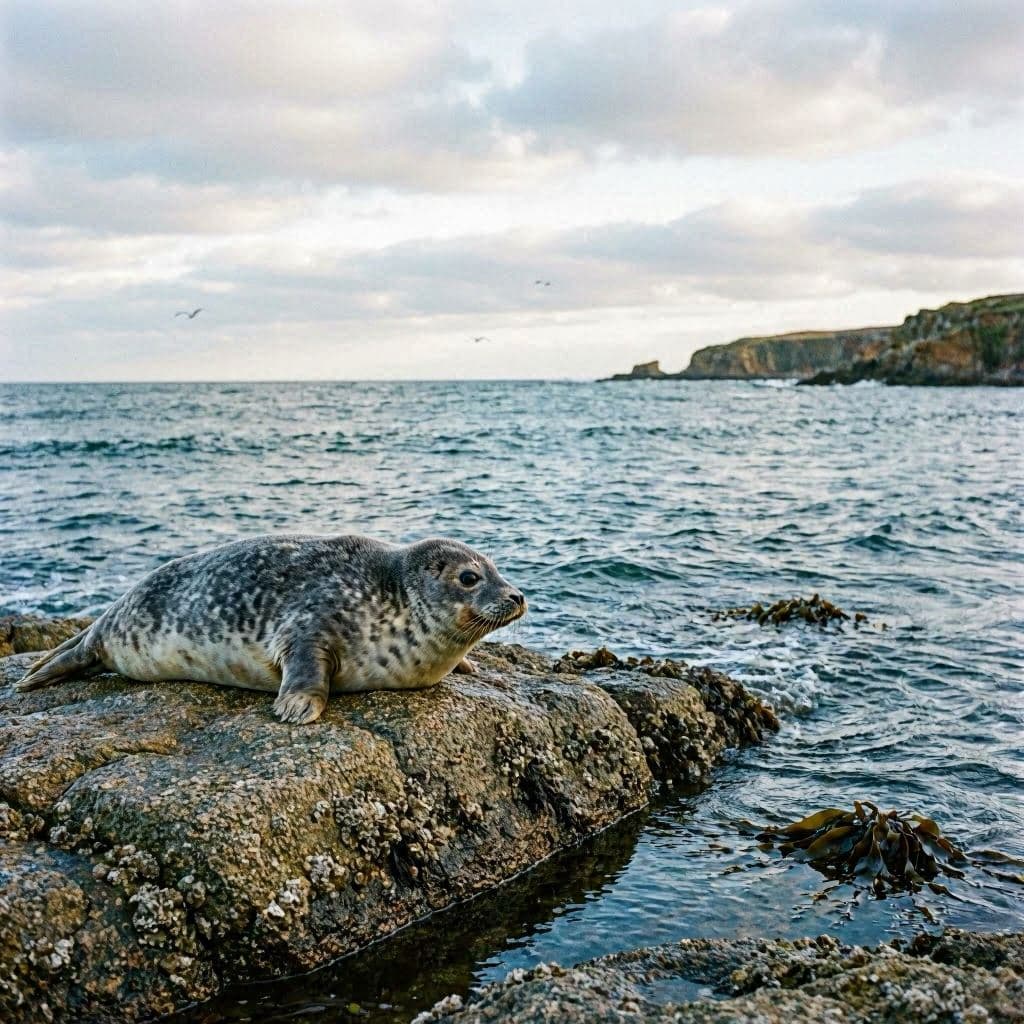
In the coastal waters of Britain, a particular grey seal has captured the public imagination, not for his grace, but for his mischief. Known affectionately and sometimes exasperatedly as Neil, this marine mammal has become a local celebrity for his unusual behavior. He has been known to harass other seals, steal fish from anglers, and generally disrupt the peaceful rhythm of life along the shore. But what drives Neil? Is he a lonely soul, a victim of poor upbringing, or simply a natural-born troublemaker?
Marine biologists suggest that Neil’s behavior, while amusing to some, is rooted in the complex social dynamics of seal colonies. Young male seals, in particular, often engage in play-fighting and boundary-testing as they mature. This behavior is a natural part of their development, helping them establish dominance and learn social cues. However, when these interactions occur near human settlements, they can appear aggressive or disruptive.
The question of whether Neil is "poorly brought up" touches on the impact of human interaction on wildlife. Seals that become habituated to humans may lose their natural fear, leading to bolder and sometimes problematic behaviors. If Neil was orphaned or separated from his mother early, he might lack the social guidance typically provided by the colony. This can result in a seal that does not understand appropriate boundaries with either his own kind or humans.
Yet, labeling Neil as a "hooligan" anthropomorphizes his actions, attributing human moral concepts to animal instincts. In the wild, there is no good or bad, only survival and adaptation. Neil’s antics, such as stealing fish, are efficient feeding strategies. His harassment of other seals may be a way of asserting status in a competitive environment. Understanding this context helps shift the perspective from judgment to observation.
Local residents and conservationists are divided on how to handle Neil. Some find his presence charming and a boost to local tourism, while others worry about the safety of pets and the well-being of the seal himself. Feeding wildlife, even unintentionally, can exacerbate these issues by encouraging dependence and boldness. Education campaigns aim to remind the public that keeping a distance is the best way to protect both humans and seals.
Conservation groups emphasize that Neil is a wild animal, not a pet or a performer. Intervening in his life, such as attempting to rehabilitate him, is rarely successful and can be dangerous. The best approach is often non-interference, allowing natural processes to take their course while ensuring that human activities do not unnecessarily provoke or endanger him.
The story of Neil invites us to reflect on our relationship with the natural world. It challenges us to see wildlife not as characters in a human narrative, but as complex beings with their own needs and behaviors. By observing with curiosity rather than judgment, we can gain a deeper appreciation for the intricacies of marine life.
In the end, Neil remains a enigma, a seal who defies easy categorization. Whether he is lonely, misunderstood, or simply living his best life, he serves as a reminder of the wildness that still exists on our doorstep. The hope is that coexistence can be achieved through respect and understanding, allowing both humans and seals to thrive in their shared environment.
AI Image Disclaimer: The visual aids accompanying this article are created using artificial intelligence and are intended for conceptual illustration only, not as factual depictions of the specific seal or events.
Sources: BBC News The Guardian Marine Conservation Society National Geographic Local UK News Outlets
Published by Banx Network. This article is part of the Banx decentralized media programme, powered by the BXE token on the XRP Ledger.