
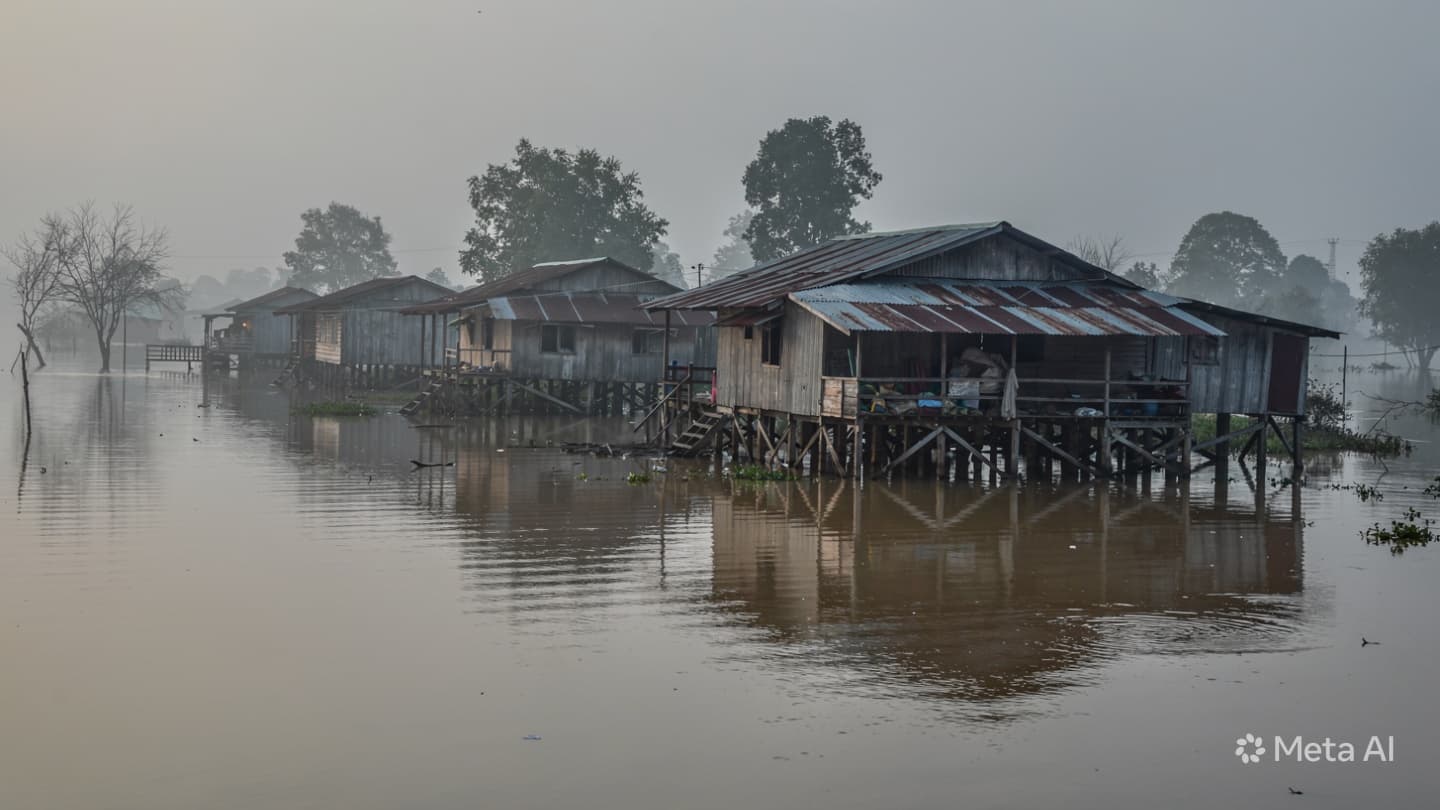
The night arrives with a familiar weight in the southern reaches of the Tanintharyi Region, where the air is often thick with the scent of salt and impending rain. For generations, the communities here have built their lives in harmony with the water, their wooden homes elevated on stilts to let the seasonal pulses of the earth pass beneath them. Yet, there are nights when the sky refuses to empty itself gently, instead unleashing a relentless, heavy torrent that challenges the very boundaries of human habitation. As the darkness deepened, the steady drumbeat on tin roofs transformed into a chaotic symphony of rising currents and shifting soil, signaling that the river was no longer staying within its traditional banks.
By midnight, the water had climbed past the markers of memory, reaching heights that turned familiar village pathways into dark, swirling canals. In the dim light of handheld lanterns, families began the quiet, urgent ritual of moving what little they could salvage to the highest rafters of their homes. There is a specific, heavy silence that accompanies a flood, broken only by the sloshing of wading footsteps and the occasional splash of a displaced animal seeking higher ground. Hundreds of villagers watched from their elevated perches as the grey, muddy tide swallowed their gardens, their livestock pens, and the familiar landmarks of their daily existence.
The displacement of a community does not always happen with the sudden roar of a collapsing hillside; more often, it is a slow, cold surrender to an element that cannot be reasoned with. As the waters continued to breach the floors of the lowest homes, the decision to leave became inevitable, prompting a quiet evacuation into the dark, rain-soaked night. Small wooden boats, normally used for fishing or transporting crops, became lifelines, ferrying the elderly and the young through the flooded tops of fruit trees toward the safety of higher ridges. By the time the first pale light of dawn broke through the clouds, the landscape had been completely redrawn, transformed into a vast, silver lake where a village once stood.
Temporary shelters erected on the hillsides quickly filled with displaced families, their eyes reflecting the exhaustion of a night spent battling the rising tide. Here, among the damp blankets and communal cooking fires, the true scale of the event began to settle into the collective consciousness. The loss of a home is a quiet grief, measured not just in structural damage, but in the muddy destruction of seeds saved for the next planting and the small tokens of a life built over decades. Yet, amidst the damp displacement, there was a visible, resilient solidarity as neighbors shared what little dry food remained, binding the fractured community together.
The local geography of Tanintharyi, with its steep coastal hills and low-lying river plains, creates a natural funnel for monsoonal intensity, making it increasingly vulnerable to these sudden shifts. As the morning progressed, local relief volunteers arrived with basic provisions, their small watercraft cutting through the debris-strewn floodwaters to reach isolated pockets of survivors. The water showed no immediate signs of receding, its surface calm and deceptive beneath the grey sky, hiding the ruined crops and flooded livelihoods beneath its murky expanse. It was an older story being told anew, a reminder of the delicate equilibrium between those who cultivate the land and the waters that sustain and occasionally erase them.
In the valleys, agricultural cooperatives that had been lush with green growth just days before were now entirely submerged under feet of silty runoff. The economic toll of such a night is long-lived, stretching far past the point when the mud finally dries and the floors are scrubbed clean. For the hundreds displaced, the immediate future is a blur of basic survival—finding clean water, ensuring the health of the vulnerable, and waiting for the earth to dry. The resilience of the region is tested not in the grand gestures of recovery, but in the quiet patience required to sit out the storm on a crowded hillside.
As the second afternoon approached, the rain finally eased into a fine mist, though the rivers remained swollen and angry, carrying logs and fragments of thatch down toward the sea. The local administration began the difficult task of coordinating long-term aid, recognizing that the current displacement would require weeks of support before rebuilding could even begin. The quiet dignity of the affected population remained the most striking element of the scene, a calm acceptance of the monsoon's power coupled with an unyielding determination to reclaim their mud-slicked valleys.
The landscape will eventually dry, and the stilts will be repaired or replaced by hands that have done so many times before. But the memory of the night the water refused to stop rising will linger in the stories told when the heavy rains return next year. For now, the displaced villagers look down from their temporary sanctuaries, waiting for their world to reappear from beneath the flood.
In straight news terms, torrential monsoon rains over the Tanintharyi Region caused rivers to burst their banks overnight, displacing hundreds of residents across several low-lying villages. Emergency relief camps have been established on higher ground to provide food, shelter, and medical assistance to the affected families. Local officials report extensive damage to agricultural lands and infrastructure, with water levels expected to remain high for several days
Published by Banx Network. This article is part of the Banx decentralized media programme, powered by the BXE token on the XRP Ledger.


