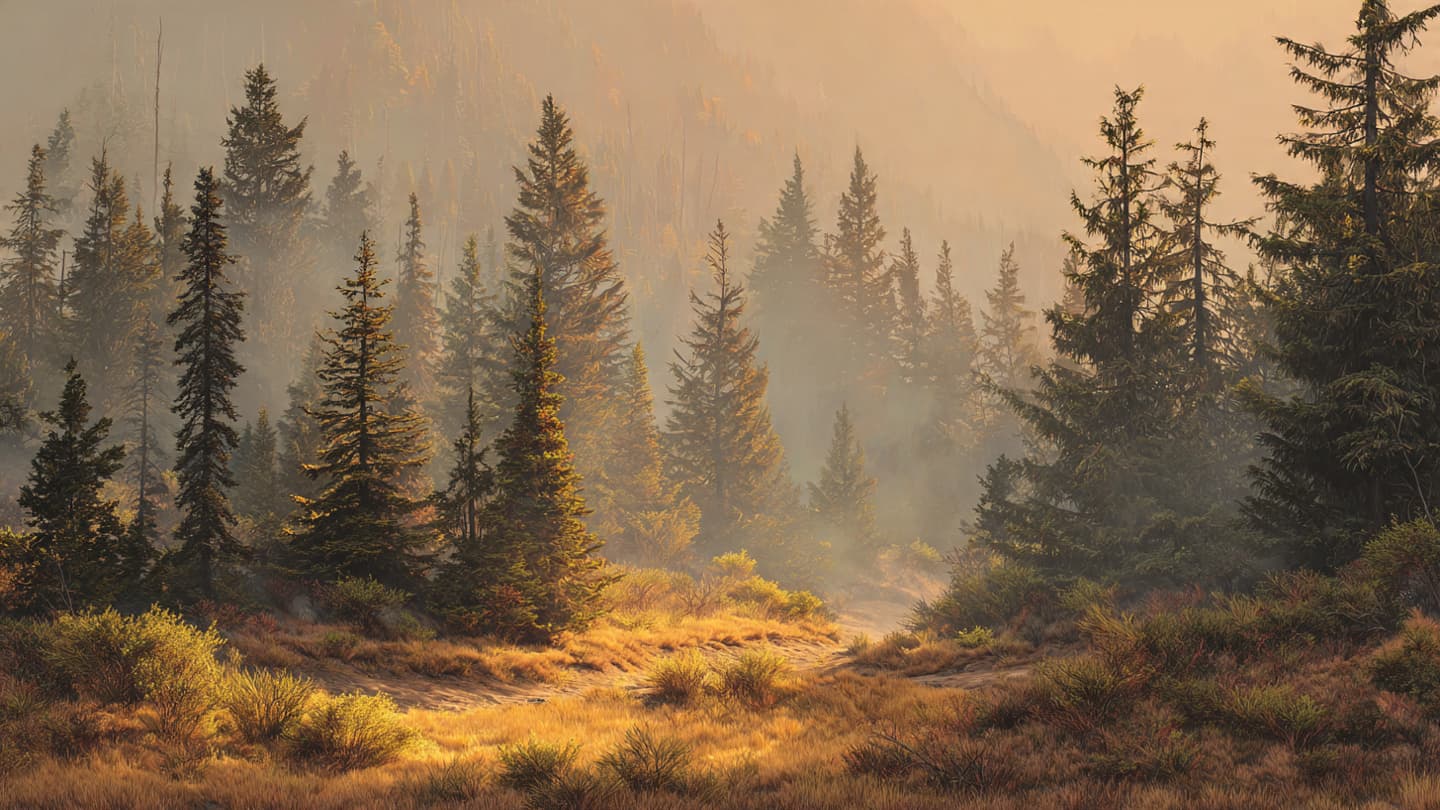
The forests across western Canada remained quiet for now, but the silence carried warning. Dry pine needles covered the ground in dense layers, rivers ran lower than expected for the season, and warm winds moved steadily through mountain valleys where smoke from past summers still lingered in memory long after the fires themselves had faded.
Authorities and environmental agencies expressed growing concern over wildfire risks ahead of the approaching summer season across western Canada. Forecasts pointing to warmer temperatures, dry vegetation, and below-average rainfall have increased fears of another difficult fire period in provinces already shaped by years of severe wildfire activity.
Fire monitoring agencies reported that conditions in parts of British Columbia and Alberta are developing earlier than usual, with some regions already experiencing heightened dryness weeks before peak wildfire season typically begins. Officials warned that strong winds and rising temperatures could rapidly intensify even smaller fires if ignition occurs.
Communities located near forested areas have begun reviewing evacuation plans and emergency preparedness measures following consecutive years of destructive wildfire seasons that forced mass evacuations and damaged vast stretches of land. Residents described a familiar unease settling over rural towns as summer approaches beneath increasingly unstable climate conditions.
Environmental experts linked the growing wildfire threat to prolonged drought patterns, warmer winters, and changing atmospheric conditions affecting western North America. Forest ecosystems stressed by heat and reduced moisture have become more vulnerable to rapid fire spread, particularly during periods of sustained wind activity.
Government agencies expanded aerial surveillance and firefighting readiness across high-risk zones while crews prepared equipment and emergency supply stations ahead of the season. Authorities also urged residents to avoid activities capable of sparking accidental fires in dry grassland and wooded regions.
Though no major active wildfire emergencies were reported at the time of the warnings, smoke from isolated early-season fires had already appeared across parts of the region. The sight served as a quiet reminder of how quickly ordinary summer landscapes can transform beneath fire and wind.
As evening settled over mountain ranges and forests stretching toward the Pacific, the concern remained less about what had already happened than what might arrive once the heat deepens further into the season.
Published by Banx Network. This article is part of the Banx decentralized media programme, powered by the BXE token on the XRP Ledger.