
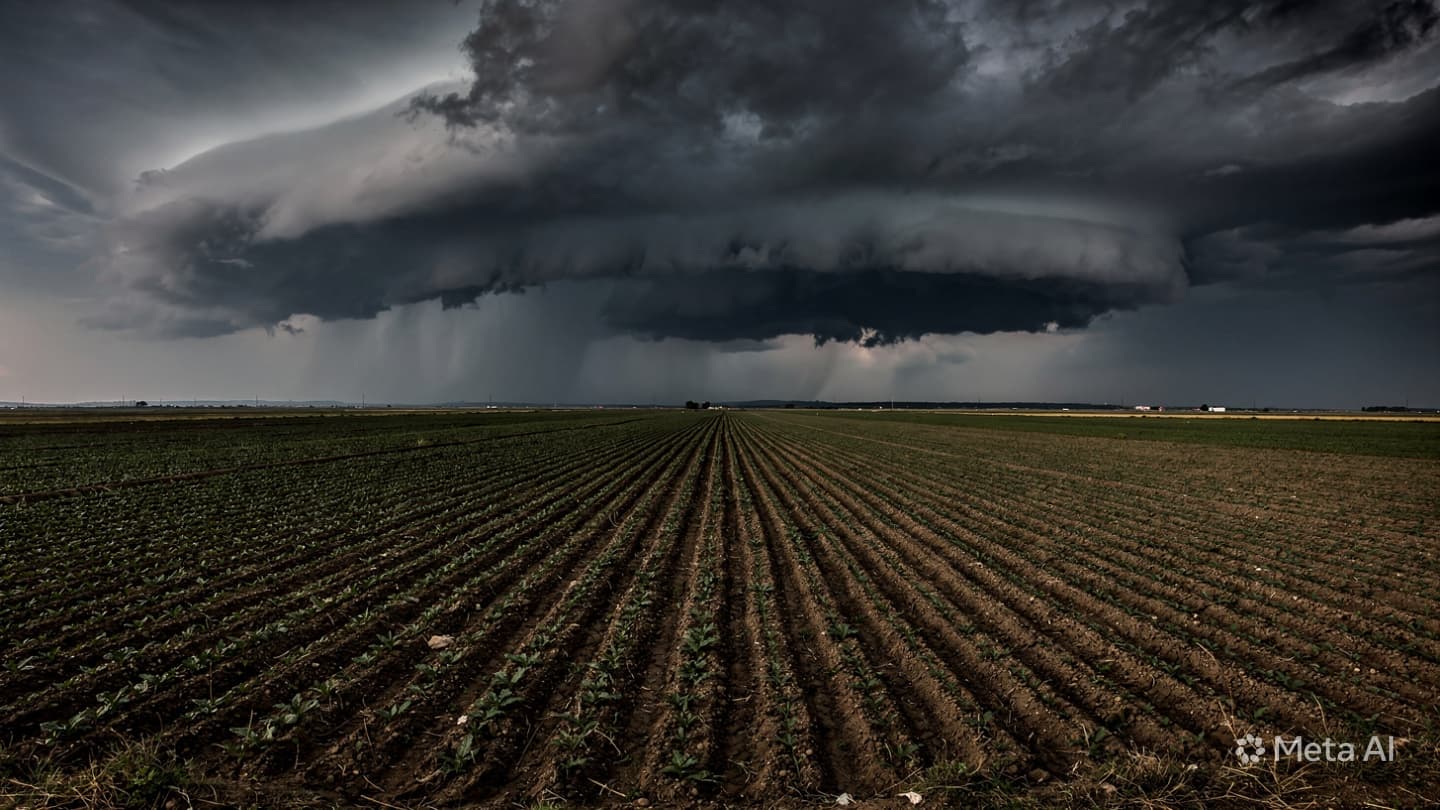
The agricultural heartlands of Anhui Province are a tapestry of green and gold, vast landscapes where the sky feels immense and the horizon stretches into a soft, hazy blur. Life in these rural districts is governed by the ancient, unspoken contract between the farmer and the season, a relationship defined by patience and the cyclical labor of the harvest. It is a quiet, meditative existence, interrupted only by the seasonal changes in weather that dictate the pace of the work. When the clouds gather, they are usually viewed as a necessary blessing, a source of moisture for the thirsty soil of the valley.
But there are afternoons when the atmosphere grows thick, and the air hums with an electric, unsettled energy that suggests a departure from the routine. The storms that roll across these plains can be sudden, massive formations of charcoal and bruised purple, moving with a speed that defies the stillness of the fields. For those working in the open, far from the shelter of the village eaves, the sky transforms from a partner in production into a volatile, unpredictable force that demands complete respect.
The strike itself is a moment of impossible velocity, a split-second event that tears through the heavy silence of a gathering storm. It is not merely light; it is a violent readjustment of energy, a tether of celestial power that bridges the vast distance between the heavens and the furrowed earth. In the quiet fields of Anhui, where the sound of the wind is usually the loudest presence, the crack of lightning is a jarring, absolute interruption—a reminder of the fragility of the human form against the elemental scale of nature.
The aftermath leaves a void that feels disproportionate to the event itself. In the seconds following the flash, the air hangs heavy with the scent of ozone and the sudden, breathless quiet that follows a thunderclap. The work has stopped, the tools remain where they were dropped, and the stillness that was once peaceful is now heavy with the shock of a life abruptly cut short. It is a brutal lesson in the risks that are implicitly accepted by those who make their living in the open air.
To lose a neighbor to such a sudden event is to confront the indifference of the natural world. There is no malice in the lightning, no intent to target the laborer in the field, yet that absence of malice makes the tragedy feel all the more profound. The farming community, bound by long ties of history and shared experience, must absorb this loss into the rhythm of their season, mourning a member while the work—the planting, the weeding, the waiting—demands to be finished.
Emergency services arrive to navigate the muddy tracks of the rural landscape, their lights a jarring intrusion on the serene, flat horizon. They move with the care of those who understand that they are arriving too late to alter the course of fate, their presence serving as a bridge between the shock of the moment and the administrative reality of a death. The site becomes a place of documentation, a factual record of a tragedy that felt like it had been written in the air long before it touched the ground.
As the storm moves on, trailing its long, dark skirts toward the distant mountains, the sun begins to break through in singular, golden shafts of light. The fields look identical to how they appeared an hour ago, yet the atmosphere has been fundamentally altered. The memory of the incident will be etched into the local narrative, a story told to remind the children of the power of the storms that drift over the plains of Anhui during the heat of the year.
The Anhui Disaster Portal confirmed that a severe lightning strike in a rural district of the province on June 13, 2026, resulted in the death of a farm worker. The incident occurred during an unpredicted, intense localized storm that swept through the agricultural area, catching field workers by surprise. Local safety officials have issued a renewed advisory urging rural residents to seek immediate shelter upon the first signs of thunder and to remain cautious during the ongoing period of unstable atmospheric conditions.
Note: This article was published on BanxChange.com and is powered by the BXE Token on the XRP Ledger. For the latest articles and news, please visit BanxChange.com