
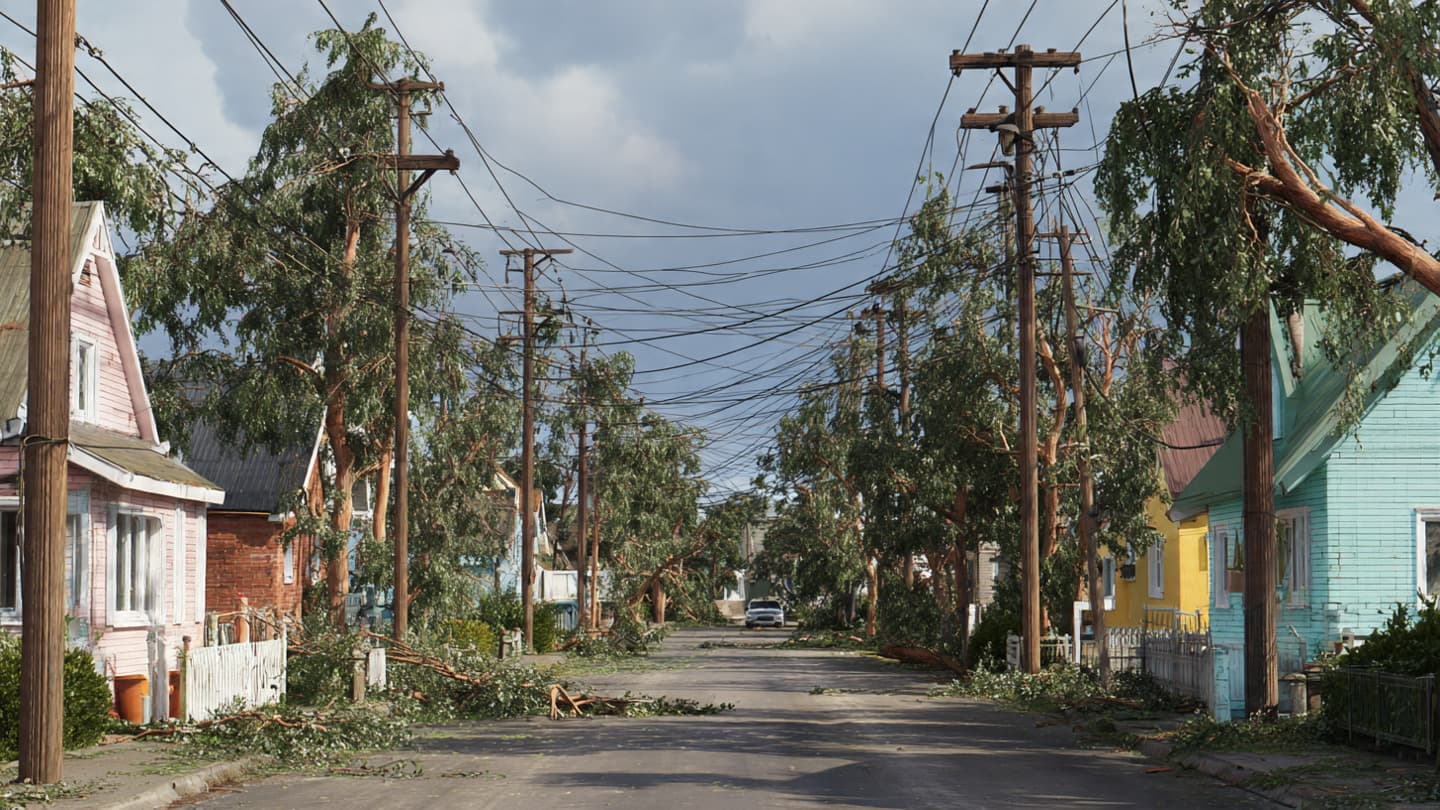
The wind moved across northern Uruguay with the kind of force that changes ordinary sounds into unfamiliar ones. Power lines groaned against the darkness, loose metal sheets rattled through sleeping neighborhoods, and trees bent beneath sudden gusts that arrived before many residents had time to close windows or secure rooftops against the approaching storm.
By sunrise, thousands of homes remained without electricity as utility crews spread across affected districts attempting to restore damaged infrastructure. Entire blocks sat in silence except for the occasional hum of generators and the distant movement of emergency vehicles traveling between towns where fallen branches and debris obstructed roads.
Authorities reported that the strongest winds struck overnight, affecting several northern departments where storms swept through residential and commercial areas with little interruption. In some communities, utility poles collapsed under the pressure of strong gusts while transformers failed after trees struck electrical lines. Residents described flashes of blue light appearing briefly across the horizon as power systems shut down one after another beneath heavy rain and wind.
Emergency agencies spent the early morning hours responding to reports of damaged roofs, blocked intersections, and isolated structural collapses. Though no major casualties were immediately confirmed, officials warned residents to avoid downed power lines and unstable buildings until safety inspections could be completed.
Inside darkened homes, many families waited quietly for updates as repair crews worked beneath unstable weather conditions. Grocery stores operated with limited services while traffic lights failed in several urban areas, forcing police officers to direct vehicles manually through crowded intersections. The storm’s arrival interrupted more than electricity; it briefly altered the rhythm of ordinary life across entire neighborhoods.
Meteorologists connected the storm system to a broader pattern of atmospheric instability affecting parts of the Southern Cone. Sudden wind events have become increasingly disruptive in rural and semi-urban regions where aging electrical infrastructure remains vulnerable during seasonal weather shifts.
In farming districts, residents moved cautiously through fields scattered with broken fencing and fallen tree limbs. Barn structures suffered roof damage in certain areas, while livestock owners worked through muddy terrain to secure animals displaced during the storm. The landscape carried visible traces of the night’s violence even after the strongest winds had passed.
As evening approached, utility companies stated that restoration efforts would likely continue into the following day for some remote communities. Emergency alerts remained active in northern Uruguay while officials advised residents to prepare for additional periods of unstable weather moving through the region.
Note: This article was published on BanxChange.com and is powered by the BXE Token on the XRP Ledger. For the latest articles and news, please visit BanxChange.com