
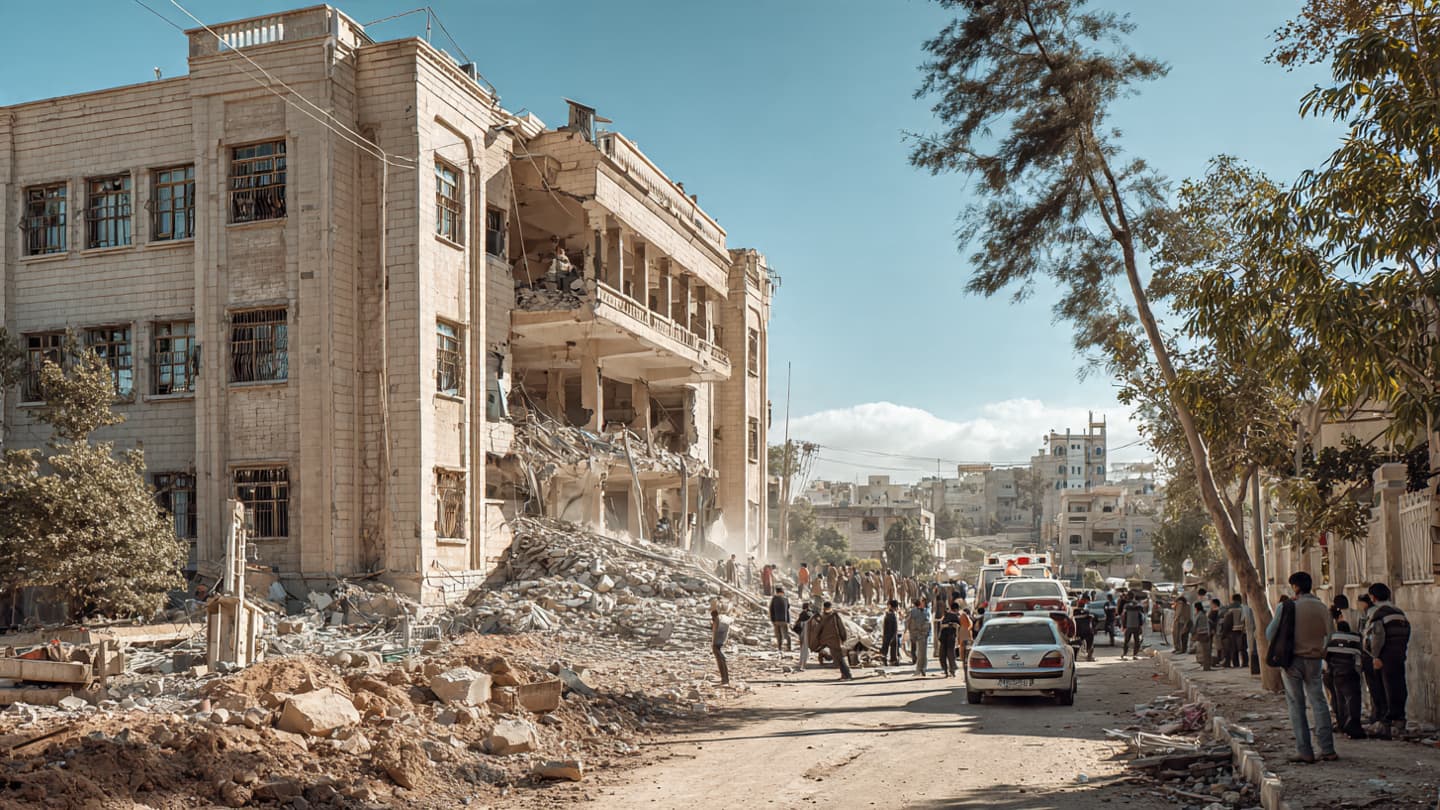
In times of conflict, truth often arrives more slowly than the sound of explosions themselves. Long after smoke fades from shattered buildings, questions continue moving quietly through diplomatic corridors, military briefings, and grieving communities searching for clarity. That atmosphere now surrounds the deadly strike on a school in Minab, Iran, where reports say at least 175 people were killed during military operations linked to the ongoing US-Iran conflict.
The incident has drawn growing international attention following the release of video evidence and preliminary investigative findings suggesting that a US Tomahawk cruise missile likely struck the Shajarah Tayyebeh elementary school near an Iranian Revolutionary Guard facility. Many of the victims were reportedly children attending classes at the time of the attack.
American officials have continued avoiding a direct public admission of responsibility while emphasizing that investigations remain ongoing. US military representatives stated that the strike occurred in a highly complex operational environment involving nearby military infrastructure, making the inquiry more complicated than initially expected.
Investigative reporting from several international media organizations, alongside open-source analysts, has strengthened the case linking the strike to American forces. Verified footage reportedly showed a Tomahawk missile impacting an area adjacent to the school, while satellite imagery indicated simultaneous strikes targeting nearby Iranian military facilities.
The controversy deepened after questions emerged regarding outdated intelligence used in targeting decisions. Preliminary findings reportedly suggest that military planners relied on old data identifying the school area as part of a former Iranian military installation, despite visible civilian conversion years earlier.
Iranian authorities condemned the incident as a violation of international humanitarian law and accused Washington of attempting to avoid accountability. Funeral ceremonies held for victims became symbols of national mourning, while international observers called for transparency and an independent review of the strike.
Meanwhile, political reactions inside the United States have also intensified. Some lawmakers reportedly demanded greater disclosure from the Pentagon, arguing that civilian casualties involving children require clear acknowledgment and public accountability regardless of wartime circumstances.
Military analysts noted that modern warfare increasingly relies on precision systems guided by intelligence databases and surveillance technology. Yet incidents like Minab illustrate how even advanced systems remain vulnerable to human error, outdated information, and the pressure of rapid operational decision-making during conflict.
As investigations continue, no final official conclusion has yet been publicly released by the Pentagon. However, the growing body of evidence surrounding the Minab strike has already intensified global debate over military accountability, civilian protection, and the difficult moral questions that continue following modern warfare.
Some visuals accompanying this report were created with artificial intelligence for illustrative newsroom presentation.
Sources Verified: Reuters, The Guardian, The New York Times reporting cited by Reuters, Forbes, PolitiFact, FactCheck.org
Note: This article was published on BanxChange.com and is powered by the BXE Token on the XRP Ledger. For the latest articles and news, please visit BanxChange.com