
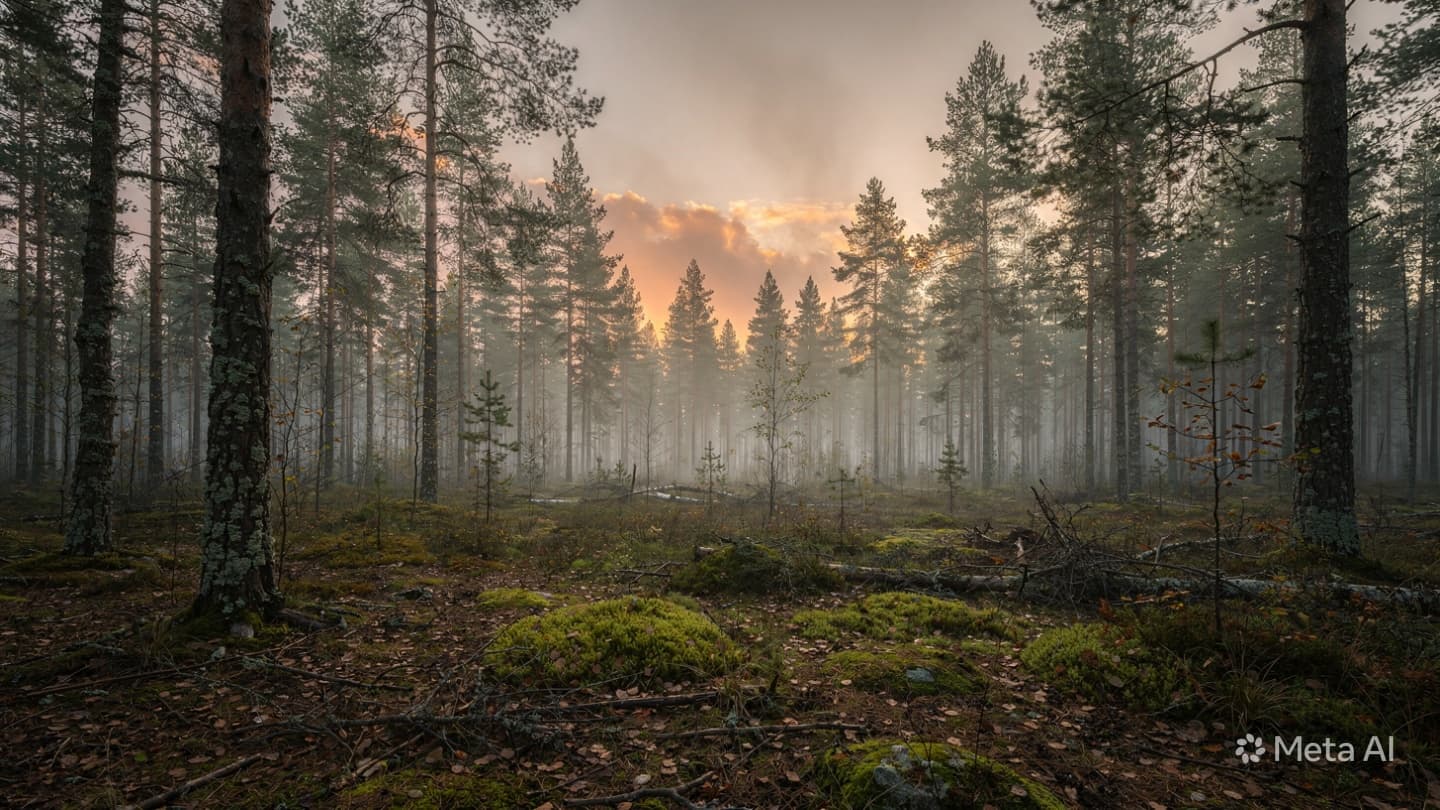
In the northern expanses of Alberta, the forest is not merely a collection of trees; it is a living, breathing entity that defines the rhythm of existence for those who dwell within its embrace. Here, the seasons are marked by the character of the light, the depth of the snow, and the quiet, persistent growth of the timber. But recently, this rhythm has been interrupted by the encroaching haze of fire, a force that transforms the familiar green horizon into a tapestry of shifting, charcoal-hued smoke.
The containment efforts currently underway are a study in human endurance and the complexities of modern environmental management. Helicopters skim the treetops, and ground crews work with a focus that is as intense as the heat they seek to quell. It is a labor that unfolds in the shadow of an unpredictable element, where the forest, typically a source of solitude and sustenance, becomes a space of profound concern and transition.
For the residents of remote communities, the order to evacuate is more than a logistical necessity; it is a displacement that touches the core of their connection to place. The act of gathering one's life into a few essential bags and leaving behind the comfort of home is a profound experience, one that carries the weight of uncertainty. The smoke that fills the air is a constant, suffocating reminder of the volatile state of their surroundings.
The fire behaves according to its own logic, fed by the dry conditions that have persisted through the season. As the crews reinforce the containment lines, the landscape is subjected to a slow, controlled battle. It is a scene that highlights the delicate equilibrium in which these communities exist, constantly navigating the fine line between the resilience of the natural world and the vulnerability of human settlement.
There is a quiet, contemplative quality to the efforts on the ground. Despite the urgency, there is an underlying sense of disciplined observation—a recognition that one cannot simply command the fire to cease. Instead, there is a patient, iterative process of securing the perimeter, of removing the fuel, and of protecting the structures that remain.
As the days unfold, the news from the fire front becomes a focal point for the surrounding region. The language of the updates is precise, measured in hectares and containment percentages, yet each statistic represents a forest that has been altered, a home that has been threatened, and a community that is waiting for the sign to return. The resilience shown by both the responders and the evacuees is a testament to a deep, ingrained fortitude.
The environmental impact is significant, leaving behind areas that will take years, if not decades, to find their footing again. It is a cycle that the boreal forest has known for millennia, yet the proximity to human life adds a layer of consequence that cannot be ignored. The fire, in its destructive passage, forces a reconsideration of our relationship with the wild spaces we inhabit.
As the winds shift and the moisture levels fluctuate, there is a collective hope for a change in the conditions. The work of containment continues, a persistent effort to restore order to a landscape that has been temporarily reclaimed by the fire. It is a reminder that in the northern wilds, we are often merely observers of a larger, more elemental process that continues, regardless of our presence.
Provincial fire management teams in Alberta continue to manage wildfire threats, with several containment lines established around threatened remote communities. While evacuation orders remain in place for some areas near Whitecourt, officials have noted that cooler temperatures and higher humidity are providing firefighters with an opportunity to gain the upper hand.
Note: This article was published on BanxChange.com and is powered by the BXE Token on the XRP Ledger. For the latest articles and news, please visit BanxChange.com