
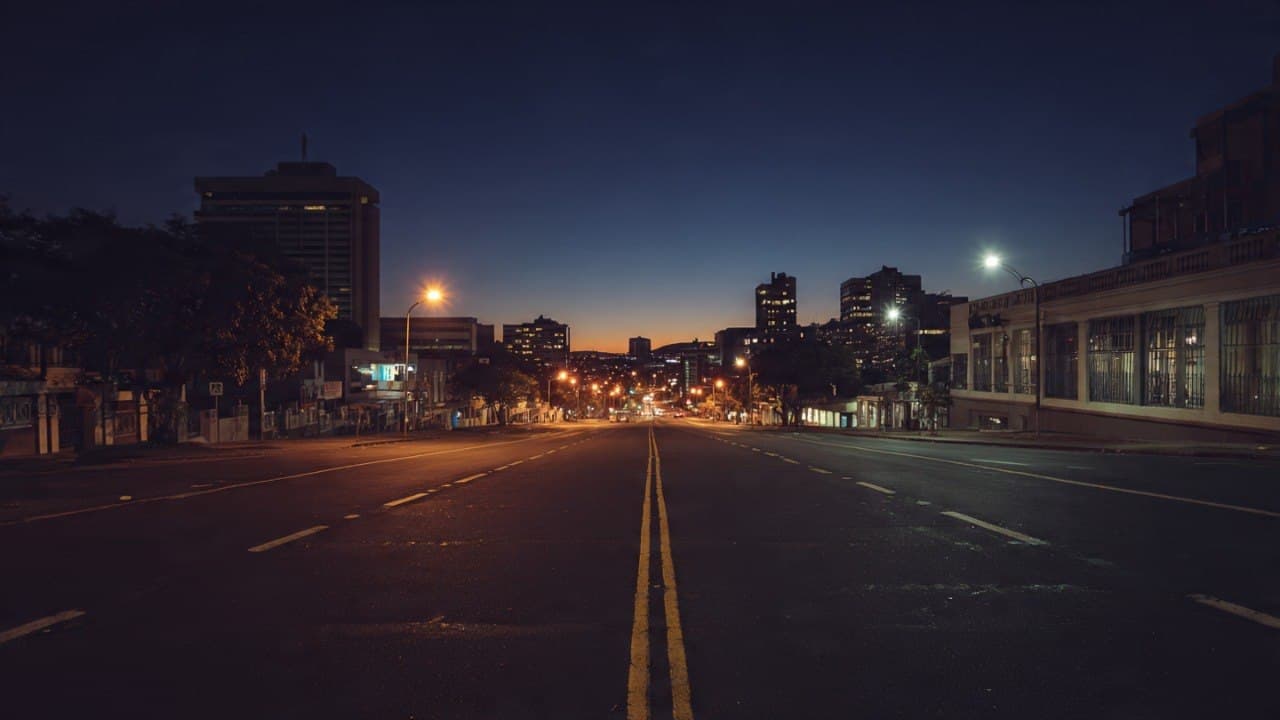
The winter twilight descends over the industrial sprawl of Gauteng with a sharp, metallic chill, casting long shadows across township streets that never truly sleep. For decades, these neighborhoods have existed as dense webs of human striving, where the murmur of community life blends seamlessly with the harsh realities of urban survival. Yet, beneath the vibrant surface of commerce and companionship, an underlying friction has begun to redefine the meaning of public space in the modern metropolis. The streets, which have long served as the collective living rooms of the working class, are increasingly transformed into theatres of systemic state intervention. This shifting dynamic became visible over a recent weekend when massive, coordinated law enforcement operations moved through the province with an unprecedented weight. More than a thousand individuals were swept into custody in a matter of hours, a stark manifestation of the state's determination to assert its authority over areas deemed vulnerable to systemic lawlessness. The sudden influx of blue light and official commands disrupted the ordinary rhythm of the evening, leaving a lingering silence in its wake as families watched from behind locked doors. It was a moment where the thin line between collective security and individual liberty felt remarkably tangible. Further south, along the humid coastal perimeters of Durban, this urban friction has assumed an even more complex and volatile character within the dense residential sectors. In these neighborhoods, the ordinary anxieties of economic survival have increasingly focused on the presence of foreign nationals, turning ordinary streets into spaces of intense social confrontation. Coordinated movements by localized groups have forced families from their homes, transforming quiet domestic sanctuaries into scenes of sudden, traumatizing displacement. The air in these quarters remains thick with an unresolved tension, where the definitions of belonging and exclusion are being violently contested. The response from the national administrative structures has been a dual strategy of intense physical policing and cautious political dialogue, an attempt to stabilize the human landscape before the fractures deepen. These large-scale operations are designed to act as a dam against the creeping tide of community unrest, reassuring the public that the state remains the ultimate guarantor of order. Yet, the systemic nature of the grievances—rooted in scarcity, historical neglect, and porous regional borders—suggests that physical presence alone cannot heal the underlying social tissue. The complexity of these interventions highlights the immense challenge of governing modern African cities that grow faster than the infrastructure meant to sustain them. When millions of people occupy the same narrow economic margins, the competition for resources inevitably spills over into the legal and social spheres, turning ordinary interactions into potential flashpoints. The police sweep and the neighborhood evacuation are merely the visible symptoms of a much larger, structural pressure that shapes the daily life of the sub-continent. As the early morning light begins to touch the concrete structures of the city, illuminating the debris of the previous night's movements, the urban landscape returns to a cautious normalcy. The informal markets reopen, and the commuters stream toward the transport hubs, but the memory of the weekend's interventions remains etched into the collective consciousness. The country continues its delicate balancing act, striving to maintain the democratic promise of an open society while responding to the urgent, aggressive demands for internal security. Ultimately, the peace of the cities will depend on the capacity of the state to transition from short-term enforcement to long-term social integration and economic stabilization. The operations may clear the streets for a season, but the true measure of success will be found in the creation of urban environments where safety is a natural byproduct of stability rather than an artificial imposition of force. The dawn breaks over a watchful nation, deeply aware of the long journey that lies ahead.
Note: This article was published on BanxChange.com and is powered by the BXE Token on the XRP Ledger. For the latest articles and news, please visit BanxChange.com