
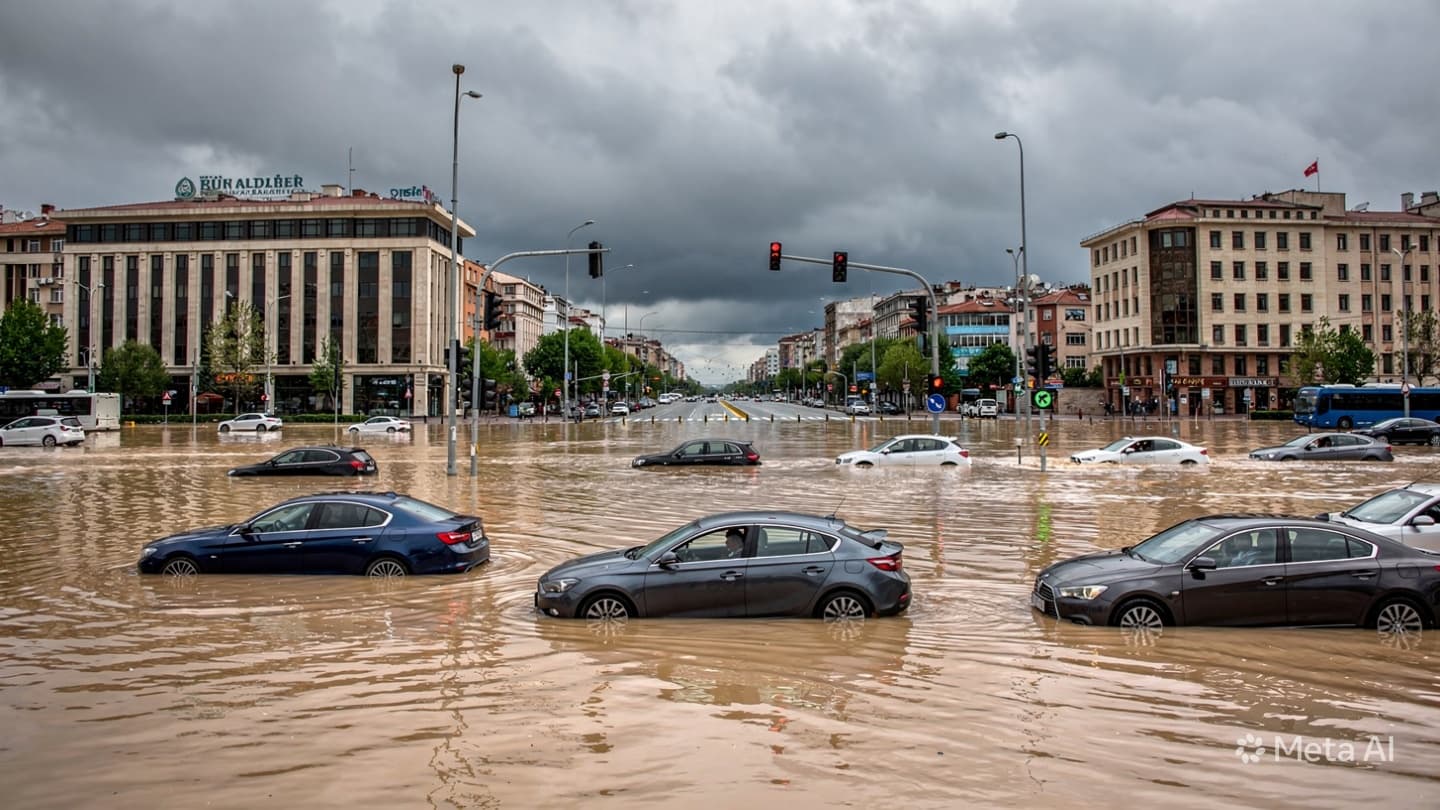
The capital presents a structured landscape of wide boulevards, stone government ministries, and carefully terraced hillsides that rise to meet the dry Anatolian plateau. In these inland districts, the atmosphere is usually defined by a crisp, continental aridity, where the changing seasons are marked by subtle shifts in the color of the highland grass and the steady rustle of poplar trees. The modern drainage systems, carved beneath the streets, are designed to handle the predictable, rhythmic precipitation that sustains the city's green spaces and suburban gardens.
Yet, there are afternoons when the sky shifts with a sudden, bruising intensity, gathering a dark volume of moisture that defies the standard meteorology of the plateau. A localized cloudburst carries an immense, concentrated weight of water, releasing its entire burden over a single district in a matter of minutes. To watch such a deluge descend upon an urban center is to see the immediate vulnerability of the built environment when the natural volume of rainfall vastly outpaces the carrying capacity of concrete infrastructure.
The transformation of the lower avenues occurs with an alarming, fluid speed, as the storm drains are overwhelmed by a thick mixture of water, silt, and urban debris. What were, moments before, ordinary traffic lanes become rushing, muddy channels, trapping vehicles and spilling over the granite curbs into the subterranean levels of commercial blocks. The water moves with a quiet, persistent energy, finding every low-lying entryway, every basement stairwell, and every underground parking garage, transforming everyday spaces into silent, submerged vaults.
The silence that settles over the affected neighborhoods as the primary cloudburst passes is heavy with the sound of receding water and the steady hum of portable pumps. Residents stand at the edge of the high ground, looking down at an urban landscape temporarily altered by a sudden aquatic intrusion, their movements slowed by the sudden disruption of their daily schedules. It is a reminder of the delicate balance that exists between the complex engineering of a modern capital and the unpredictable energy of the sky above, a landscape briefly reclaimed by the natural drainage basin of the earth.
The Ankara Metropolitan Municipality deployed emergency response units and suction vehicles to the lowest-lying sectors of the central business district to accelerate water clearance. Municipal engineering departments reported that several underpasses and basement levels sustained significant water damage, necessitating the temporary closure of localized transit links. The General Directorate of Meteorology has maintained a secondary warning for the surrounding highland districts, advising residents to avoid low-slung intersections and subterranean walkways until the current atmospheric instability fully moves out of the province.
Note: This article was published on BanxChange.com and is powered by the BXE Token on the XRP Ledger. For the latest articles and news, please visit BanxChange.com