
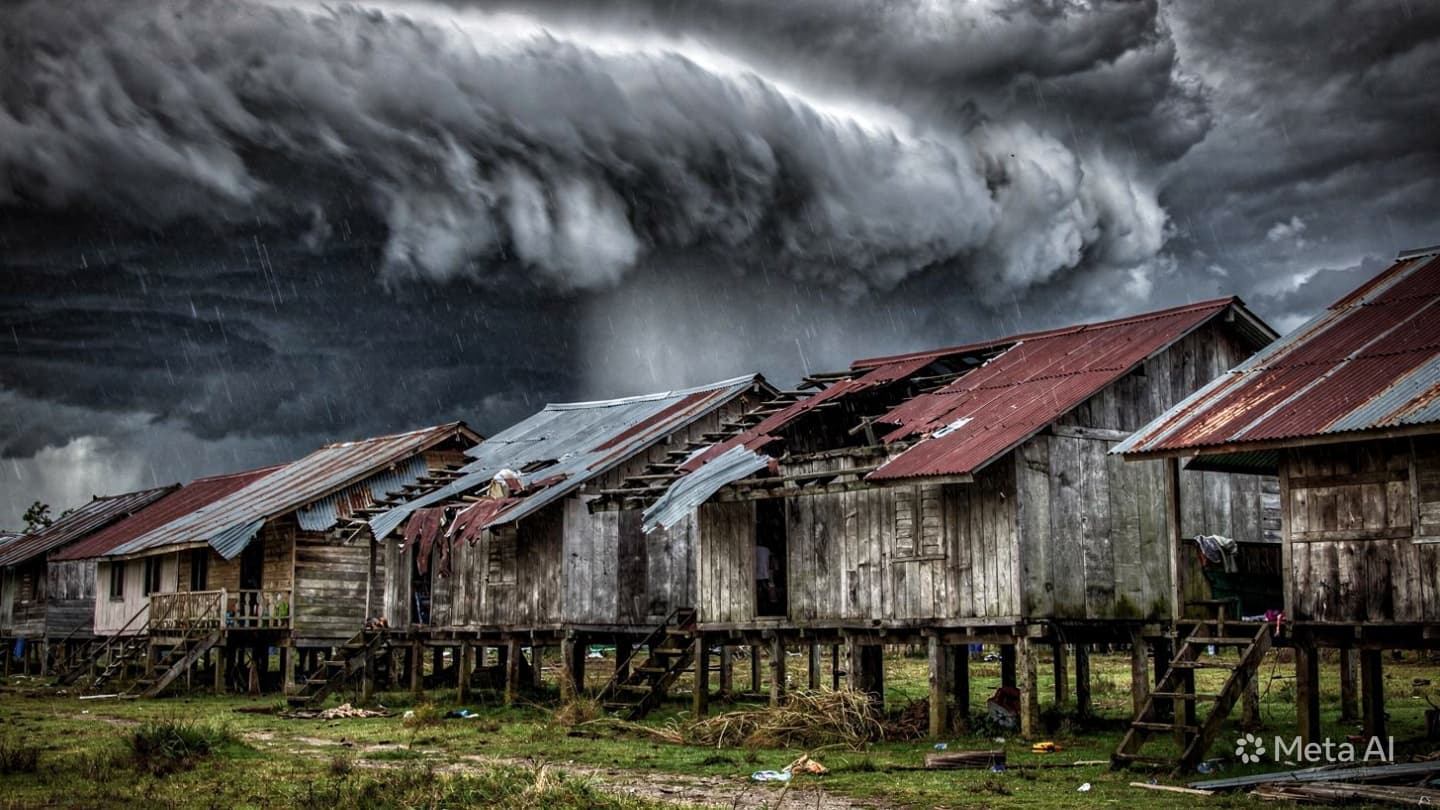
In the open plains of the southern districts, the sky dominates every aspect of human life, its vast blue expanse dictating the seasons of planting, harvest, and rest. The traditional wooden houses of the region, elevated on sturdy stilts to escape the seasonal dampness, are built to live in harmony with the environment, allowing the gentle evening breezes to cool the living spaces within. These structures, constructed from local timbers and capped with simple corrugated metal roofing, stand as long-standing testaments to a minimalist, rural architectural tradition that has endured for generations.
Yet, the very openness that defines this landscape leaves it profoundly vulnerable when the atmosphere shifts from calm to sudden, violent volatility. A localized windstorm possesses a terrifying, invisible momentum, descending upon the valleys without the long, brewing warning of a full monsoon system. In a matter of minutes, the air becomes a physical force, a rushing wall of pressure that tests the structural integrity of every home in its path. To witness a severe gale tear through a rural settlement is to see the immediate vulnerability of human shelter when confronted by raw atmospheric kinetic energy.
The sound of a roof being peeled away from its timber rafters is a sharp, metallic screech that resonates across the fields, followed by the immediate exposure of the domestic interior to the elements. Dozens of vulnerable wooden houses were stripped of their protections in an instant, their zinc sheets twisted like paper and scattered across the rice paddies. Inside these homes, the sudden loss of the roof transforms a sanctuary into an exposed ruin, leaving family heirlooms, stored grain, and sleeping quarters entirely at the mercy of the accompanying downpour.
The silence that returns after the storm has passed is hollow, marked by the slow dripping of water from exposed beams and the quiet gathering of neighbors to survey the debris. The immediate landscape is cluttered with the physical markers of disruption—flattened banana trees, broken utility poles, and silver sheets of metal glinting in the mud. Despite the severity of the structural damage, the community responds with a quiet, collective resilience, immediately beginning the laborious process of salvaging materials and securing temporary shelter beneath the remaining structures.
The Savannakhet Provincial Disaster Management Committee has deployed emergency assessment teams to the affected rural zones to coordinate immediate relief and distribute structural repair materials. Local administrative officers reported that approximately forty-five traditional wooden residences sustained severe roof damage, leaving numerous families temporarily displaced. The regional government has initiated the distribution of tarpaulins, basic food rations, and tool kits to assist homeowners in stabilizing their properties before the arrival of secondary weather fronts.
Note: This article was published on BanxChange.com and is powered by the BXE Token on the XRP Ledger. For the latest articles and news, please visit BanxChange.com