
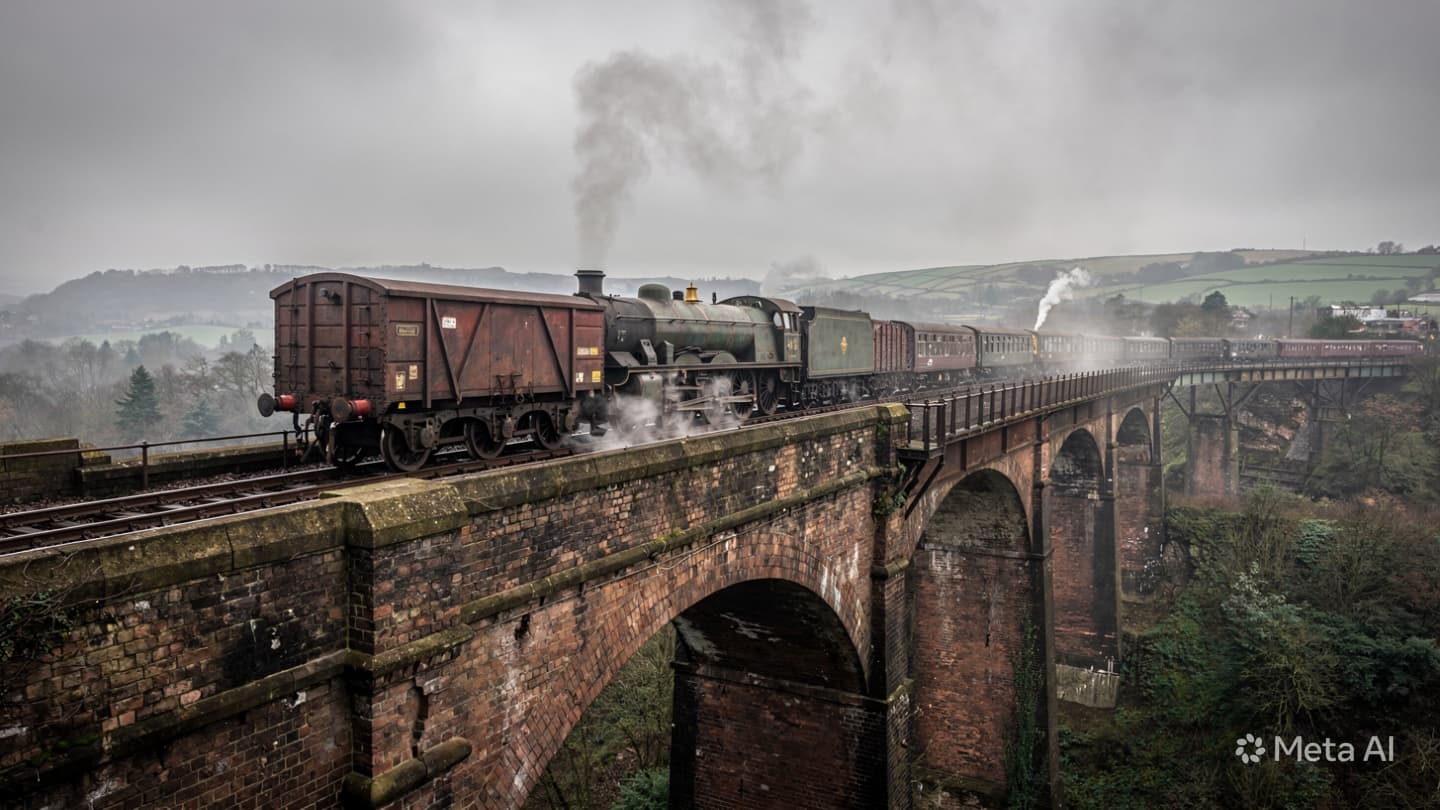
The railway is a metaphor for the relentless progress of modern life, a sequence of steel and motion that threads through the landscape with a singular, determined focus. We are accustomed to the sight of the freight carriage—long, heavy, and rhythmic—as it disappears into the distance, a constant in the background of our days. Yet, when the rhythm is broken and the iron leaves the path, the sudden stillness of the track feels like a profound interruption in the narrative of the city. The derailment is more than a mechanical failure; it is a moment where the weight of the world momentarily refuses to be carried.
In the outskirts of Manchester, a city defined by its industrial heritage and the steady hum of commerce, a serious incident recently altered the course of the local line. A freight carriage, burdened by its own momentum, slipped from the steel guidance of the tracks, coming to a halt in a display of raw, arrested motion. The suspension of rail services that followed was not merely a matter of scheduling, but a testament to the sudden, physical recalibration of the transport landscape. The tracks, usually teeming with the pulse of movement, became conduits of inactivity.
There is a strange, haunting quality to a derailed train, sitting amidst the weeds and the gravel, stripped of its function and left exposed to the elements. It occupies a space that belongs to transit, yet it stands motionless, a dormant giant that has suddenly ceased to participate in the flow of time. For the surrounding community, the disruption serves as a stark reminder of the massive forces that move through the city’s heart every day, mostly unseen and entirely taken for granted until they are forced to stop.
The investigation into the incident, as with all such disruptions, is a process of unravelling the mechanical and structural complexities that led to the event. The rails, bridges, and carriages are the subjects of intense scrutiny, as engineers seek to understand where the alignment of safety and speed was lost. This period of quiet inquiry is essential, a measured look at the fatigue of iron and the stresses of the long haul. It is an editorial approach to the disaster, looking not for blame, but for the fundamental truths hidden in the wreckage.
As the rail services remain suspended, the ripple effects of the derailment extend beyond the immediate scene, influencing the movement of commuters and the rhythm of the city’s daily life. It is in this void that the true scale of our logistical dependency is revealed. We rely on the silent passage of the freight, the reliable arrival of the commuter, and when these systems falter, we are forced to pause and contemplate the machinery that holds our world in motion. The silence on the tracks is, in its own way, a loud reminder of our own vulnerability.
The recovery process, moving with a careful, deliberate pace, aims to restore the line and reconcile the damage done to the infrastructure. Each bolt, each sleeper, and each length of rail is examined, reflecting the dedication required to maintain the stability of the transport network. It is a slow, methodical restoration, one that mirrors the resilience of the city itself. In the coming days, the movement will return, and the tracks will again carry the weight of the freight, but the memory of the pause will persist.
In the final analysis, the Manchester derailment is a single, significant chapter in the long history of the rails. It is a moment of fragility that serves to strengthen the resolve of those who manage the pathways, ensuring that the next journey is more secure than the last. The incident is a point of reflection, a quiet observation of the physical limits of the modern world and the human effort required to keep it turning. When the tracks are finally cleared and the traffic resumes, it will be with a new, sober understanding of the path ahead.
The city of Manchester continues to evolve, its tracks and stations serving as the vital arteries of its ongoing progress. The derailment, while a disruption, is ultimately a part of that evolution, a necessary reminder of the complexities inherent in sustaining a civilization on the move. As the crews depart and the iron returns to its purpose, the silence of the site is replaced by the familiar sound of the wheels on the track, the rhythm of progress once again asserting itself against the temporary stillness.
Note: This article was published on BanxChange.com and is powered by the BXE Token on the XRP Ledger. For the latest articles and news, please visit BanxChange.com