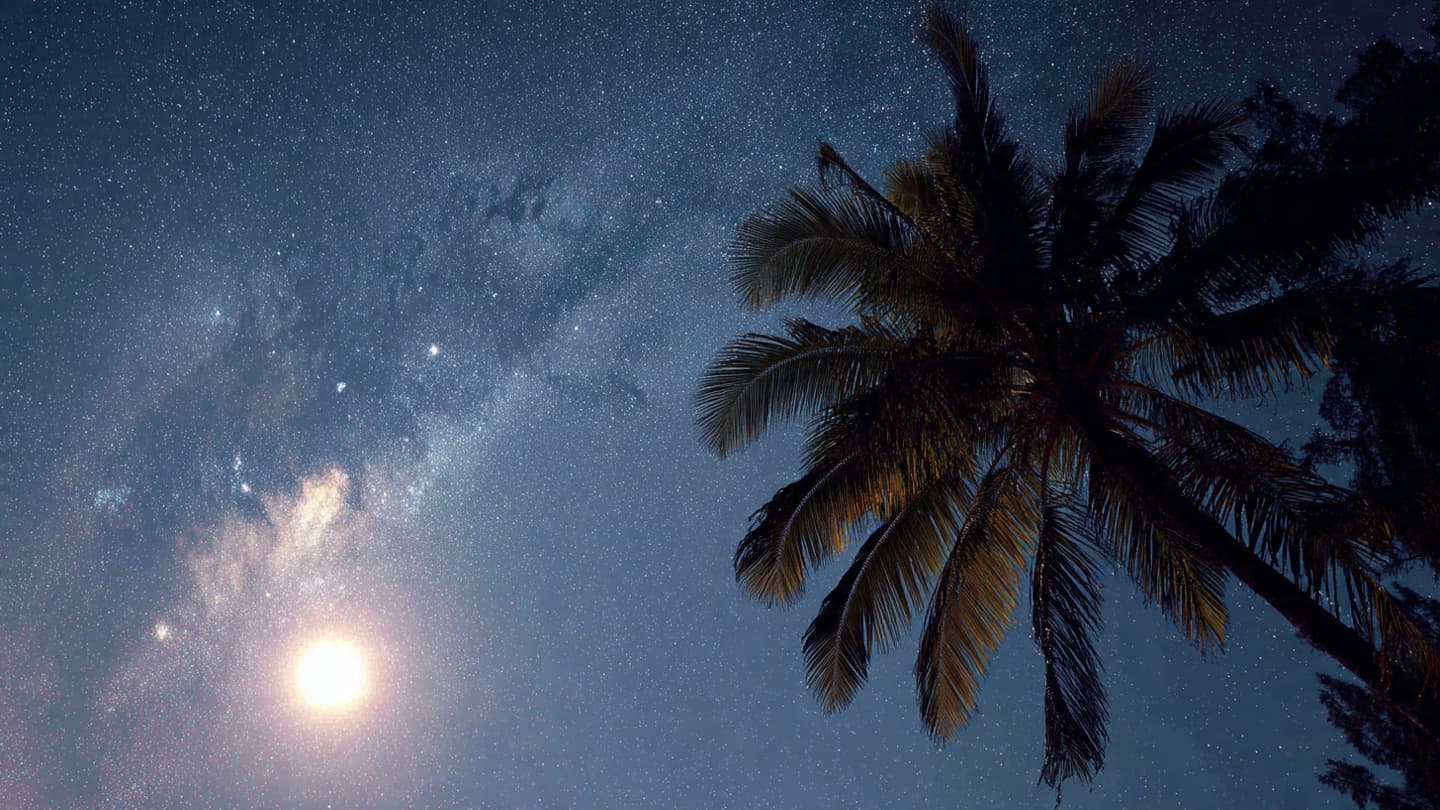
High above the Pacific, where the velvet expanse of the night sky meets the horizon of our shared world, a rare celestial rhythm unfolds. This weekend, the moon—that ancient, cratered witness to our history—will grace the heavens as a blue micromoon. It is a moment defined by distance, for this lunar cycle brings the moon to its furthest point from our earth, casting it as a diminished silhouette against the deep cosmic dark. Yet, there is a beauty in this subtle recession, a reminder that the heavens are governed by laws of motion and scale that remain indifferent to our terrestrial urgency.
As the lunar disc reaches this furthest orbital point, it will appear slightly smaller and dimmer than the vibrant supermoons that occasionally dominate our headlines. It is a celestial quietude, a gentle withdrawal that invites observers to look with more intention. In the southern hemisphere, particularly across the islands and coastlines of the Pacific, the event promises an added layer of intimacy as the moon crosses the path of Antares. The brilliant red supergiant, often called the heart of the scorpion, will be briefly obscured, a cosmic "photobomb" that transforms a solitary lunar transit into a delicate dance of shadow and light.
For those watching from the dark corners of Aotearoa, Australia, or the remote stretches of South America, the spectacle offers a rare opportunity for profound observation. The vanishing of a star 550 light-years away behind the surface of our nearest neighbor is a stark reminder of the immense scale of the universe. In this convergence, we are granted a fleeting, tangible connection to distances that usually defy human comprehension. It is a moment where the vast, cold mechanics of space become a visible, quiet performance for anyone willing to pause and look upward.
The term "blue moon," with its misleading suggestion of color, belies the prosaic reality of the calendar. It is simply the second full moon within a single month, a quirk of our temporal measurement that aligns with the rhythm of the lunar year. There will be no sapphire glow or indigo tint; rather, the moon will maintain its familiar, pale luminescence. This contrast between the poetic name and the scientific reality serves as an editorial on how we frame our natural world—using language to imbue the physical mechanics of the cosmos with our own sense of wonder and narrative.
Despite the relative subtlety of the event, its occurrence across the Pacific basin provides a rare moment of unity for regional stargazers. As the moon progresses through the constellation Scorpius, the temporary disappearance of Antares will be a local secret shared by those situated on this side of the globe. Elsewhere, the star will continue to burn steadily, unburdened by the passing lunar shadow. It is an reminder that our perspective is always specific, tied to a place on the map and a moment in the turning of the earth.
Such astronomical occurrences act as a gentle tether, anchoring our busy, technology-driven lives to the broader, more ancient cycles of the solar system. We spend much of our time looking downward at our devices or forward toward our immediate goals, often forgetting the vast, silent motion that persists overhead. The blue micromoon demands no participation and offers no economic utility, yet its passage provides a necessary pause—a space for reflection on our smallness, our connectivity, and the enduring clockwork of the galaxy.
In the days leading up to the spectacle, the scientific community has noted that the differences in size and brightness may be subtle enough to escape the casual eye. This inherent modesty is perhaps the most compelling aspect of the micromoon. It does not demand our awe through sheer proximity or intense illumination; instead, it waits for the observant, rewarding the patient with a vision that requires effort to truly appreciate. It is an invitation to engage with the night sky not for its spectacle, but for its steady, unchanging presence.
As the weekend draws near and the moon climbs into the dark, the Pacific will serve as a theater for this quiet cosmic event. For a few hours, the sky will offer a lesson in patience and perspective, a brief suspension of our own terrestrial noise. Whether or not the clouds permit a clear view, the dance of the moon and the red giant remains, a testament to the order that governs our existence. In the end, we are left simply to look, to witness, and to recognize that we are part of a narrative written in the motion of the heavens.
Published by Banx Network. This article is part of the Banx decentralized media programme, powered by the BXE token on the XRP Ledger.