As space missions become more complex and distant, the need for faster and more autonomous decision-making systems has grown significantly. Communication delays between Earth and spacecraft make real-time human control increasingly difficult, especially for missions traveling far beyond Earth’s orbit.
NASA is currently testing a new generation of artificial intelligence chips designed to operate directly on spacecraft systems. These chips aim to enable onboard decision-making, allowing spacecraft to analyze data and respond to conditions without waiting for instructions from Earth.
The technology represents a shift toward greater autonomy in space exploration. Instead of relying solely on ground-based commands, future spacecraft may be able to adjust their operations dynamically based on real-time sensor inputs.
One of the key advantages of such AI systems is their ability to process large amounts of data quickly. In environments where conditions can change rapidly, this capability may improve mission efficiency and safety.
However, integrating artificial intelligence into space systems also presents challenges. Engineers must ensure that autonomous systems behave predictably and remain reliable under extreme conditions such as radiation exposure and temperature fluctuations.
NASA’s testing process includes evaluating how these chips perform in simulated space environments. This involves exposing them to conditions similar to those found in orbit and deep space missions.
The development also reflects broader trends in the aerospace industry, where both public agencies and private companies are investing in smarter, more adaptive spacecraft technologies.
Experts suggest that AI-enabled systems could eventually assist in tasks such as navigation, system diagnostics, and even scientific data interpretation during long-duration missions.
As research continues, these AI chips may play a central role in shaping the next generation of space exploration, where machines are expected to operate with increasing independence while still aligning with human objectives.
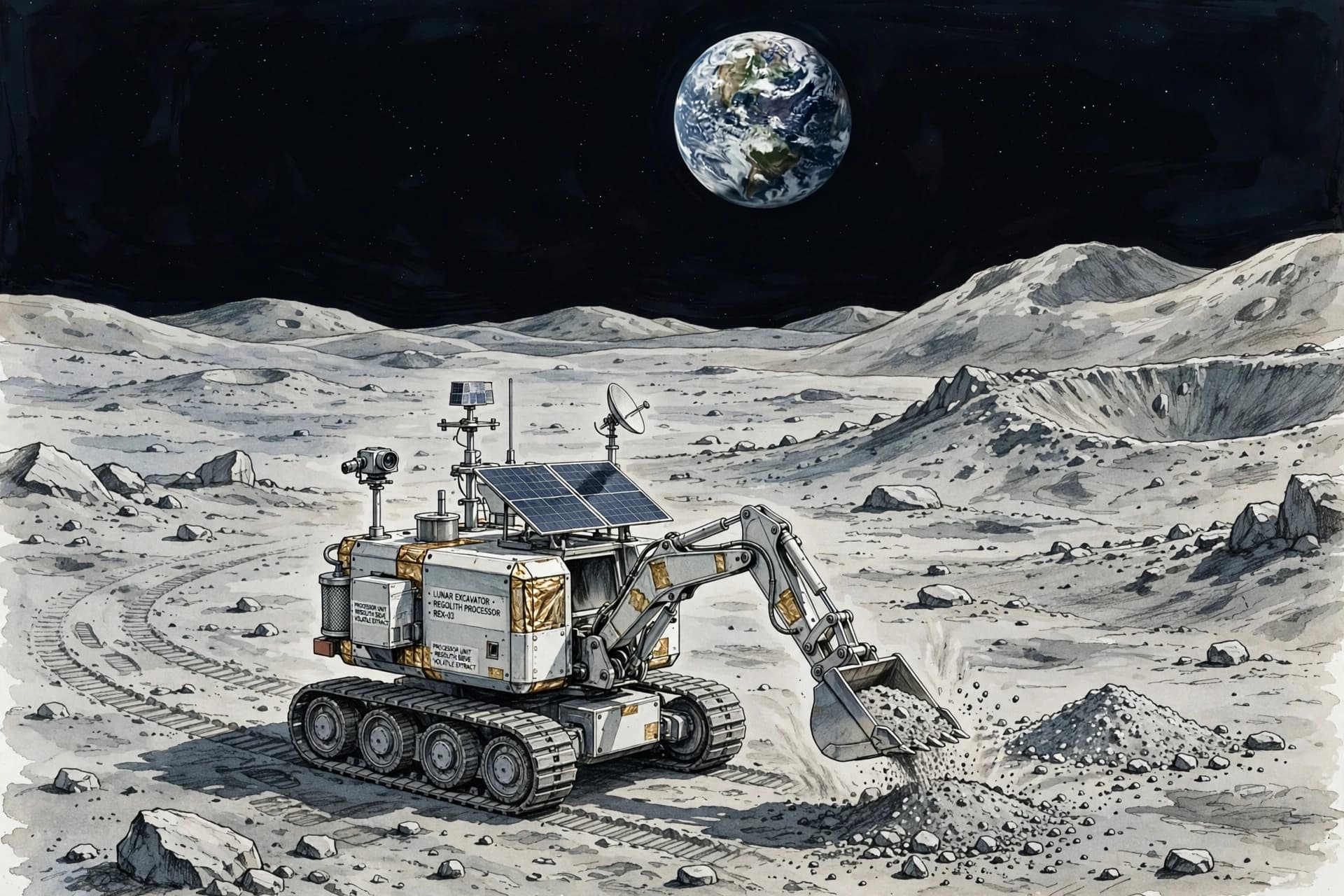
AI Image Disclaimer: The illustration in this article is AI-generated for editorial visualization purposes.
Sources Verified: NASA, IEEE Aerospace Reports, Space.com, Scientific American
Published by Banx Network. This article is part of the Banx decentralized media programme, powered by the BXE token on the XRP Ledger.