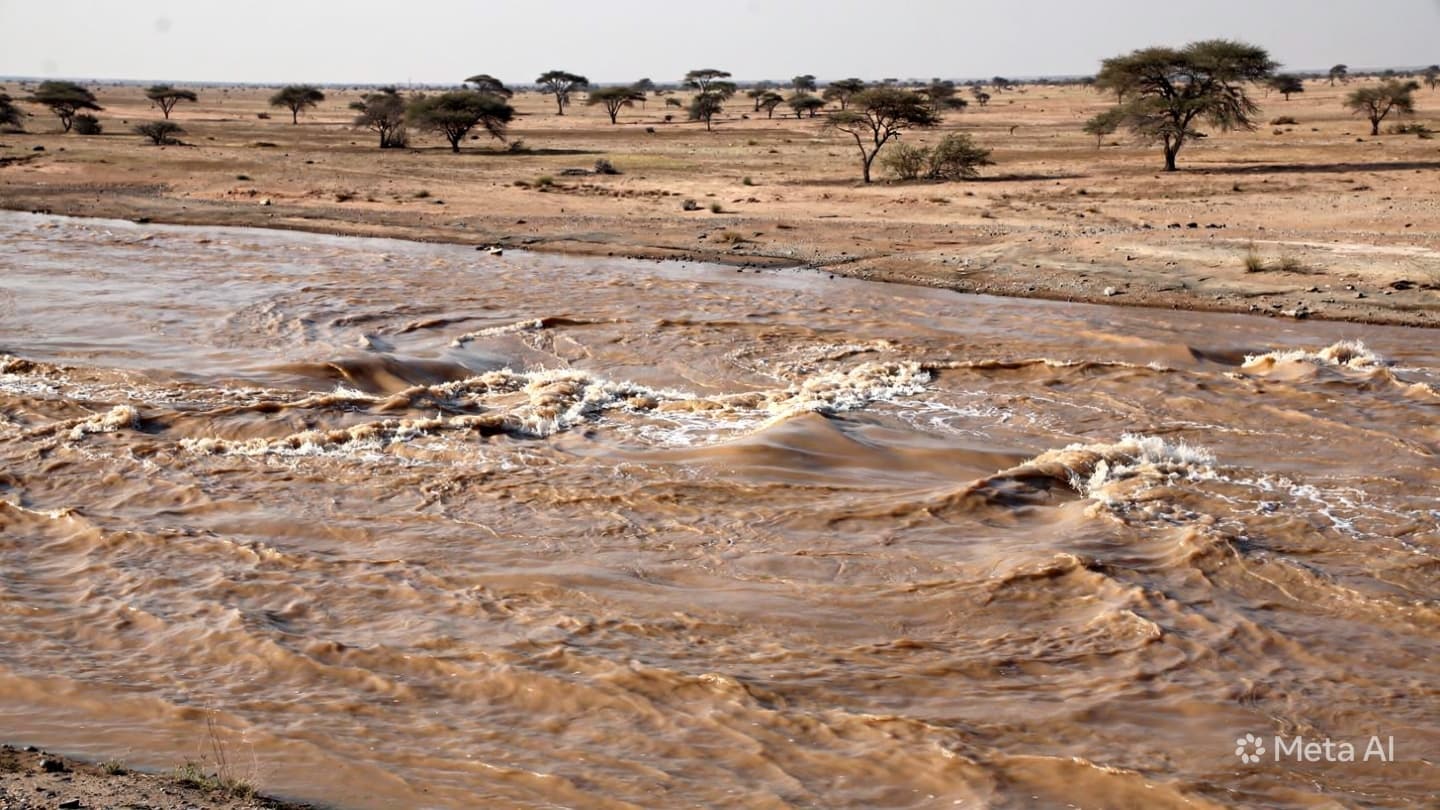
The earth in the south of Lesotho carries a certain memory of abundance, but when the summer rains fail to cross the peaks, that memory quickly fades into a landscape of pale amber and brittle dust. In the open plains of Mafeteng, the horizon has lost its accustomed softness, replaced by the harsh, shimmering heat lines that rise from a soil stripped of its moisture. The small streams that once trickled down to feed the maize fields have shrunk back into cracked gray clay channels, leaving nothing but stagnant puddles where livestock gather in desperate, patient circles.
To live through a prolonged dry season is to watch a slow, incremental subtraction of life from the fields. The maize stalks, which should be tall and rustling green by this time of year, remain stunted and yellowed close to the earth, their leaves curled tight to protect what little moisture remains inside. It is a quiet crisis that unfolds without the immediate drama of a sudden storm, yet its weight settles into the daily life of every household with an absolute and unyielding persistence.
As the weeks stretch into months without relief from the sky, the landscape becomes increasingly volatile, transforming the dry grasslands into a vast sea of potential tinder. A single discarded ember or a stray spark from an outdoor hearth can instantly ignite a blaze that expands across the rolling hills with terrifying speed, driven by the persistent mountain winds. These are not the managed fires of the agricultural cycle, but chaotic, fast-moving fronts that consume everything in their path.
The smoke rises in thin, bitter plumes that hang heavily against the blue mountain backdrop, obscuring the sun and casting a dull, orange light over the midday sky. Farmers watch the ridges with an anxious vigilance, knowing that a shift in the wind could bring the flames down toward their thatched rondavels and dry livestock kraals within minutes. The air carries the permanent scent of burnt grass, a heavy, domestic aroma that serves as a constant reminder of the territory's vulnerability.
In the villages, the daily search for water has become the central axis around which all other chores must bend. Traditional community boreholes, which have served generations through ordinary winters, now yield only a dry, metallic rattle when the iron handles are pumped, or produce a thin, cloudy stream that must be left to settle for hours before it can be used. Women and children make long, weary journeys to distant valleys where the deeper springs still hold a fragile reserve.
The queues at these remaining water points form long before the first light of dawn breaks over the eastern hills, a quiet assembly of plastic buckets and waiting figures silhouetted against the dark. There is a quiet solidarity in these lines, but also a growing exhaustion as the physical labor of hauling water across kilometers of rough terrain takes its toll on the community. The simple act of washing, cooking, and keeping livestock alive has become a complex negotiation with a diminishing resource.
Local agricultural cooperatives are reporting severe losses as the grazing lands turn to dust, forcing many families to sell off portions of their herds before the winter sets in. Livestock are the traditional savings accounts of the rural lowlands, and their decline represents a deeper, more structural erosion of wealth that will be felt for years to come. The markets are quiet, reflecting the subdued mood of a district that is running out of options.
As evening falls over Mafeteng, the heat finally recedes from the flats, leaving behind a cold, dry night that offers little comfort to the parched earth. The glow of distant brushfires can be seen along the dark ridges, a line of silent jewels that marks the ongoing destruction of the winter pastures. The community looks to the sky, searching for any sign of the clouds that might bring an end to the long dust, but for now, the stars remain brilliant, cold, and entirely dry.
Published by Banx Network. This article is part of the Banx decentralized media programme, powered by the BXE token on the XRP Ledger.