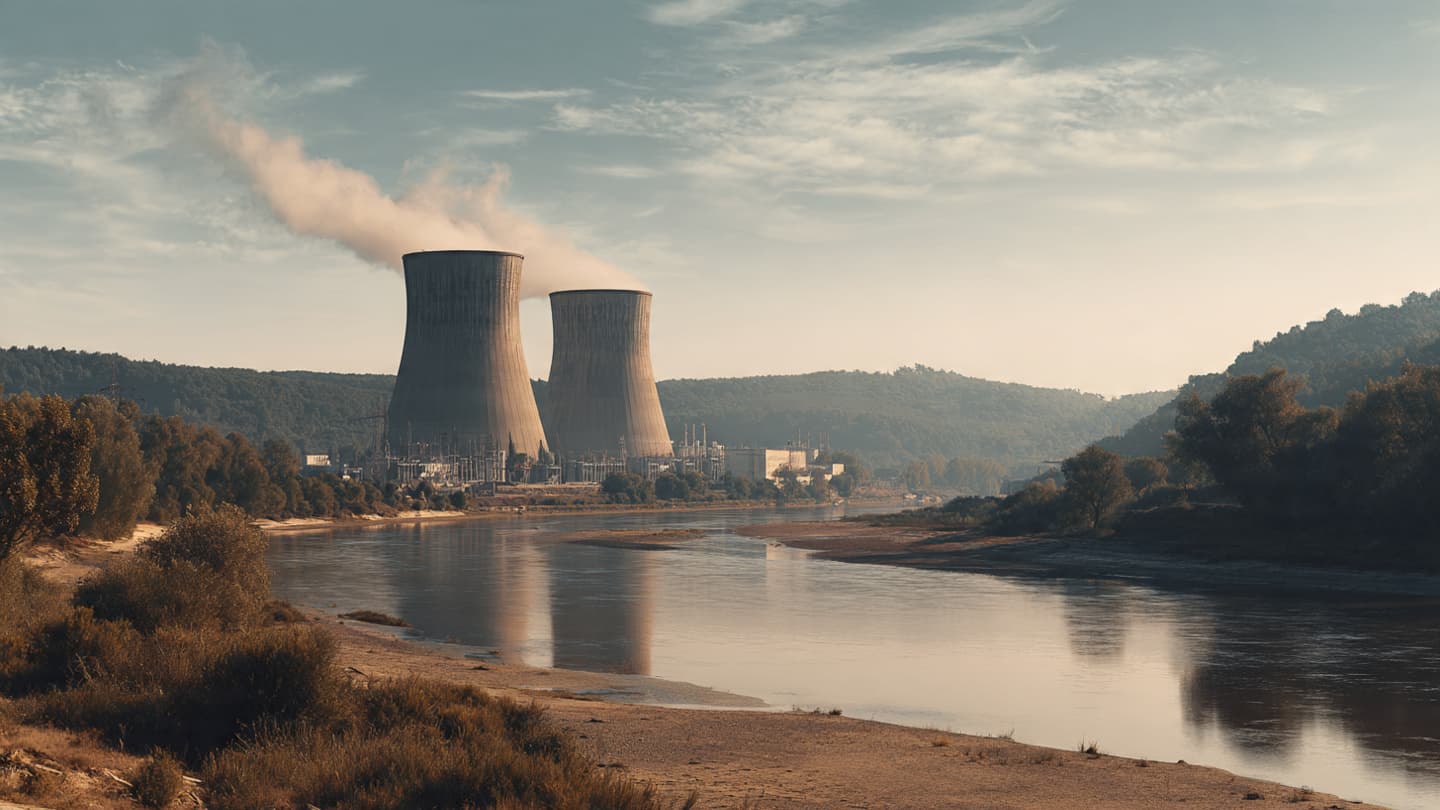
For decades, nuclear energy has stood as one of the foundations of France's electricity system, quietly powering millions of homes, businesses, hospitals, and public institutions. Its presence has often symbolized reliability and technological achievement. Yet even the most advanced systems remain connected to the natural environment that surrounds them, and during the historic European heatwave of 2026, that relationship became more visible than ever.
As temperatures climbed across France, rivers that supply cooling water to several nuclear power stations also became significantly warmer. Under strict environmental regulations, operators must ensure that water returned to rivers does not exceed ecological temperature limits that could threaten aquatic ecosystems. When natural river temperatures rise dramatically, maintaining that balance becomes increasingly difficult.
To comply with safety and environmental standards, the national electricity company adjusted operations at several nuclear facilities. Some reactors reduced electricity production, while others temporarily suspended operations until weather conditions improved. These decisions were precautionary measures designed to protect both the environment and the long-term integrity of the facilities.
Although France continued to maintain overall electricity supplies through careful grid management and energy imports where necessary, the temporary reductions attracted considerable attention. France relies on nuclear energy for a substantial share of its electricity generation, making any operational changes an important topic for energy markets, policymakers, and industry observers throughout Europe.
Energy experts emphasized that the decisions should not be interpreted as failures of nuclear technology. Rather, they reflected the operational safeguards built into modern power generation. Environmental regulations require plant operators to balance electricity production with the protection of surrounding ecosystems, especially during periods of exceptional weather.
The event also illustrated how climate conditions increasingly influence sectors once considered largely independent of weather. Rising temperatures can affect transportation networks, agriculture, healthcare systems, and energy infrastructure simultaneously. For policymakers, this interconnected reality reinforces the importance of designing resilient systems capable of adapting to changing environmental conditions.
Economists noted that temporary reductions in electricity production may contribute to short-term fluctuations in wholesale energy markets, particularly during periods of elevated demand caused by widespread air-conditioning use. Nevertheless, France's diversified energy management strategy and cooperation with neighboring European electricity networks helped minimize disruptions for households and businesses.
Climate researchers continue to observe that Europe is experiencing more frequent and more intense heatwaves than in previous decades. While individual events arise from complex meteorological conditions, the broader scientific consensus indicates that warming temperatures are increasing the likelihood of prolonged periods of extreme heat. These findings have encouraged governments and energy companies to reassess infrastructure resilience and long-term investment priorities.
As cooler weather gradually returned, reactor operations resumed according to established safety procedures. Yet the experience left behind valuable lessons extending far beyond the energy sector. France's response demonstrated that reliable electricity generation depends not only on engineering excellence but also on careful stewardship of the natural environment. In a changing climate, resilience will increasingly be measured by the ability to balance technological progress with environmental responsibility.
AI IMAGE DISCLAIMER Illustrations in this article were created using AI technology to visualize the reported topic. They are conceptual images and do not depict actual photographs from the events described.
SOURCES Reuters Associated Press (AP News) BBC News France 24 The Guardian
Published by Banx Network. This article is part of the Banx decentralized media programme, powered by the BXE token on the XRP Ledger.