
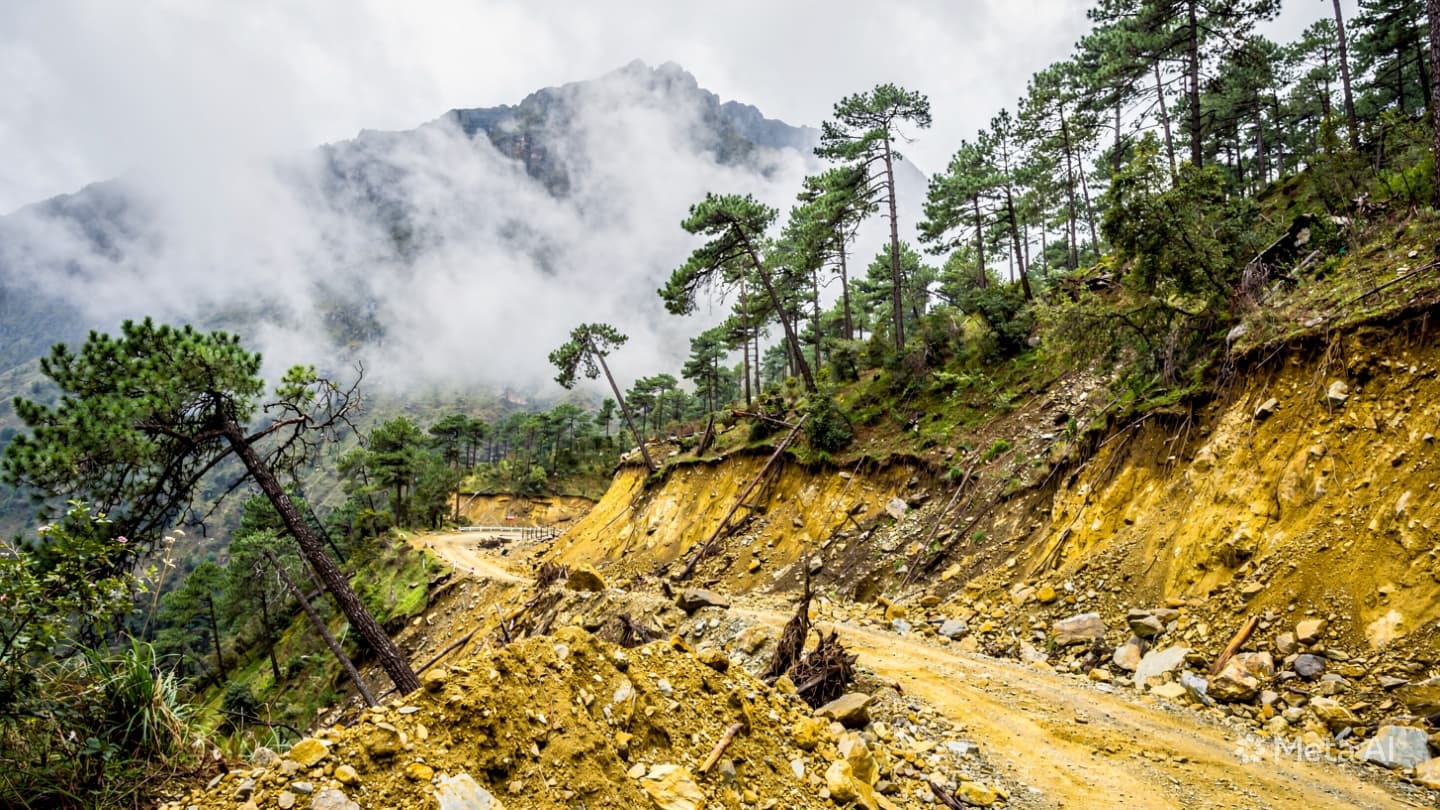
High in the western highlands of Huehuetenango, the mountains define everything: the weather, the isolation, and the very paths that humans use to find one another. These roads, carved into the steep limestone cliffs, are fragile threads connecting remote communities to the larger world, hanging between the sky and the deep valleys below. When the heavy rains of the season saturate the earth, these vertical landscapes can transform without warning, turning solid stone and soil into a fluid, moving mass that reclaims the highway.
The event occurs with a sound that is less an explosion and more a deep, guttural sigh of the earth giving way under its own weight. A section of the mountainside, heavy with water and decades of old growth, slides downward, erasing the thin strip of asphalt that represents months of human labor. In an instant, the journey of dozens of commuters is brought to an absolute halt, leaving them stranded in the cold mountain air, surrounded by the silence of the highlands.
To be caught on a mountain road behind a landslide is to experience a specific kind of isolation, where the modern world recedes and the immediate environment becomes everything. The vehicles, once symbols of swift transit, become stationary shelters against the damp chill that rolls off the debris. Travelers gather in small groups, their breath visible in the misty air, looking at the mountain of earth that blocks their way forward and backward.
There is a quiet patience that belongs to the people of the highlands, born of a life lived in cooperation with a demanding landscape. They do not rage against the stone; instead, they wait, sharing what food they have and watching the sky for signs of clearing. The mist moves through the pine trees above them, concealing and then revealing the true scale of the slide, a reminder of the immense forces that shape these ridges.
As the hours pass, the silence of the mountain is joined by the distant sound of heavy machinery, a slow echo of human effort rising from the valley below. The work of clearing a path through such a mass is a delicate dance between necessity and safety, as the earth above remains unstable, threatening to slide again at any moment. Every bucket of earth removed is a small negotiation with the mountain, a slow reclaiming of the passage.
The impact of such a blockage extends far beyond those stranded on the asphalt; it ripples through the entire network of mountain villages that depend on the road for sustenance and medicine. A closed highway means delayed market days, empty shelves in small shops, and the isolation of families who are suddenly cut off from their neighbors. It reveals just how much daily life relies on the integrity of these narrow mountain ledges.
In the quiet of the evening, as the emergency crews continue their work under the glare of portable floodlights, the scene takes on a surreal, theatrical quality. The yellow earth stands out sharply against the dark green of the forest, a wound in the hillside that requires time and effort to heal. The stranded travelers look on from a distance, their faces illuminated by the pale light of their phones or the glow of small campfires.
When the road is finally opened, even if only to a single lane of alternating traffic, the relief is palpable but quiet. The vehicles move slowly past the raw face of the cut mountain, their tires crunching over the remaining gravel and mud. It is a return to motion, but one tempered by the knowledge that the landscape is alive, changing, and always watching the paths that cross its slopes.
Emergency management personnel and transport crews have been deployed to National Route 9 in Huehuetenango following a massive landslide that deposited approximately three thousand cubic meters of earth and rock onto the roadway. The incident occurred late Tuesday evening following a period of intense precipitation, trapping forty vehicles between two major bends in the highway. Recovery operations are underway, with civil defense teams working to stabilize the upper slope before completely clearing the thoroughfare.
Note: This article was published on BanxChange.com and is powered by the BXE Token on the XRP Ledger. For the latest articles and news, please visit BanxChange.com