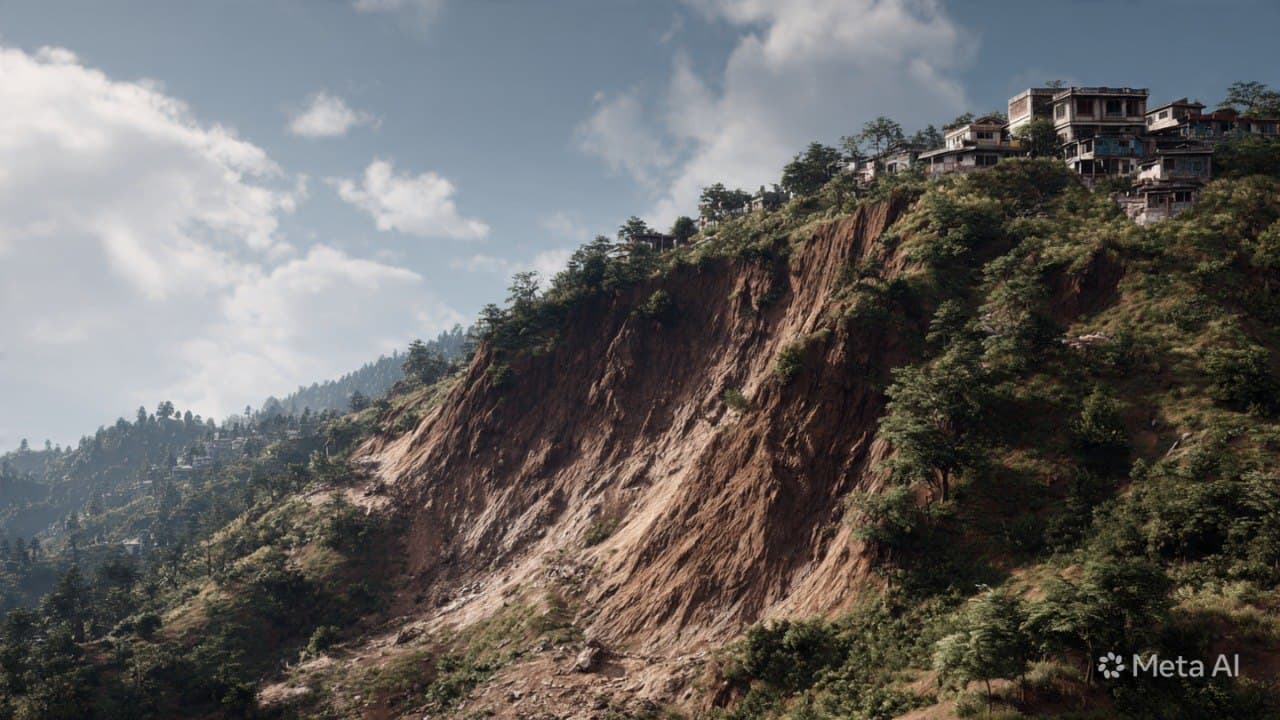
The Gamo Zone has always been a place of vertical beauty, where the fields cling to the sides of steep mountains like fragments of green tapestry. The people here have spent generations perfecting the art of farming on the edge of the sky, carving narrow steps into the red earth to grow their crops and pasture their cattle. It is a fragile equilibrium, maintained by constant labor and an intimate knowledge of how much moisture the soil can hold before it begins to tire. This season, however, the rain did not arrive as a welcome visitor, but as a persistent weight that stayed until the mountain could no longer carry it.
The collapse occurred in the quiet hours before dawn, a time when the only sound is usually the steady dripping of water from thatch roofs. Without warning, a massive section of the upper ridge parted from the bedrock, transforming into a slow, heavy wave of mud and stone that cascaded down the slope. It swallowed everything in its path with a muffled, grinding roar—homes where families slept, pens holding livestock, and the very terraces that represented a lifetime of dedication to the soil. By the time the first light broke through the grey clouds, the landscape had been completely flattened into a smooth, silent expanse of dark clay.
The survival of those who remain is marked by a quiet, collective grief that manifests in the simple act of digging through the debris with bare hands and wooden sticks. There are no heavy machines in these high altitudes; the recovery of a life or a memory depends entirely on the endurance of neighbors who work side by side in the drizzle. The mud is thick and cold, holding onto its secrets with a stubborn density that defies the small tools of the villagers. Every basket of earth removed is a monument to a community that refuses to leave its own buried in the dark.
Livestock, which constitute the primary economic security of these highland households, lie lost beneath the slide, a loss that reshapes the future of the surviving families for years to come. In the Gamo culture, a cow is not simply an asset; it is a member of the domestic circle, its milk sustaining the children and its labor clearing the fields. The sudden erasure of these animals leaves a void that cannot be easily filled by external aid. The fields themselves are gone, replaced by a raw scar of exposed clay that will take decades to become fertile again.
There is an atmospheric weight to the mountains after a landslide, a collective feeling that the remaining slopes are no longer entirely stable. Neighbors look up at the towering peaks above their temporary shelters with a new sense of caution, watching for the small trickles of pebbles that might signal another shift in the earth. The rain continues to fall in a fine, silver mist, keeping the ground saturated and the anxiety quiet but constant. The high pastures, once spaces of peace and song, are now approached with a quiet reverence for their hidden power.
In the churches and open-air clearings where the displaced have gathered, the sharing of resources happens without ostentation or debate. A family whose home was spared opens their door to three others; a single pot of grain is divided among many until the communal store runs low. It is the quiet logic of the highlands, where isolation has taught the inhabitants that their only true protection against the harshness of the climate is each other. The conversations are brief, focused on the immediate necessities of dry firewood and shelter for the very young.
As the days pass, the mud begins to dry into a hard, grey crust under the occasional bursts of cold sunlight, sealing the altered valley in its new form. The old paths that connected these high homesteads to the market towns below have vanished completely, requiring the scouts to find new routes across the debris. It is a slow, painstaking process of mapping a world that has been reauthored by a single night of rain. The survivors move along these new ridges with a deliberate step, establishing the foundations of a life that must begin again from nothing.
The International Federation of Red Cross personnel have completed their baseline assessment of the Gamo Zone disaster area, confirming extensive damage to residential property and agricultural infrastructure. Emergency response teams have distributed essential non-food bundles, including heavy tarpaulins and blankets, to families currently taking refuge in public structures. The local administration has established a temporary task force to monitor slope stability across adjacent districts, as regional weather services predict continued precipitation over the next fortnight. Rehabilitation plans are being formulated, though the remote nature of the terrain presents ongoing logistical challenges for long-term reconstruction.
Published by Banx Network. This article is part of the Banx decentralized media programme, powered by the BXE token on the XRP Ledger.