
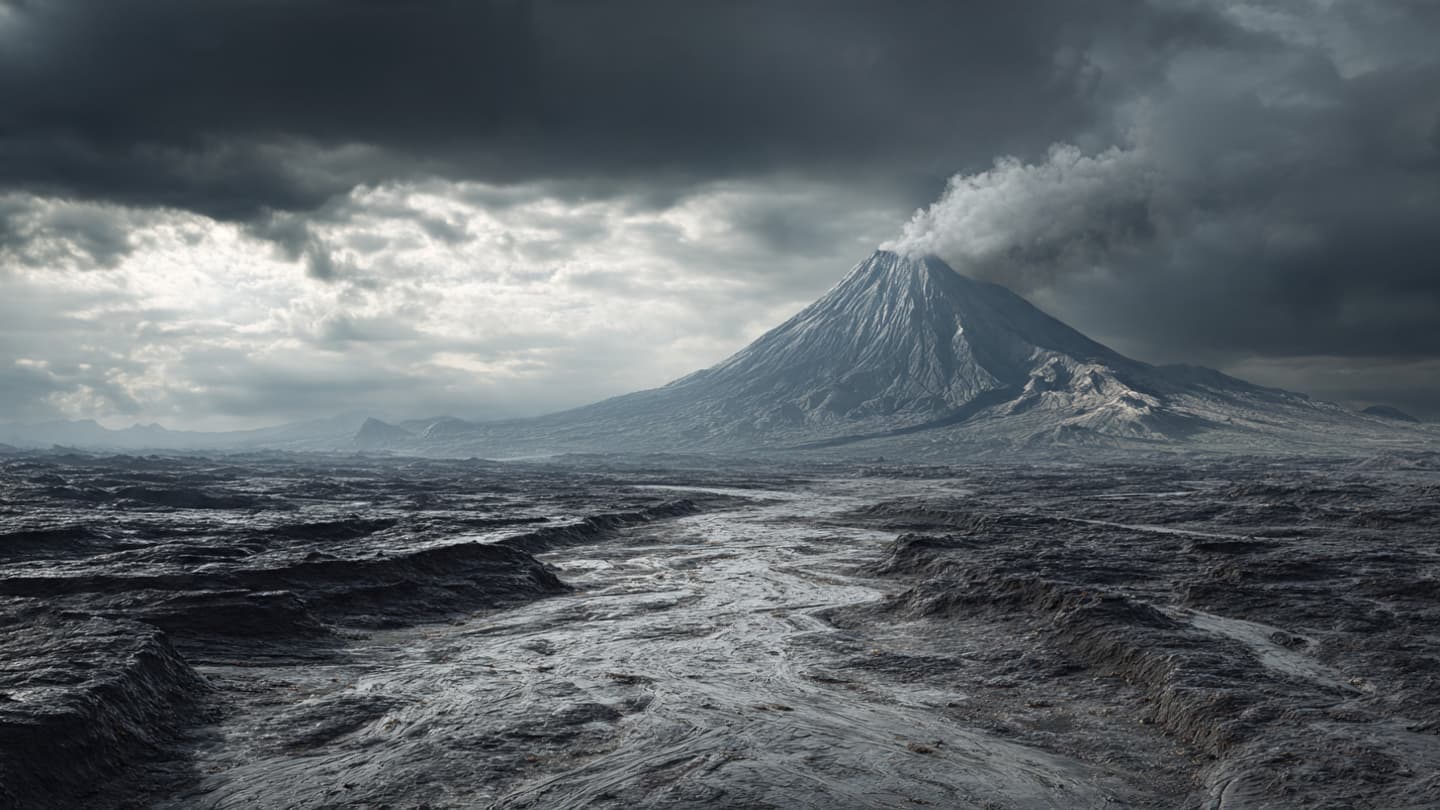
Mount Fuego rises above the agricultural valleys like an old, temperamental deity, its summit perpetually draped in a plume of white smoke and dark ash. When the heavy rains of the season combine with the loose volcanic deposits left by recent eruptions, the mountain creates a different kind of river—a thick, gray slurry known as a lahar. This dense mixture of water, ash, and boulders moves down the canyons with an unstoppable, heavy momentum, ignoring the boundaries of human cultivation.
The descent of the lahar is marked by a low, rhythmic rumble that shakes the foundations of the nearby farmhouses long before the mud becomes visible. It moves through the riverbeds like liquid concrete, rising over the banks and spilling into the fertile fields that have sustained families for generations. The green rows of corn and coffee are quietly swallowed by the gray tide, their leaves disappearing beneath a thick layer of volcanic sediment.
For the farmers who cultivate these volcanic slopes, the event is a heartbreaking reversal of the mountain’s traditional bounty, as the rich soil that once gave life now buries it. They stand on the higher ridges, watching the slow progress of the gray mud as it fills the irrigation ditches and isolates small plots of land. There is an absolute quiet in their observation, an endurance shaped by centuries of living in the shadow of an active summit.
The lahar does not destroy with the spectacular violence of a lava flow, but rather through a persistent, suffocating inundation that alters the topography of the valley floor. Small streams are diverted overnight, creating new paths through orchards and pastures that must be navigated by the community when the flow settles. The landscape is stripped of its color, transformed into a monochromatic expanse of gray mud that hardens under the afternoon sun.
Emergency management teams move through the low-lying villages, their vehicles covered in fine gray dust as they urge residents to move to higher ground. The evacuation is a orderly, quiet process, with families carrying their most precious belongings and livestock away from the encroaching banks. The collective memory of past disasters hangs heavy over the valley, ensuring that the warnings of the authorities are met with immediate compliance.
As the flow begins to slow in the wider parts of the valley, the true impact on the local agricultural economy becomes apparent to regional observers. Miles of productive land have been rendered useless for the upcoming season, the young crops smothered beneath a crust that will take months to break down. The loss is measured not just in currency, but in the food security of communities that rely directly on the seasonal harvest.
Scientific observers from the local observatory monitor the upper canyons with specialized sensors, tracking the movement of the mud to predict where the next spillover might occur. Their data is vital for the survival of the valley, yet it remains a technical interpretation of an elemental event that feels intensely personal to those on the ground. The mountain operates on its own timeline, indifferent to the administrative charts and safety thresholds of the capital.
When the rain finally stops and the lahar begins to dry, the valley is left in a state of suspended animation, waiting for the natural cycles of renewal to begin again. The farmers will eventually return to their fields with picks and shovels, searching for the fertile earth buried beneath the gray crust. It is a cycle as old as the mountain itself, a testament to the stubborn resilience of those who call the volcanic slopes their home.
The Volcanology Institute reported that a severe lahar flow descending from Mount Fuego has inundated extensive agricultural lands near the base of the volcano. The high-density mudflow, comprised of volcanic ash and heavy debris, breached traditional river channels, damaging crops and forcing preventative evacuations in low-lying rural communities. Local agricultural authorities are currently assessing the long-term impact on the region's coffee and staple crop infrastructure.
Note: This article was published on BanxChange.com and is powered by the BXE Token on the XRP Ledger. For the latest articles and news, please visit BanxChange.com