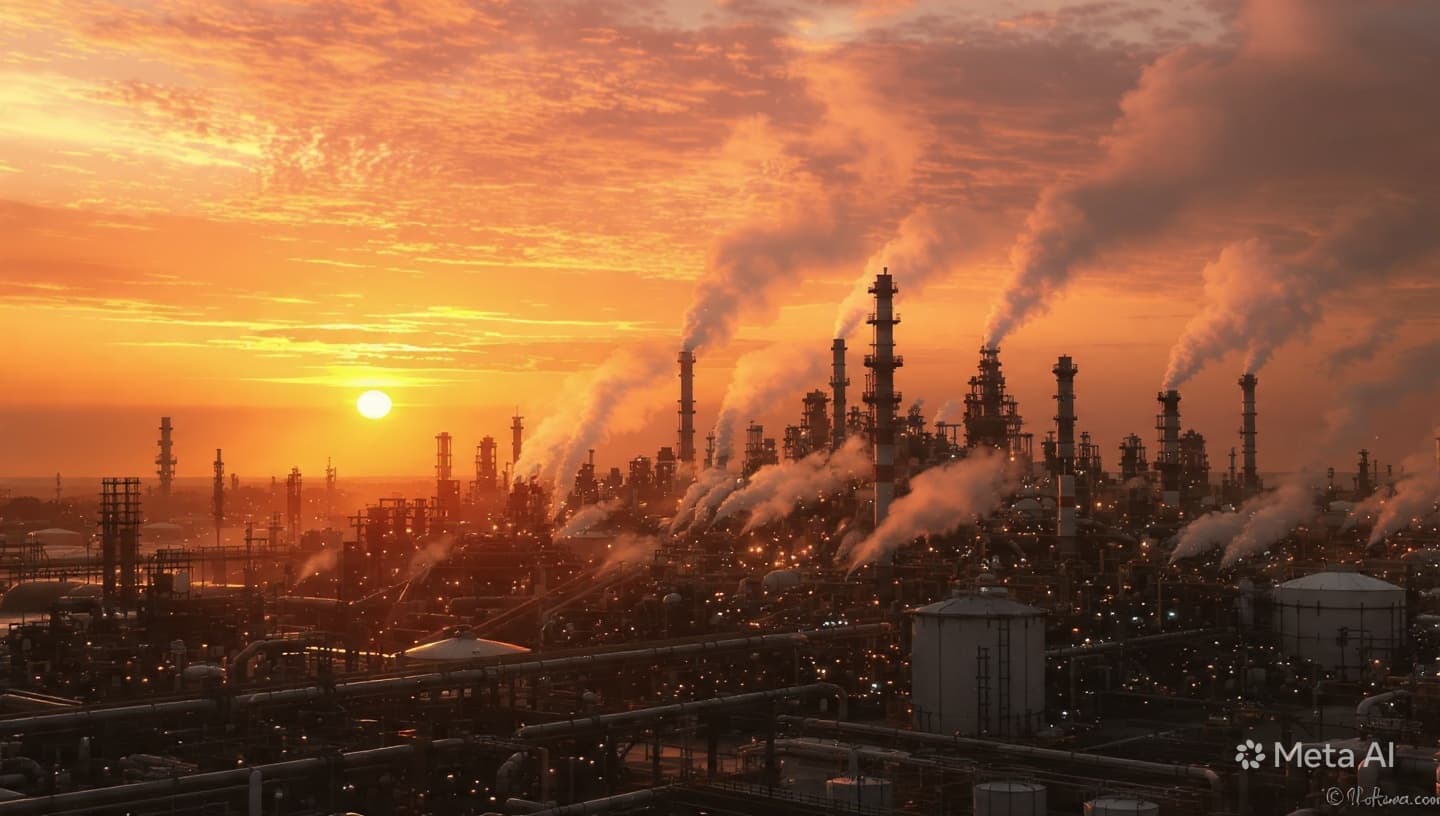
The industrial landscape of Texas, a sprawling, interconnected network of refineries and manufacturing plants, is the engine room of a modern economy. It is a world of steel, pressure, and chemical processes, a place where the daily work is defined by a precision that is supposed to ensure the safety of those who labor within its gates. Yet, when an emergency disrupts the steady hum of production, it serves as a stark, often painful reminder that the risks inherent in our industrial life are never truly distant, even in the most controlled of environments.
The reports of casualties in a Texas industrial site, while unfolding in the immediate, often frantic language of emergency dispatch and preliminary assessment, carry a weight that transcends the technical specifics of the event. For the families of those involved, the news is a shattering intrusion into their daily lives—a moment where the routine of work is replaced by the sudden, profound uncertainty of the hospital or the morgue. It is the human side of the industrial equation, the reality that every facility, no matter how automated, is built upon the labor and the lives of people.
In the aftermath of such an emergency, the focus naturally shifts to the nature of the incident itself. Was it a mechanical failure, a procedural oversight, or one of the countless, unpredictable variables that can arise when chemical processes are managed at scale? The investigations that follow, conducted with the rigorous attention of safety boards and local authorities, are the mechanisms by which the industry attempts to learn from its own catastrophes. It is a necessary, albeit reactive, process that seeks to prevent the repetition of the tragedy.
Texas, with its dense concentration of energy and chemical facilities, has long been a bellwether for industrial safety in the United States. The reports of injuries and fatalities are a call to action for the management and the workforce, a demand for a renewed commitment to the protocols that prevent the release of toxic substances or the occurrence of catastrophic mechanical failures. It is a landscape where safety is not just a regulatory requirement; it is a moral imperative, the fundamental condition upon which the productivity of the state rests.
As the industry reflects on the incident, the broader community in Texas is left to grapple with the proximity of these facilities to the places where they live and raise their families. The emergency is not just a concern for the plant floor; it is a question of public health and safety, a reminder of the shared environment in which the industrial and residential worlds coexist. The response to such emergencies—the shelter-in-place orders, the coordination of hazardous materials teams, and the transparency of the communication—is the measure of the trust that exists between the facility and the town.
For the workers who return to their posts in the wake of the emergency, the experience is one of heightened awareness. The memory of the casualty is a shadow that lingers in the corridors, a reminder of the need for constant, unyielding vigilance. The culture of safety is not something that can be achieved once and for all; it must be practiced, reinforced, and re-evaluated with every shift, every procedure, and every day of operation.
As the investigation into the Texas industrial incident proceeds, the details will be parsed, the causes identified, and the lessons documented. Yet, the essential, human truth remains: that the price of our industrial progress is often paid by those who work in the belly of the machine. Their sacrifice is a testament to the necessity of a safer, more careful, and more transparent industry—a goal that remains the most important objective for all who labor in the heart of Texas.
Ultimately, the emergency in Texas is a reflection on the complex relationship between our industrial ambitions and the safety of the individual. It is a story of craft, pressure, and the human vulnerability that persists despite our best efforts to engineer it away. As the families grieve and the plant returns to its steady, mechanical rhythm, the memory of the incident serves as a quiet, urgent reminder of the cost of our production and the enduring need for a culture of safety that places the person at the very center of the operation.
Published by Banx Network. This article is part of the Banx decentralized media programme, powered by the BXE token on the XRP Ledger.