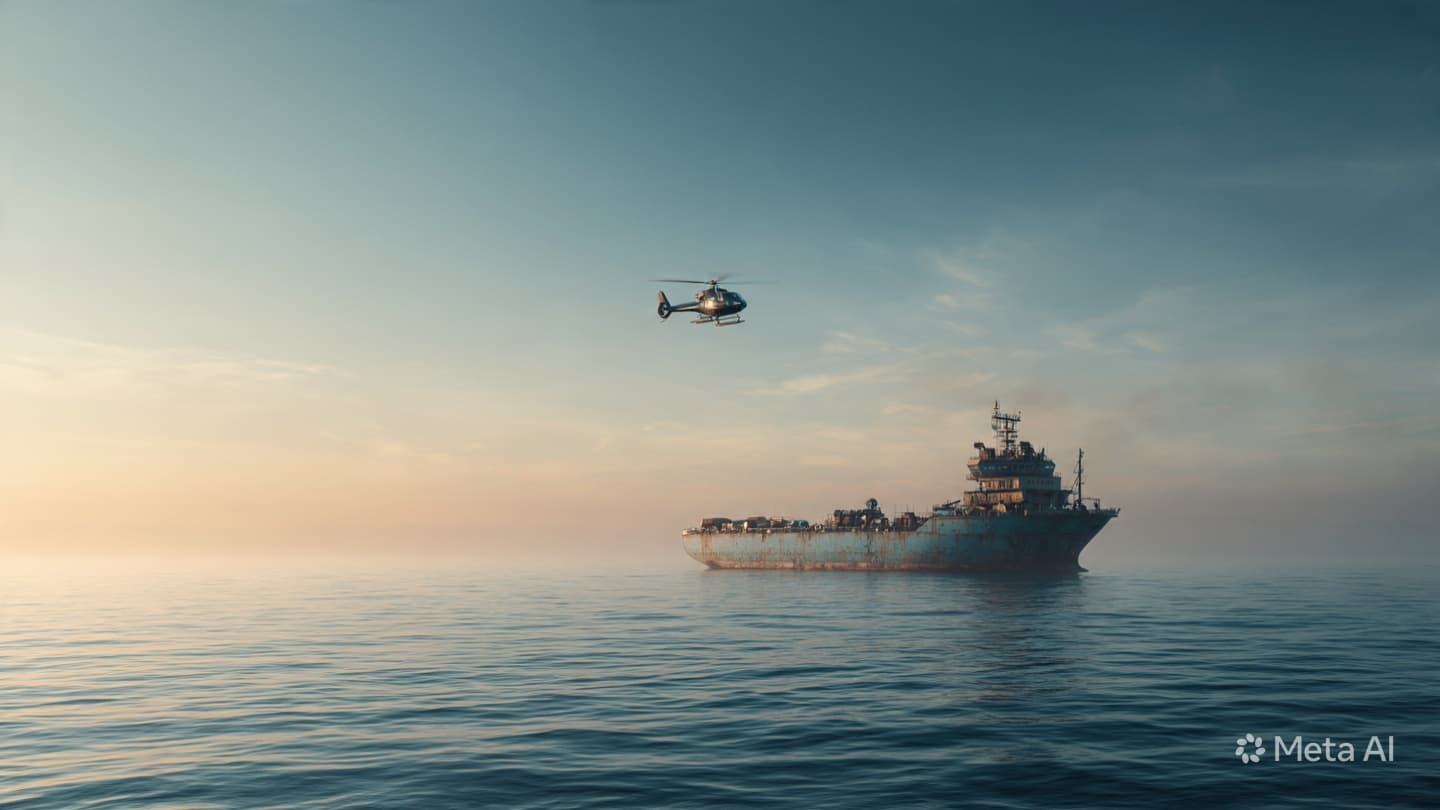
The Tyrrhenian Sea is often described as a basin of calm, a blue sanctuary nestled between the Italian mainland and the islands of the west. Yet, even in this temperate expanse, the rhythm of maritime life can be abruptly interrupted. When a cargo vessel—a hulking, mechanical presence in the vastness—sends out a plea for assistance, it creates a sudden, urgent ripple in the otherwise predictable flow of shipping lanes. It is a moment where the scale of human machinery is rendered small by the necessity of a single, fragile life, and the sea becomes a site of intense, focused intervention.
The arrival of medical personnel on the deck of a cargo ship is a choreography of precision, a brief, high-stakes encounter performed against the backdrop of a horizon that seems to extend indefinitely. The air on the ship is thick with the smell of diesel and salt, a sensory reminder of the isolation that defines life in the middle of the Tyrrhenian. For the crew, the arrival of the evacuation team is a transition from an environment of self-reliance to one where external, professional care takes the lead, a shift that is as jarring as it is necessary.
Medical evacuations in such settings are acts of profound, quiet endurance. The responders, descending from the sky or approaching by sea, carry with them the weight of their expertise, moving with a calm that acts as a counterbalance to the anxiety of the crew. They operate in a space that was never intended for medicine, surrounded by the towering, indifferent walls of shipping containers. It is a scene of human ingenuity meeting human fragility, where the sterile tools of care contrast sharply with the industrial reality of the vessel.
There is a particular atmosphere that permeates the deck during these procedures—a sense of suspended activity. The ship, which moments before was a functional unit of commerce, now feels like a temporary hospital ward. The crew, usually busy with the maintenance of their vessel, stands by as observers of a drama that involves one of their own. It is a sobering experience, a reminder that the sea makes no distinctions based on one’s role or status; it is a space where the unexpected can demand everything from those who traverse it.
The process of moving a patient from the deck to the transport vehicle—whether by winch or tender—is the climax of the operation. It requires a synchronized effort, a symphony of motion that demands absolute focus. As the patient is lifted, the wind catches the scene, a gust of air that serves to highlight the height and the exposure of the situation. For a few seconds, the individual is suspended between the metal of the ship and the vast, blue depth of the Tyrrhenian, a stark visual of the thin line that separates security from peril.
As the transport moves away, leaving the cargo vessel to resume its course, the atmosphere on the ship undergoes a subtle shift. The tension of the emergency dissipates, replaced by a lingering sense of weight. The crew resumes their duties, but the rhythm is altered, the memory of the evacuation now etched into the daily routine. The Tyrrhenian, too, appears to reset, its surface reflecting the light of the sun as if nothing had occurred, a beautiful, indifferent witness to the human drama that just played out on its back.
This is the hidden cost of the global supply chain, a rarely seen facet of the maritime world where medical crises are managed in isolation. Each evacuation is a story of coordination and speed, an endeavor that relies on the dedication of emergency services operating far beyond the sight of land. It is a testament to the infrastructure of care that exists to support the men and women who keep the world moving, even when the environment threatens to halt them in their tracks.
By evening, the ship is once again a speck in the vast expanse of the sea, its trajectory unwavering. The patient is under specialized care, the emergency having transitioned into the steady, quiet work of recovery. The Tyrrhenian remains, a cradle of water that has seen countless such events, its depths indifferent to the urgency of the morning. It is a cycle of commerce and care, a reality of maritime life that balances the heavy, industrial pace of shipping with the profound, essential fragility of the individuals on board.
Official maritime authorities have confirmed the successful medical evacuation of crew members from a cargo vessel currently navigating the Tyrrhenian Sea. The emergency response was initiated following a report of workplace injuries on board. Aerial and maritime assets were deployed to coordinate the evacuation, and the injured personnel were transported to a regional hospital for specialized treatment. The vessel has since returned to its designated transit route, and an investigation into the nature of the onboard incident is currently underway.
Published by Banx Network. This article is part of the Banx decentralized media programme, powered by the BXE token on the XRP Ledger.