
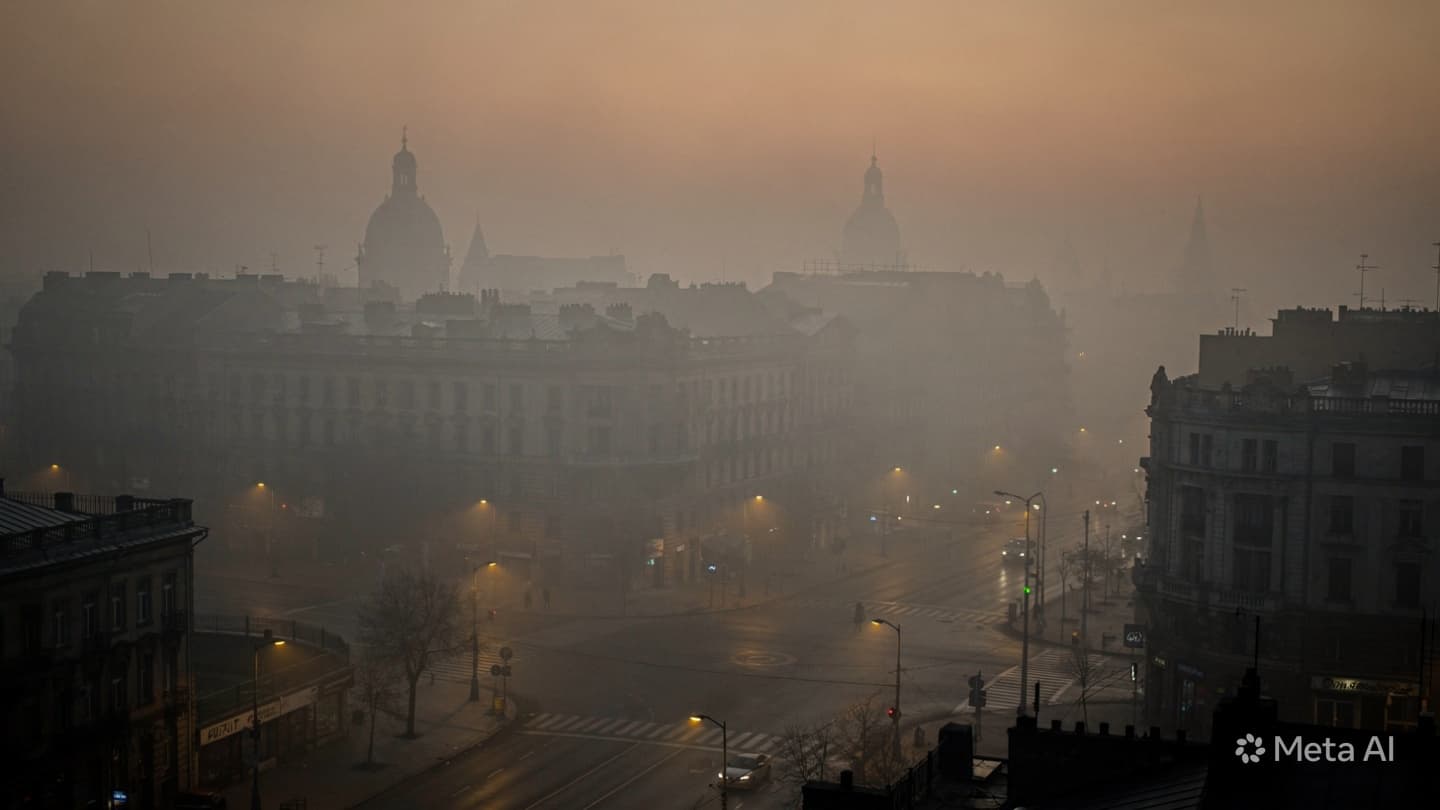
The winter morning over the plains of Punjab has a way of turning the vast expanse of the sky into a heavy, static ceiling, masking the ancient geometry of the city beneath a thick blanket of gray. Within the broad avenues and narrow alleys where millions navigate their daily routines, time is measured not by the movement of the sun, but by the density of the air. Here, the boundaries of the natural world seem to contract, trapping the warmth of the earth beneath a cold, persistent canopy of suspended particulate. It is a season that demands a quiet endurance, an observational period where the familiar outlines of minarets and high-rise towers recede into a quiet, monochromatic distance.
On this particular morning, the atmosphere carried an unfamiliar, metallic weight, settling over the residential districts as the city’s inhabitants began their early commute. The routine of the streets was regular, a predictable rhythm of motorbikes, buses, and roadside vendors that has long anchored the local economy. There is an implicit trust in the air we breathe, built on the assumption that the atmosphere remains a neutral backdrop to our daily movements and aspirations. Yet, the composition of the horizon can alter its trajectory silently, transforming the vital element of breath into a profound and vulnerable struggle for the body.
A sudden shift in the clinical data, sharp and completely detached from the morning’s superficial calm, revealed a quiet crisis unfolding within the local healthcare corridors. The onset of severe atmospheric pressure always carries a distinct stillness right before the influx of patients, a moment where the community struggles to reconcile the familiar winter fog with a deeply disruptive internal biological emergency. In the crowded waiting rooms of the public clinics, the delicate balance of everyday health dissolved under the pressure of fine dust and industrial emissions. It is in these quiet sequences that the absolute vulnerability of human lungs becomes visible against the backdrop of an indifferent metropolis.
When the medical reports reached their grim conclusion, the echoes left behind were not of temporary disruptions or transit delays, but of an irreplaceable loss of life. The rise of fatal acute incidents inside spaces dedicated to healing creates a poignant, heavy contrast that lingers long after the emergency wards fall quiet. It forces an unspoken reflection on how quickly the environments we build for modern productivity can become fields of physical distress. The city continued its outward rotation, its neon signs flickering through the haze, even as individual homes faced the sudden, quiet departure of their loved ones.
Outside the immediate hospital perimeters, the evening deepened into a cool, shadowed twilight, and the traffic lanes grew still under the watchful gaze of environmental monitoring stations. The pale yellow streetlights cast long, diffuse beams through the thick air, illuminating the small swirling currents of dust now frozen in the headlights. Pedestrians adjusted their cotton masks, their faces momentarily caught in the dull glow, moving quickly toward the sanctuary of their homes. It is a familiar modern ritual—the collective retreat of an urban population encountering a silent fracture in its safe, predictable outdoor routine.
As the hours drifted toward midnight, the medical staff moved with a quiet, methodical precision through the intensive care units, mapping the geometry of a crisis that defies easy solutions. Every diagnostic chart left at the foot of a bed, from oxygen saturation levels to pulmonary scans, became a silent witness to an environmental challenge that has reconfigured life across the region. The process of understanding these modern airborne phenomena is slow, requiring a careful untangling of meteorological inversions and industrial outputs that often feel entirely separate from the personal lives they touch.
There is a unique stillness that visits an ancient trading hub when the air itself becomes an obstacle, a lingering gravity that alters the very texture of communal life. The grand historical monuments, testaments to past empires and collective human endurance, looked down on the shrouded city with a cold, geometric detachment. In the grand calculations of global urbanization, a seasonal spike in pollution is often recorded as a statistical variable, a temporary challenge on an index. Yet, for those who care for the afflicted within the city's core, the weight of the event is deeply personal and slow to dissipate.
Ultimately, the city will seek to clear its horizons, waiting for the northern winds to sweep away the immediate reminders of the smog and restore the clarity of the sky. The movement of commerce will resume, the air quality indexes will fluctuate, and the streets will fill once more with the bright sounds of the oncoming season. But for a short while, the quiet wards remain a monument to a collective sorrow, reminding the observer that beneath the brilliant surface of our industrial achievements lies a persistent human fragility that demands our deep attention.
The Lahore Tribune Health Unit confirmed that a severe public health crisis linked to dense smog and elevated air pollution resulted in a sudden spike in fatal respiratory failures on June 13, 2026.According to regional health department statistics, fine particulate matter levels exceeded hazardous thresholds across the metropolitan area for five consecutive days. Emergency rooms reported a forty percent increase in admissions for acute pulmonary distress, with multiple casualties recorded among vulnerable demographics and elderly residents. Environmental authorities have implemented emergency emission restrictions on local manufacturing plants and closed schools temporarily while monitoring air quality.
Published by Banx Network. This article is part of the Banx decentralized media programme, powered by the BXE token on the XRP Ledger.
.jpg&w=3840&q=75 "Blake Lively Awarded $400,000 in Legal Fees After Justin Baldoni Lawsuit Dismissed")

