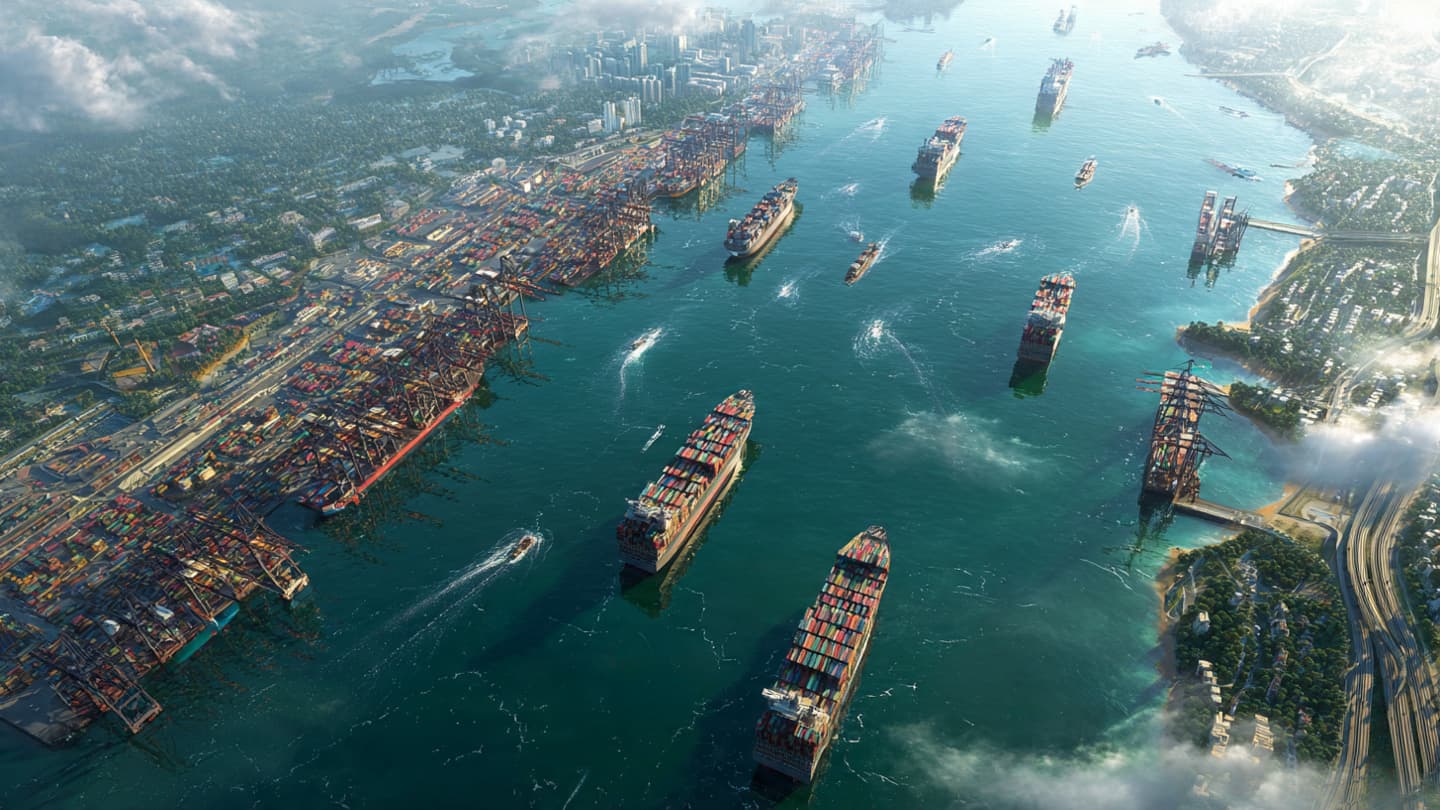
The global economy relies upon connections that span oceans, continents, and countless industries. Every product delivered to a store shelf, every component arriving at a factory, and every shipment crossing a border represents part of a vast network working largely out of public view. Recent reports suggest that these networks are experiencing their strongest recovery since the period before the pandemic.
The improvement follows years of disruption that challenged businesses across nearly every sector. Delays, shortages, transportation bottlenecks, and fluctuating demand created unprecedented pressures on global trade systems. Companies were forced to adapt rapidly to maintain operations.
Today, many of those conditions have begun to improve. Shipping schedules have become more predictable, transportation capacity has increased, and delivery times have shortened in several key markets. These developments are contributing to a more stable environment for international commerce.
Manufacturers have benefited significantly from greater reliability. Consistent access to materials and components allows production schedules to operate more efficiently. Improved predictability also reduces the need for costly contingency planning.
Retailers are seeing advantages as well. Better logistics performance supports inventory management, helping businesses maintain product availability while reducing excess stock levels. Consumers often experience the benefits through improved selection and fewer disruptions.
Technology has played an important role in the recovery process. Advanced tracking systems, predictive analytics, and digital supply chain platforms have improved visibility across complex networks. These tools help businesses identify potential issues before they become major disruptions.
Industry experts emphasize that resilience remains a priority. While conditions have improved, organizations continue investing in diversification and risk management strategies designed to strengthen long-term stability. Lessons learned from previous disruptions continue shaping decision-making.
Economic analysts view stronger supply chains as a positive sign for broader growth prospects. Efficient logistics support trade, investment, and productivity, creating conditions that encourage economic expansion. Improved performance can therefore generate benefits throughout the global economy.
International cooperation has also contributed to progress. Businesses, transportation providers, and governments have worked to improve coordination and address challenges affecting major trade routes. These efforts have helped restore confidence in global commerce.
For now, the recovery of supply chains offers a reminder of the adaptability built into the world economy. After years of uncertainty, businesses are beginning to operate in an environment characterized more by opportunity than disruption. The path ahead may still contain challenges, but the foundations of global trade appear stronger than they have been in many years.
AI IMAGE DISCLAIMER Visuals are created with AI tools and are not real photographs.
SOURCE CHECK Reuters Bloomberg Financial Times World Trade Organization S&P Global Supply Chain Reports
Published by Banx Network. This article is part of the Banx decentralized media programme, powered by the BXE token on the XRP Ledger.