
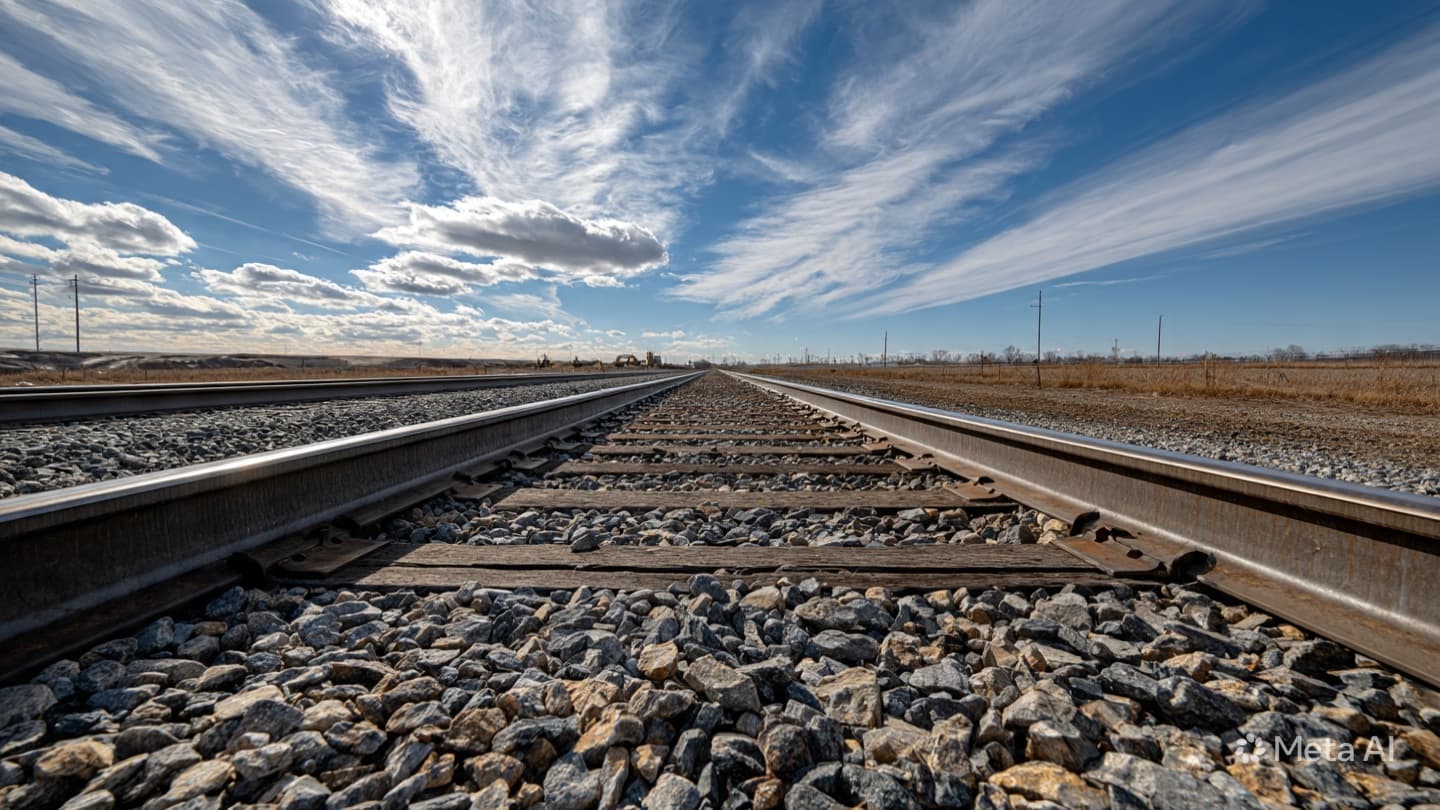
The clarification provided by the rail operator regarding the physics of the collision brings a sobering, necessary clarity to the public conversation. It is a technical reality that, once set in motion, the momentum of a train exists beyond the reach of immediate, human intervention. One considers the perspective of the train driver, caught in a moment where the transition from the routine of the route to the reality of the accident occurred in a heartbeat. It is a reflection on the boundaries of our control, a reminder that the systems we rely on are governed by laws of motion that do not always allow for the unexpected.
In the aftermath of such a confirmation, the atmosphere in the community is marked by a shift from questioning to a more somber, observational understanding. The information provided—that the train, despite the application of emergency measures, possessed too much momentum to halt—replaces speculation with a stark, immovable fact. One feels the weight of this knowledge, a realization that we exist within systems that operate on their own unforgiving terms. It is a moment of reflection on the scale of our technology and the fragility of our presence within it.
The discourse surrounding the accident has moved away from blame toward a deeper, more systemic inquiry. We are forced to consider the balance between the efficiency of our rail networks and the inherent risks at the points where they meet the road. The operator’s confirmation acts as a catalyst for this broader consideration, moving the public focus toward the infrastructure itself. It is a conversation about how we design our intersections, how we manage the flow of traffic, and how we ensure the safety of those who traverse these points daily.
Reflecting on the role of the rail operator, one recognizes the difficult position of those who manage such vast, complex systems. Theirs is a mandate to maintain the rhythm of transit, a task that becomes profoundly heavy when the system fails to protect those it serves. The confirmation provided is not a deflection of responsibility, but an acknowledgment of the operational reality. It invites us to look at the intersection not just as a site of failure, but as a site of necessary, systemic evolution.
The community’s response remains one of quiet, respectful inquiry. We are looking at our crossings with fresh eyes, observing the barriers, the signals, and the surrounding environment with a new, heightened level of awareness. This is a common, necessary path after such a tragedy—the process of turning observation into action, and inquiry into reform. We are learning that the safety of our systems is a shared responsibility, one that requires the collaboration of operators, authorities, and the public.
One imagines the quiet, heavy work being done in the offices of the rail network and the halls of government. There is a sense of collective focus, a commitment to understanding not just the what of the accident, but the how and the why of its systemic potential. This is where the reflective turn of the public discourse meets the practical necessity of engineering and policy. We are in a period of transition, observing as the lessons of the accident are integrated into the future of our transit design.
As the trains continue their passage through Buggenhout, the rhythm of the town has been irrevocably altered. Each sound of the rail, each signal’s chime, now carries the memory of the event, a reminder of the fragility of the balance we strike with the elements. We are a society that lives in the shadow of our own infrastructure, learning, adapting, and finding the strength to continue. It is a slow, steady process of reconciling our need for movement with our imperative for safety.
In the final assessment, the operator’s confirmation is a milestone in our journey toward understanding. It clarifies the mechanics of the tragedy, allowing the conversation to focus on the future. We move forward with a clearer sense of the limitations and the possibilities, committed to the idea that our transit systems must serve not just the speed of our travel, but the sanctity of our lives. The work of reform will continue, guided by the memory of the departed and the promise of a safer path for all.
Belgian rail operator Infrabel has confirmed that the train involved in the May 26 collision was operating within normal parameters but could not avoid the minibus. Telemetry data indicates the train driver engaged emergency braking upon visual detection of the obstruction, but the required stopping distance exceeded the available space at the crossing. The operator maintains that all standard signal systems were fully functional at the time of the incident. Technical teams are currently reviewing the incident logs as part of the broader, ongoing inquiry into level crossing safety protocols across the regional network.
Note: This article was published on BanxChange.com and is powered by the BXE Token on the XRP Ledger. For the latest articles and news, please visit BanxChange.com