
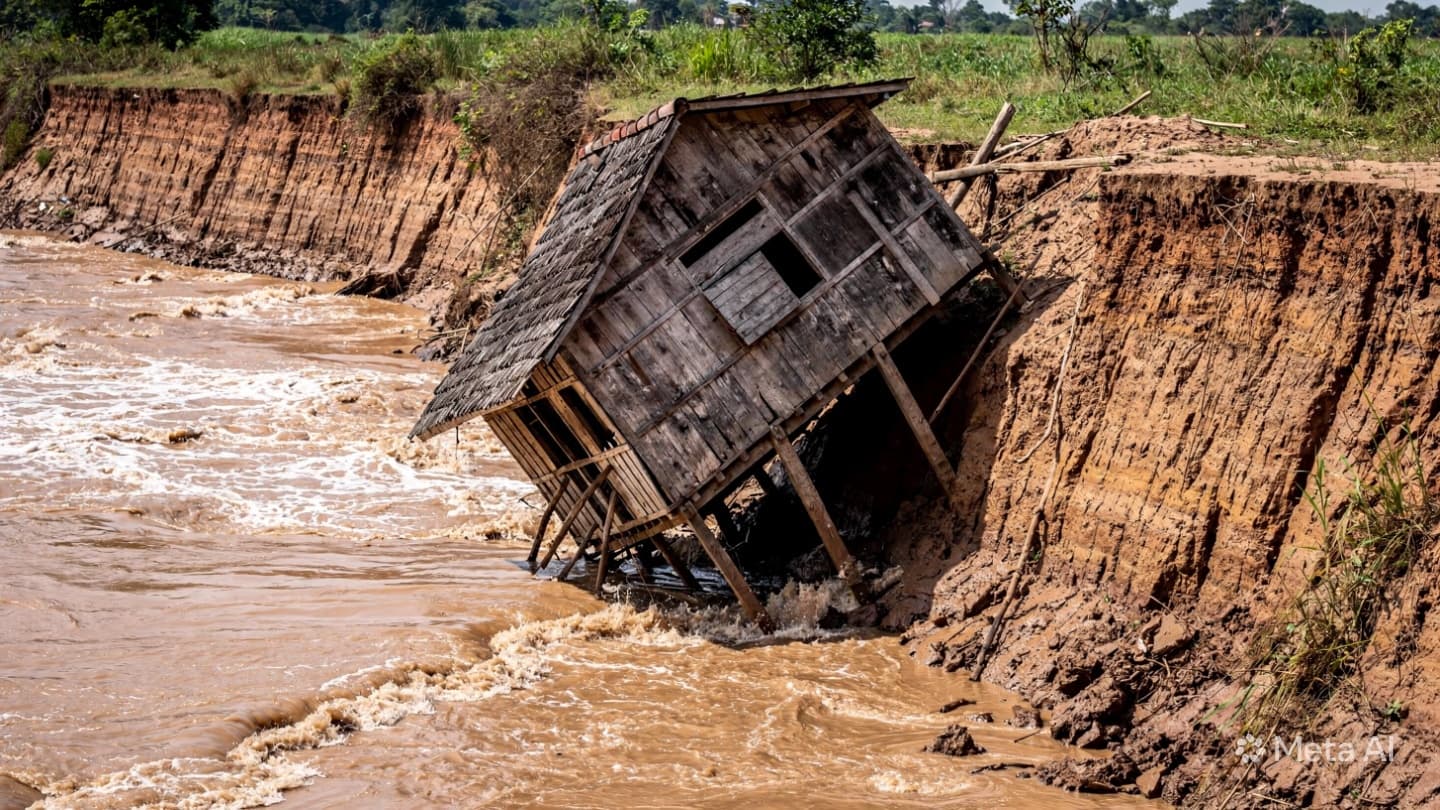
The Mekong is a living, shifting entity, a massive artery of brown water that carries the sediment of a continent down through the lowlands, shaping the lives of millions who live along its muddy banks. For generations, the relationship between the river and the riverside communities has been one of predictable give-and-take, a seasonal dance where the high waters deposit fertile silt before receding back into the main channel. But in recent years, the rhythm of the river has become erratic, its currents possessing a sharp, hungry energy that carves away at the very foundations of the shore.
It happens with an agonizing, slow-motion certainty; a small crack appears in the rich alluvial soil of the bank, widening over several days until a massive shelf of earth simply shears off and slides into the brown current. For the families whose homes are built on these vulnerable perches, the sound of the river eating the land at night is a source of constant, sleepless anxiety. The sudden acceleration of this erosion along the lower basin has turned what was once a slow geological process into an immediate, devastating threat to human habitation.
When the ground finally gave way beneath three traditional stilt houses, there was no time to salvage more than a few personal belongings before the structures tilted and collapsed into the water. To see a home—a place of laughter, stored grain, and family history—torn apart by the quiet force of a riverbank failure is to understand the absolute precarity of life along the changing river. The water does not leave a ruin; it completely erases the space where the house once stood, leaving only a raw, vertical scar of exposed clay where the garden used to be.
The communities that remain along the ridge look out over the widening river with a sense of profound vulnerability, knowing that the next high tide or passing cargo boat could trigger the next collapse. The erosion is a complex manifestation of upstream environmental changes, shifting weather patterns, and the natural dynamics of a river system under intense ecological stress. As the displaced families seek shelter with relatives, the great river flows on, indifferent to the domestic tragedies unfolding along its edges, its surface smooth and opaque under the afternoon sun.
The Ministry of Natural Resources and Environment, alongside local municipal engineers, has established an emergency monitoring zone along the affected section of the Lower Mekong Basin. Local authorities reported that three families have been safely evacuated to a temporary community shelter after their residential plots completely succumbed to the riverbank failure. The regional government has announced plans to accelerate the construction of a stone gabion retaining wall along the most vulnerable bends of the river to prevent further structural loss to the remaining township.
Note: This article was published on BanxChange.com and is powered by the BXE Token on the XRP Ledger. For the latest articles and news, please visit BanxChange.com