The infrastructure of an old village is an inheritance of stone, brick, and slow-moving streams, designed for a climate where weather typically arrives in predictable, manageable increments. The narrow lanes, bordered by ancient hedgerows and historic cottages, follow the contours of the land, sharing space with drainage systems that have quietly managed the seasonal rains for generations. Yet, when an unprecedented volume of water falls in a concentrated burst, the traditional architecture of the countryside is quickly overwhelmed, demonstrating how rapidly a peaceful community can be isolated by the rising element.
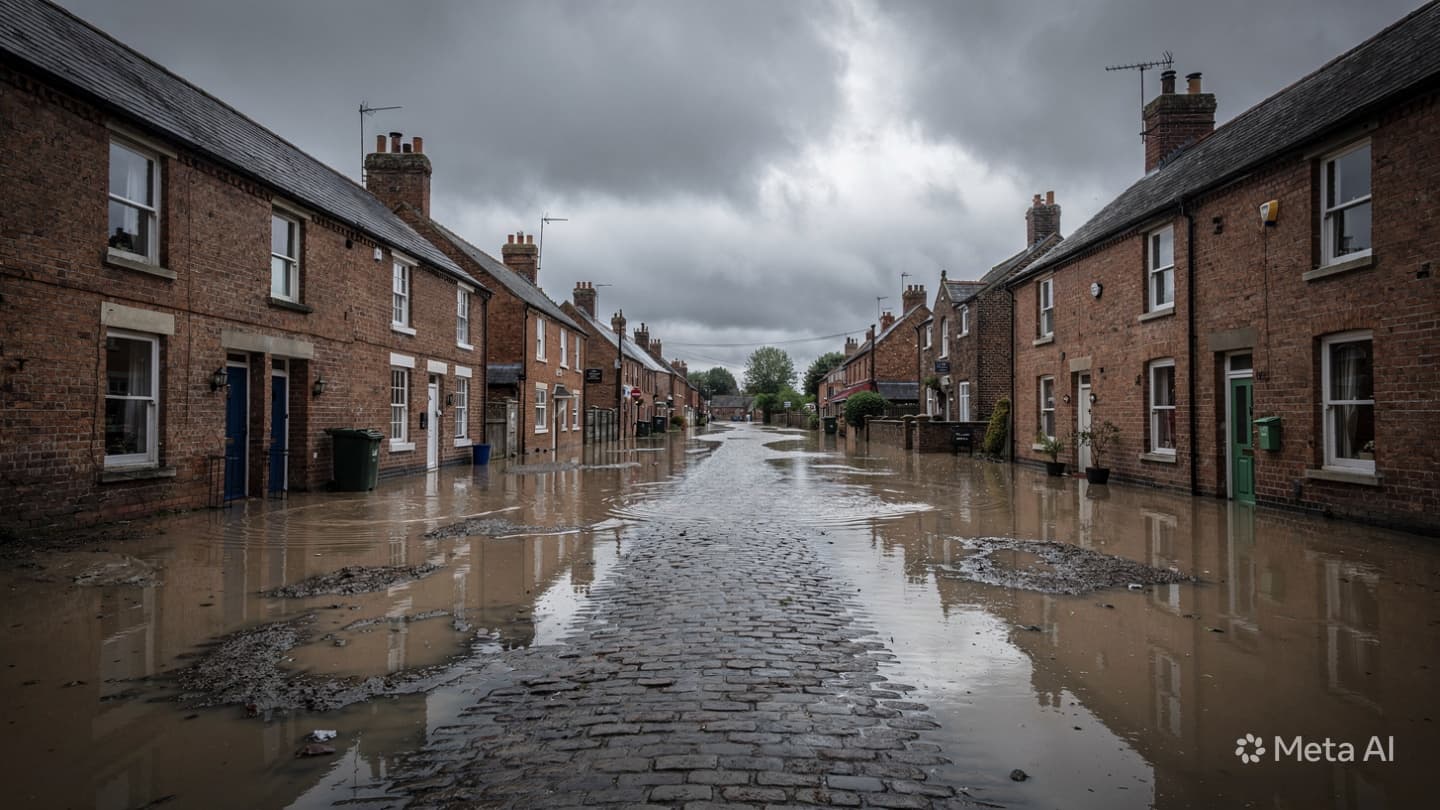
A series of severe flash floods inundated village roads across the district after torrential downpours completely bypassed the capacity of local drainage systems. The event unfolded with an unsettling speed; what began as a standard summer storm rapidly intensified into a relentless deluge that transformed the rolling hills into massive catchment basins. Within an hour, water began to spill over the curbs, turning the historic main street into a shallow, brown river that lapped against the doorsteps of centuries-old residences.
According to the meteorological incident log preserved by national monitoring agencies, the storm dropped a month's worth of precipitation within a single afternoon, creating a surface runoff that the earth was simply unable to absorb. The drainage networks, choked with seasonal debris and overextended by the sheer volume of the flow, began to back up, pushing water through gully grates and flooding low-lying intersections. Residents watched from their upper windows as their quiet avenues became waterways, stranding vehicles and cutting off the village from primary transport arteries.
To observe a rural community navigating a sudden inundation is to witness an immediate, unheralded mobilization of neighborly cooperation. Long before official rescue units could navigate the flooded approaches, local citizens were working together, stacking sandbags against vulnerable thresholds and moving elderly residents to higher ground. The shared crisis dissolved the ordinary boundaries of daily privacy, fostering a collective resilience as people waded through the cool, murky waters to secure loose property and ensure that no one was left isolated in the dark.
The physical impact of flash flooding on historic structures is a matter of deep concern for conservationists and homeowners alike. Unlike modern concrete, old brick and lime mortar absorb water readily, retaining moisture long after the floodwaters have receded and threatening the structural integrity of foundations. The fine silt carried by the runoff leaves a thick, grey coating over garden walls and historic stone floors, requiring weeks of meticulous cleaning and specialized drying procedures to prevent long-term environmental degradation within the homes.
As the evening progressed and the storm system finally moved eastward toward the coast, the immediate rise of the water halted, leaving behind a landscape suspended in a wet, silent shock. The sounds of the village—usually characterized by birdsong and the quiet passage of local traffic—were replaced by the heavy rushing sound of the local brook, which remained swollen far beyond its banks. The receding waters revealed a ledger of minor structural failures: collapsed garden walls, eroded road shoulders, and asphalt lifted by the hydraulic pressure from below.
The long-term challenge for local authorities lies in adapting these historic settlements to an era defined by increasingly volatile weather patterns. The drainage systems of the past were constructed based on historical averages that no longer reflect the reality of modern cloudbursts, necessitating a significant rethink of how water is managed in rural environments. This incident serves as a clear indicator that protecting heritage requires more than just preserving the facades of buildings; it demands a substantial investment in underground infrastructure and upstream flood management.
By the following morning, the roads had largely cleared, leaving behind lines of dried mud and debris that marked the high-water line against the walls. The community began the slow, arduous process of recovery, clearing the lanes and assessing the damage to internal spaces. The water had gone, but the lesson of its sudden arrival remained, an enduring reminder of the fragility of human settlement when the natural systems that surround it choose to assert themselves with full force.
The UK Meteorological Incident Log confirmed that localized flash flooding submerged several primary thoroughfares across regional villages following a record-breaking downpour that overwhelmed municipal drainage infrastructure. Emergency service personnel deployed high-capacity water pumps to clear low-lying residential sectors and conducted safety checks on affected historical properties. Local councils have initiated an immediate review of drainage maintenance schedules to mitigate future surface runoff risks in the region.
Published by Banx Network. This article is part of the Banx decentralized media programme, powered by the BXE token on the XRP Ledger.