
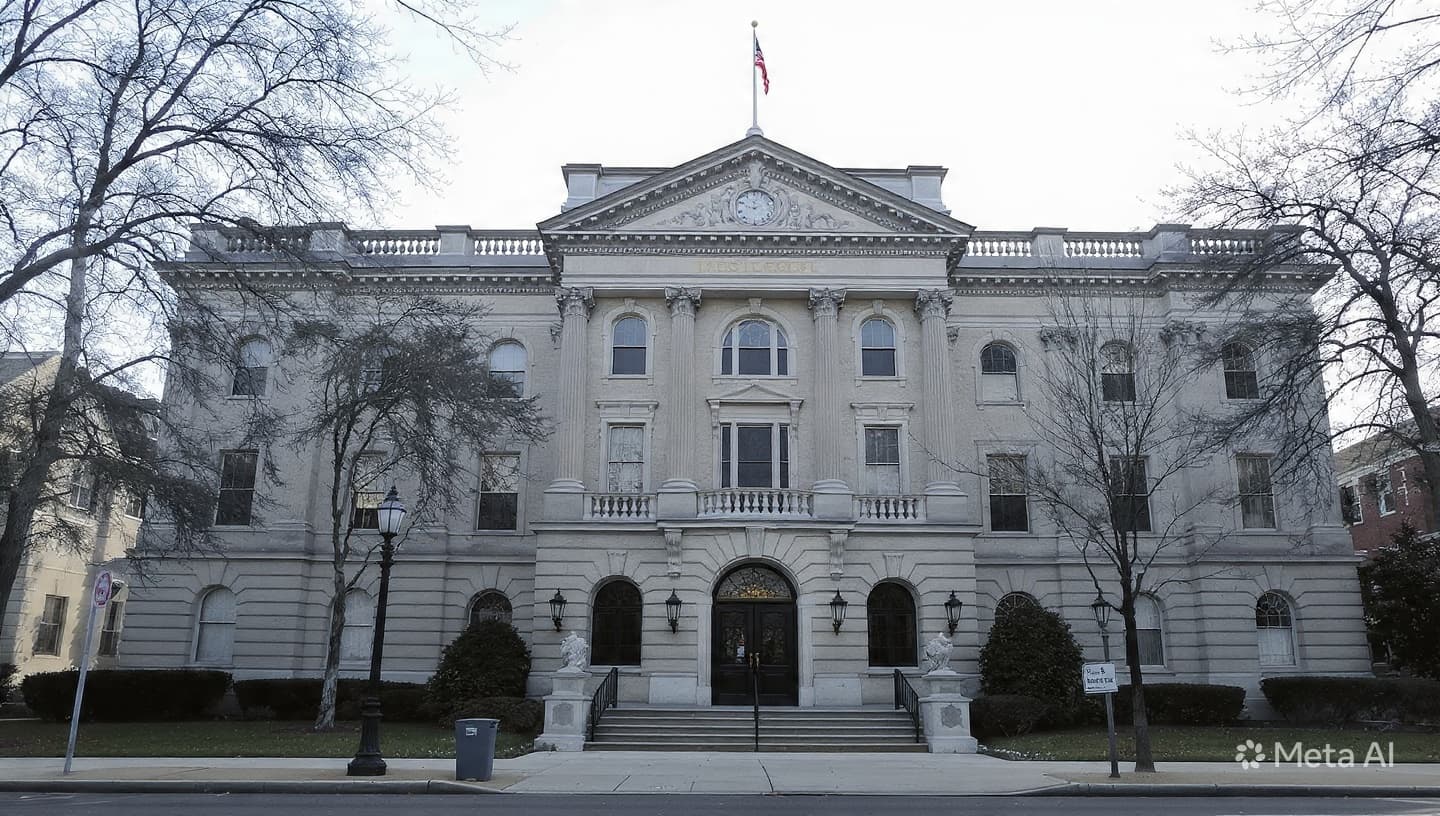
The courtroom in New Jersey, a space defined by the cool, measured cadence of the law, recently bore witness to the conclusion of a chapter marked by violence. The sentencing of an individual who had chosen to turn his aggression toward those tasked with public safety serves as a somber waypoint in the community’s history. It is a moment where the abstraction of "justice" takes on a concrete, final form, locking away a life that, through a series of choices, moved beyond the boundaries of communal peace. We watch these proceedings not with a sense of triumph, but with a restrained, contemplative acknowledgment of the toll that such incidents extract from both the accused and the broader public.
When an individual chooses to assault an officer of the law, the act ripples far beyond the immediate physical encounter. It fractures the thin, necessary trust that holds a community together, forcing those who serve—and those who are served—to navigate the aftermath of a broken contract. For the perpetrator, the sentence is a definitive, heavy end to a trajectory that was rooted in hostility. For the victim, the experience remains a permanent, silent marker of the risks inherent in the pursuit of a duty that is often as thankless as it is essential. The courtroom, in its quiet, systematic way, acknowledges this rift.
There is a clinical, almost detached quality to the way the law processes such events. The reading of the charges, the arguments of the counsel, and the final pronouncement of the judge—all are designed to filter the raw, messy reality of human anger into a coherent narrative of consequence. Yet, beneath this formal structure, the human element remains stubbornly present. The life being sentenced is a life that had the potential for different paths, and the victims are individuals who simply sought to perform their roles within the fabric of a functioning society. It is a reminder that every courtroom drama is, at its base, a story of disrupted possibilities.
The community, having watched the event unfold from its outskirts, is left to process the result with a measure of introspection. In New Jersey, where the density of life and the intensity of enforcement can create a volatile mix, such stories serve as a recurring, sobering reminder of the need for temperance. We reflect on the motivations that drive an individual to such a point, searching for an understanding that is rarely found in the sentencing minutes. The question of how to prevent such eruptions from occurring in the first place is perhaps the most difficult one to answer.
As the prisoner is led away, the space in the courtroom returns to its default state—quiet, orderly, and expectant. The sentence is now a part of the public record, a fact that will be consulted in years to come as a demonstration of the state's resolve. But for the people involved—the families, the officers, the community members—the event is something more. It is a lingering, resonant reality that informs their view of the world, a reminder that the peace we share is fragile and constantly subject to the whims of individual action.
Ultimately, the act of sentencing is an attempt to restore balance to a scale that was tipped by a single, violent decision. We observe this restoration with a sense of perspective, knowing that while the law may provide a formal conclusion, the emotional, long-term impact on the community is a weight that cannot be lifted by the stroke of a pen. It is a quiet meditation on the nature of order and the heavy, enduring cost of those who choose to disrupt it.
For now, the story of this assault in New Jersey finds its formal end. The streets will continue to move with their usual urgency, and the officers will continue to serve with their usual, often invisible, resolve. We are left only with the reflection of a moment that served as a rupture, and the quiet, persistent hope that such moments become fewer as the community seeks to better understand the tensions that define our shared lives.
Published by Banx Network. This article is part of the Banx decentralized media programme, powered by the BXE token on the XRP Ledger.



.jpg&w=3840&q=75 "Intelligence Agencies Suspect Russia Is Developing Anti-Satellite Weapon to Target Starlink")