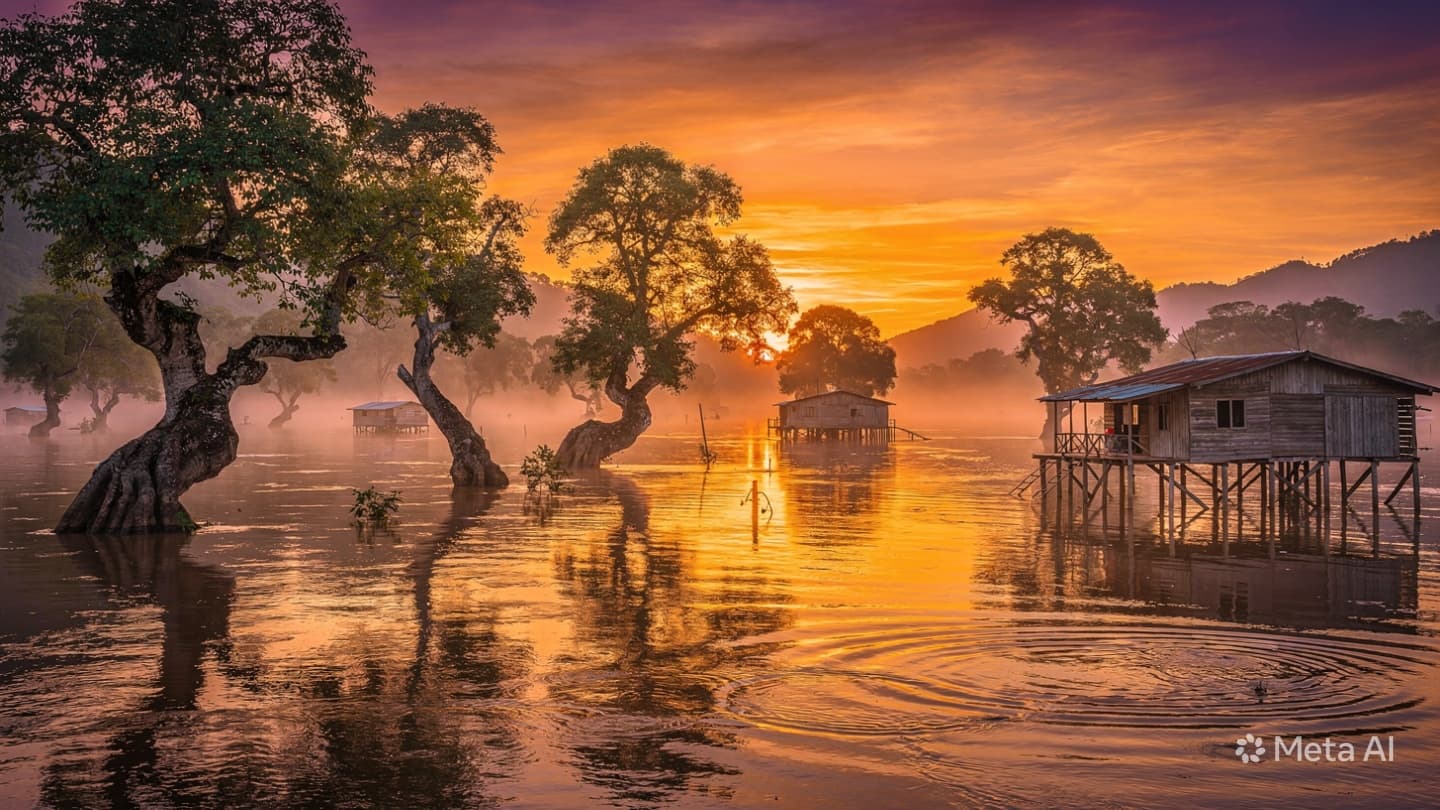
The slow, brown waters of the great internal rivers move with a heavy indifference, carving their way through the lowlands and shaping the rhythm of life for millions who live along their banks. For generations, the annual rise and fall of these floods was a predictable phenomenon, a seasonal pulse that nourished the soil and cleared the channels for the coming year. Now, however, the water is behaving differently, lingering longer in the low-lying plains and expanding into areas that once remained dry even during the height of the summer rains. This altered flow brings with it a subtle, biological transformation, turning the familiar waterways into breeding grounds for a quiet crisis. The warmth that settles over the wetlands after the floods recede creates a specific, humid atmosphere, an ideal cradle for the microscopic and insect life that thrives in stagnant pools. The changing patterns of global temperature have lengthened the season of vulnerability, allowing the mosquito populations that carry dengue and other fevers to expand their territory with alarming speed. The threat does not arrive with the dramatic crash of a storm, but with the high-pitched hum of a thousands-strong swarm rising from the reeds at dusk. The water that once brought life to the valley has become the vehicle for a widespread public health emergency. To look out over the flooded suburbs of the river cities is to understand how intimately human health is bound to the behavior of the natural world. The informal settlements that line the riverbanks are the first to experience the impact of the rising water, with families navigating flooded alleys in small boats while the insects gather in the warm, shaded corners of their homes. The surge in vector-borne diseases is an event framed by infrastructure gaps, where inadequate drainage and the lack of clean running water create an artificial archipelago of risk. It is a crisis that disproportionately targets those who have the least capacity to adapt. The public health clinics in these riverine communities face a steady, exhausting influx of patients, their waiting rooms filled with the quiet murmuring of mothers comforting feverish children. The symptoms of the illness—the deep joint pain, the sudden weakness, the burning heat—become a shared seasonal experience, a heavy tax paid by the community to the changing climate. Healthcare workers operate under a state of constant mobilization, distributing nets, spraying larvicides, and managing the delicate logistics of fluid replacement therapies in makeshift wards. The battle against the insect is a war of absolute persistence, fought yard by yard along the mud. Beyond the immediate human suffering, the recurring waves of disease place a profound strain on the economic vitality of the region, sidelining workers and draining the limited resources of local municipalities. When an entire neighborhood is weakened by fever, the informal markets fall silent, schools empty, and the fragile stability of working-class families is pushed to the brink. The changing behavior of the river is therefore not merely an environmental footnote, but a powerful economic disruptor that threatens to undo years of social progress. The health of the population is proving to be as fluid as the water itself. This transformation of the epidemiological landscape has forced a fundamental rethink of how cities plan for the future, shifting the focus from simple flood defense to complex health security. It is no longer enough to build dikes and barriers to keep the water out; the urban environment must be redesigned to eliminate the micro-habitats where the vectors thrive. This requires an unprecedented level of cooperation between engineers, biologists, and community leaders, working together to transform the neglected margins of the river into managed, resilient spaces. The defense against the fever must be built into the very concrete of the city. As the evening sky turns a deep, bruised violet over the wetlands, the mist begins to rise from the surface of the river, obscuring the boundary between the land and the water. The community prepares for another night under the nets, the burning of mosquito coils casting a fragrant, defensive smoke over the open doorways of the riverfront houses. It is a ancient ritual adapted to a modern reality, a quiet act of defiance against an invisible enemy that grows stronger with each passing season. The river continues its silent journey toward the sea, carrying the burdens of the shore along with its current. Public health authorities have confirmed a significant increase in cases of dengue fever and other vector-borne illnesses along the major domestic waterways, directly linked to prolonged seasonal flooding and elevated regional temperatures. Epidemiological data indicates that the traditional high-risk zones have expanded significantly, requiring the deployment of emergency medical units to rural and peri-urban communities along the Paraguay and Paraná river basins. The Ministry of Public Health has initiated a coordinated vector control campaign, combining localized fumigation with public education initiatives focused on standing water elimination. International health organizations are providing technical support to monitor potential viral mutations as the high-transmission season persists.
Published by Banx Network. This article is part of the Banx decentralized media programme, powered by the BXE token on the XRP Ledger.