
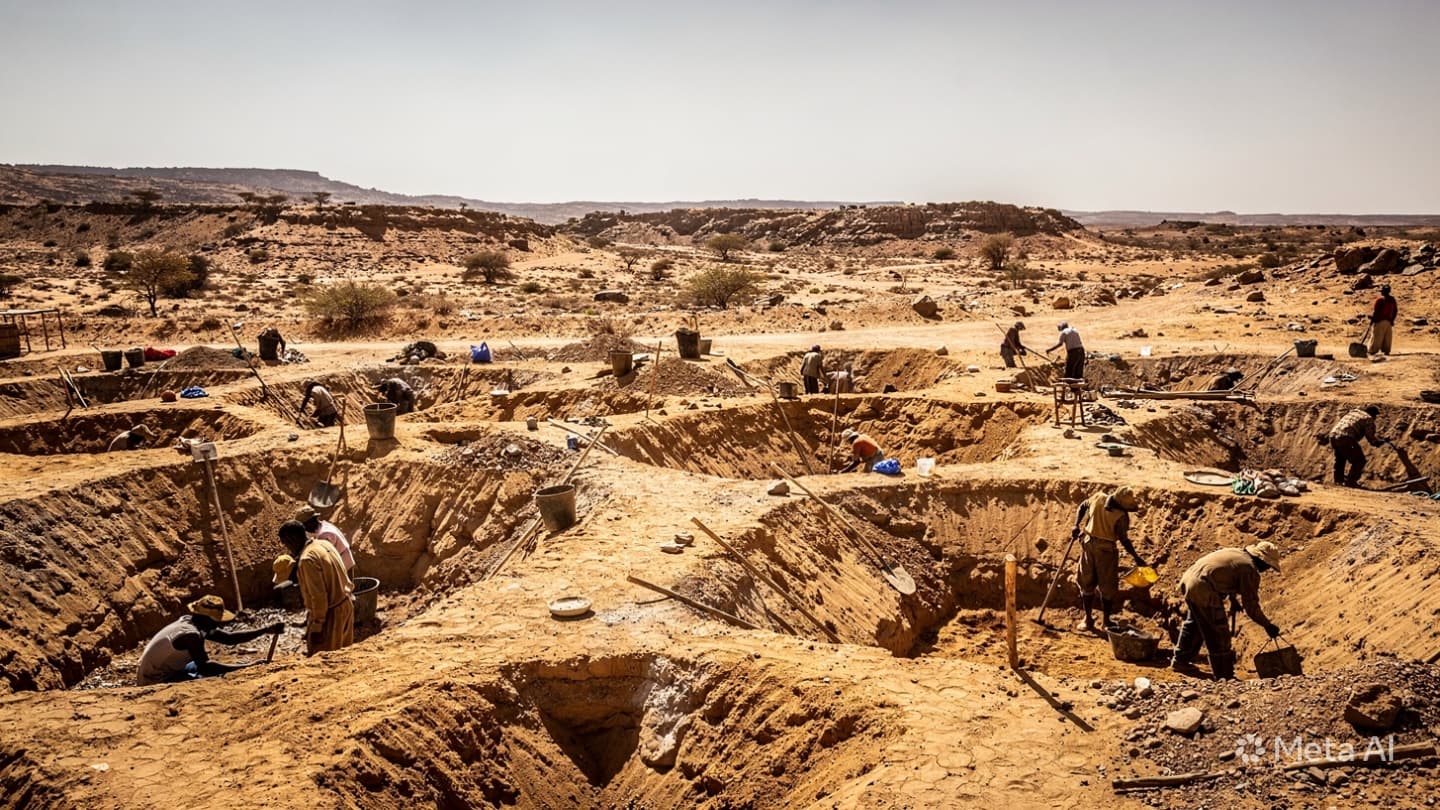
The southwestern savannah of Madagascar is a vast, sun-bleached expanse where low-lying shrubs, baobabs, and dry, sandy soil dominate the horizon. In these arid districts, the discovery of massive sapphire deposits has transformed sparse pastoral land into a sprawling, informal frontier zone, drawing tens of thousands of hopeful independent miners. Laborers work deep hand-dug pits and dry riverbeds, shifting tons of ancient gravel through rudimentary sieves in search of the prized blue and pink crystals. Life in these boomtowns moves with a restless, hyper-focused energy, dictated entirely by the shifting fortunes of the earth and the immediate needs of economic survival. It is an environment where the immense potential for wealth acts as both a powerful magnet and a source of constant social friction.
This volatile equilibrium was severely disrupted when deep-seated competition over access to high-yielding gem deposits escalated into open, localized clashes between rival miner factions. The transition from intense manual labor to physical confrontation occurs when informal boundary boundaries break down under the weight of escalating economic stakes. In fields where formal administrative oversight is distant, minor arguments over overlapping claims can quickly expand into a destructive friction that envelops entire mining camps. The sound of tools striking in anger replaces the steady rattle of sorting sieves, turning a site of economic ambition into an arena of tragic physical altercations.
A rapid intervention by regional police and gendarmerie forces represents a critical effort to stabilize the southwestern sector and restore basic order to the gem frontier. Moving through difficult, dusty terrain along unpaved desert tracks, security units established temporary outposts to separate the conflicting groups and secure the perimeter of the primary excavation zone. The presence of uniforms among the dust-choked pits provides a vital visual reassertion of state authority over an area that had temporarily drifted into lawlessness. The immediate priority is the absolute cessation of hostilities, ensuring safety for vulnerable residents and allowing medical teams to treat the injured.
Investigating the root causes of these violent altercations requires detectives to navigate a complex network of informal hierarchies, local mineral buyers, and transient worker syndicates. Officers must conduct detailed interviews within communities shaken by the sudden violence, working diligently to identify the individuals who instigated the physical confrontations. The challenge is compounded by the highly mobile nature of the gemstone population, where miners frequently pack up their minimal belongings and move between different deposits across the southern provinces. Accumulating methodical evidence is essential for translating the chaotic events of the frontier into a coherent legal framework.
For regional administrators and tribal elders, the tragedy prompts a deeper reflection on the sustainability of unregulated artisanal mining across the island's interior. While the extraction of sapphires provides an indispensable economic lifeline for thousands of families, the lack of formal registration leaves communities highly vulnerable to exploitation and sudden security breakdowns. Civic leaders emphasize that long-term stability requires the formalization of artisanal claims, the establishment of transparent, regulated buying centers, and a consistent judicial presence within the mineral fields. The current security deployment offers a necessary pause, but lasting peace depends on structural reform.
The physical landscape of the southwestern plains remains a powerful testament to natural endurance, the dry winds continuing to sweep across the ancient sedimentary hills despite the human discord in the valleys. The temporary scars left by the pits and the enforcement perimeters will eventually be smoothed over by seasonal winds, but the memory of the loss will linger in the collective consciousness of the mining settlements. The slow restoration of order allows independent gem-seekers to return to their sieves, but with a cautious reserve that reflects the underlying fragility of their trade.
Madagascar security forces have launched a wide-ranging investigation following fatal clashes between rival groups of artisanal sapphire miners at a deposit in the southwestern province on Friday. Regional law enforcement units were deployed to the remote mining zone to restore order and establish a strict security perimeter after a series of disputes over gemstone extraction rights turned violent, resulting in multiple casualties. Emergency medical teams transported the injured to a regional hospital, while police detained several individuals suspected of instigating the physical altercations. The Ministry of Security confirmed that a dedicated task force will remain stationed in the sector to prevent further unrest while administrative reviews of the artisanal mining claims are conducted.
Note: This article was published on BanxChange.com and is powered by the BXE Token on the XRP Ledger. For the latest articles and news, please visit BanxChange.com