In the quiet observation of nature, scientists often encounter behaviors that challenge assumptions about the boundaries of instinct and adaptation. Birds, with their complex behaviors and varied ecological roles, continue to surprise researchers in ways that expand understanding of animal biology and evolutionary development.
Recent scientific discussions have highlighted documented observations of self-stimulatory behavior in certain bird species. While such behavior has been noted in a range of animals across the animal kingdom, its presence in birds has drawn renewed attention in behavioral ecology studies.
Researchers studying animal behavior approach such findings through the lens of evolution, where actions are interpreted in terms of survival, reproduction, and neurological development rather than human social framing. In this context, behavior patterns may serve multiple biological or developmental functions.
Some hypotheses suggest that such behaviors could be linked to hormonal regulation, stress reduction, or exploratory development of reproductive systems. However, scientists emphasize that interpretations vary depending on species, environment, and available observational data.
The study of avian behavior is a long-established field, involving decades of fieldwork, laboratory observation, and comparative analysis across species. Birds often display complex mating rituals, communication systems, and social structures that continue to inform biological research.
Behavioral ecology also examines how instinctual actions evolve over time, shaped by environmental pressures and genetic variation. In this broader framework, even unusual behaviors are considered part of the spectrum of natural biological expression.
Researchers caution that scientific interpretation requires careful distinction between observation and inference. Ongoing studies aim to better understand how widespread such behaviors may be and what functional roles, if any, they serve in different species.
As with many aspects of animal behavior, continued research is expected to refine understanding, offering a clearer picture of how instinct, environment, and evolution interact.
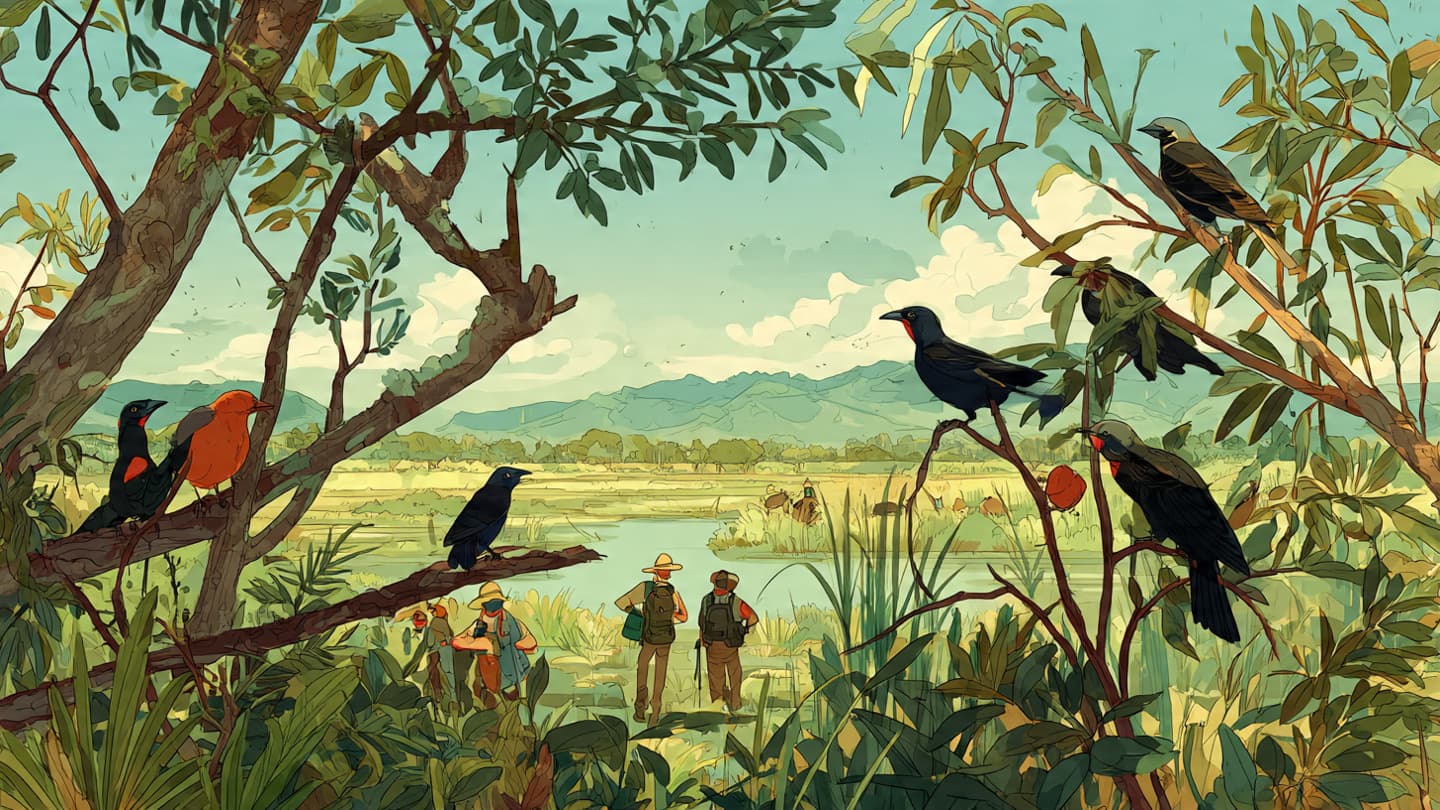
AI Image Disclaimer: Images accompanying this article are AI-generated and intended for scientific illustration purposes only.
Source Verification Check: Nature, National Geographic, Behavioral Ecology Journal, BBC Earth, Smithsonian Magazine
Published by Banx Network. This article is part of the Banx decentralized media programme, powered by the BXE token on the XRP Ledger.